
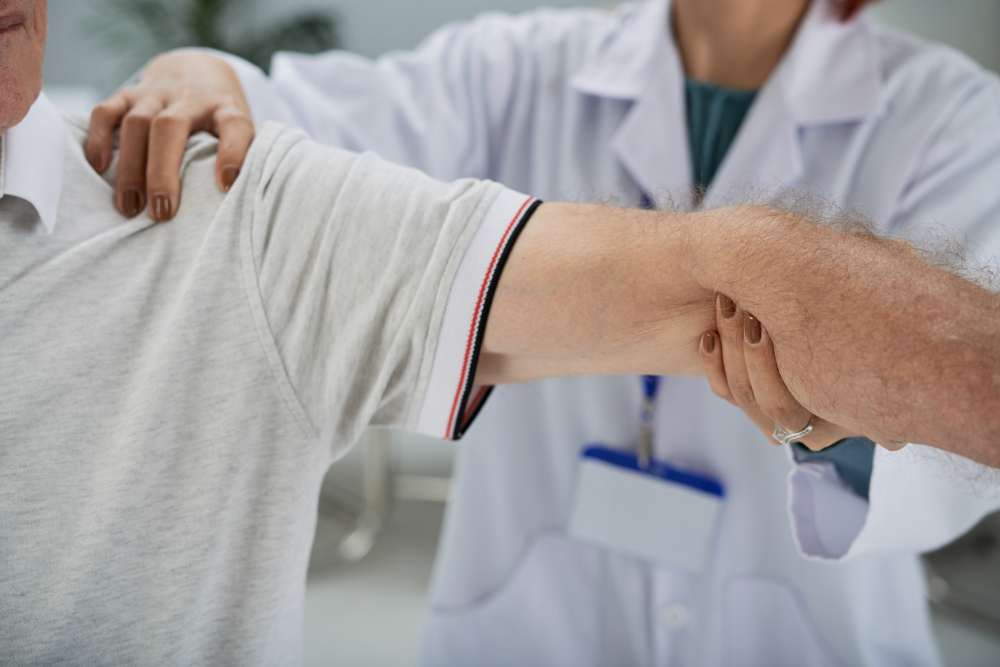
Shoulder arthroscopy is a keyhole surgical technique in which an orthopedic surgeon examines and treats problems inside the shoulder joint through small incisions, using a tiny camera and thin instruments. It is commonly used for rotator cuff tears, labral tears, shoulder instability and some cases of impingement. However, not every painful shoulder needs surgery, and many people improve with physiotherapy and other non-surgical care.
Shoulder pain, stiffness, weakness or a feeling that the joint may slip can make simple tasks difficult, such as combing your hair, lifting a bucket or sleeping on your side. This guide explains which conditions arthroscopy can treat, when it is considered, what recovery involves and when to see an orthopedic doctor in Indore.
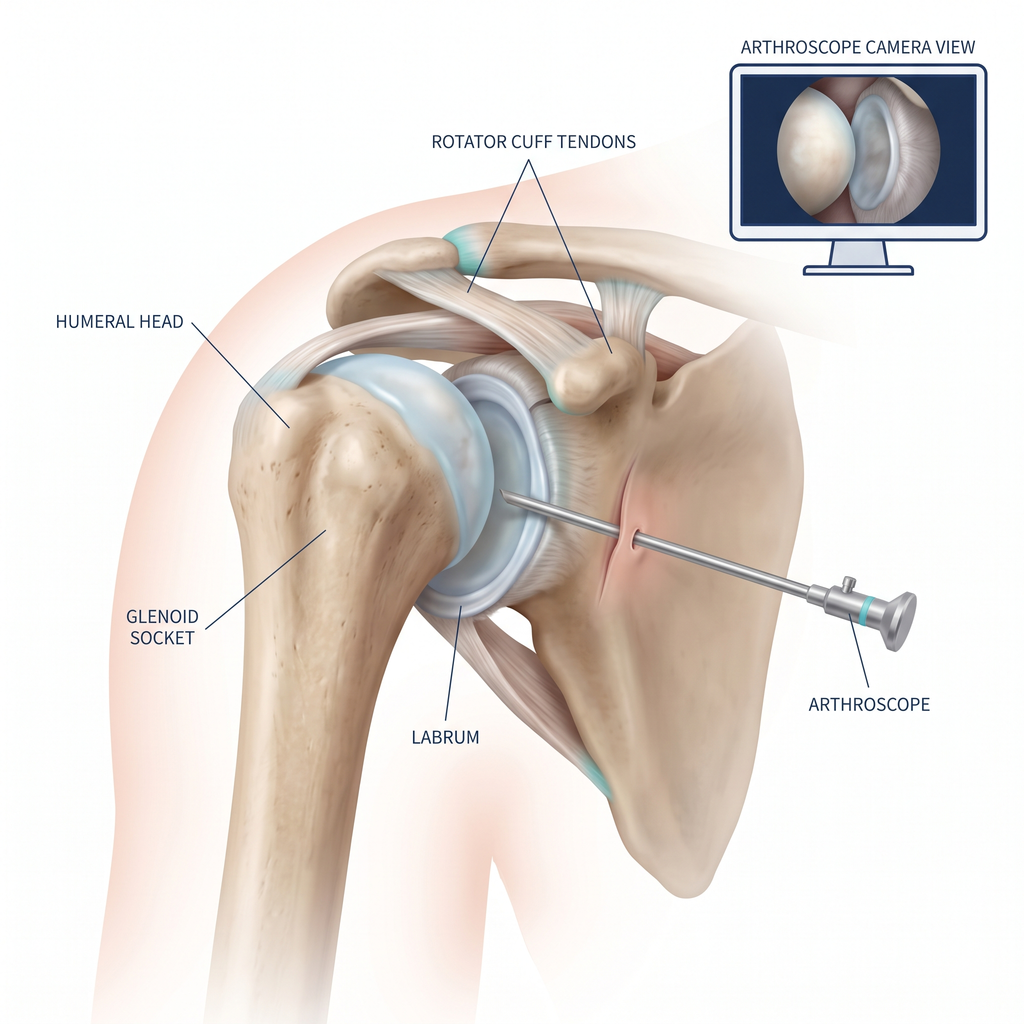
What Is Shoulder Arthroscopy and How Does It Work?
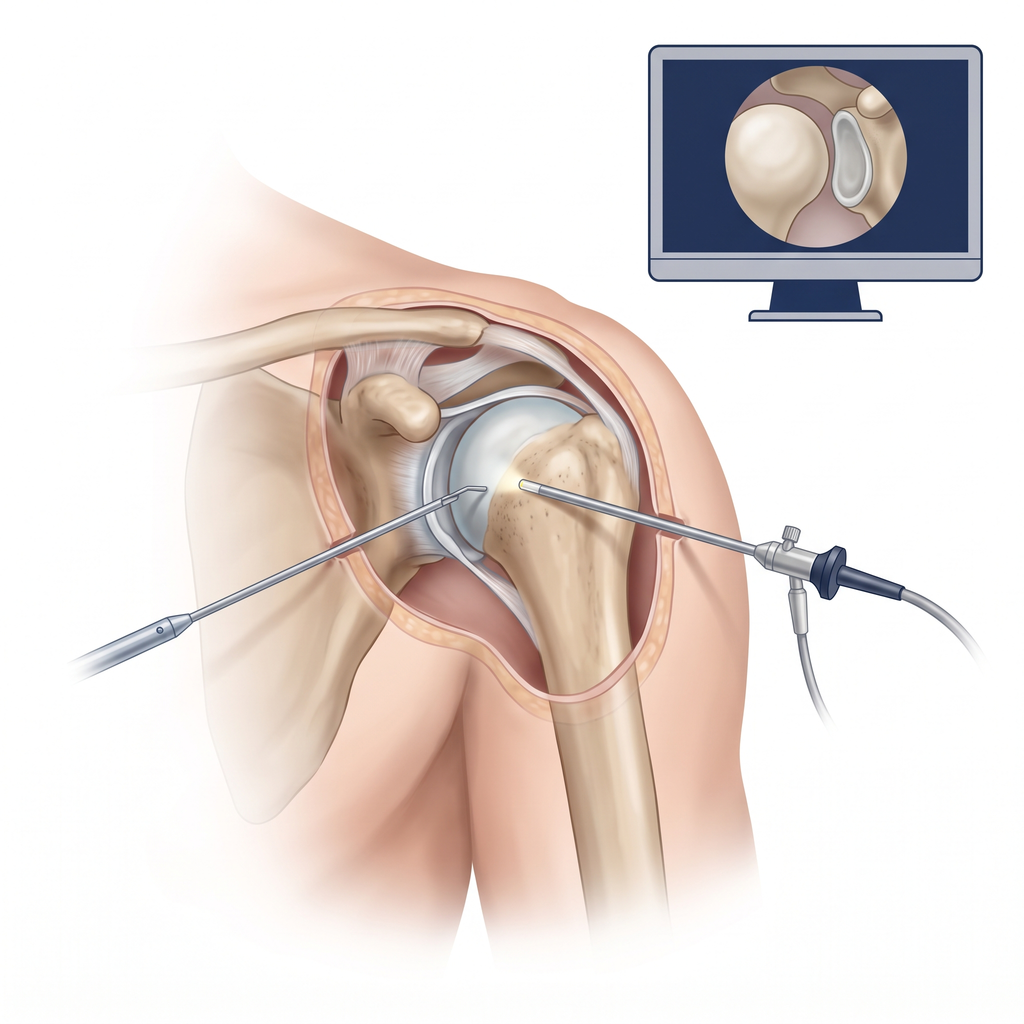
Shoulder arthroscopy is a minimally invasive procedure that lets a surgeon see inside the shoulder joint on a screen and, when needed, repair or clean up damaged tissue. A small camera called an arthroscope goes through one small incision, and thin instruments go through other small openings.
Looking inside the joint to confirm a diagnosis is different from carrying out a repair. Sometimes the camera shows what scans could not. At other times the surgeon stitches a torn tendon, reattaches the labrum or removes loose tissue. Whether arthroscopy suits you depends on your diagnosis, not on the technique alone. The American Academy of Orthopaedic Surgeons (AAOS) notes that it is generally considered for painful problems that have not responded to non-surgical treatment.
Which Shoulder Conditions Can Be Treated With Arthroscopy?
Several conditions can be treated arthroscopically in carefully selected patients. These are the most common.
Rotator Cuff Tears
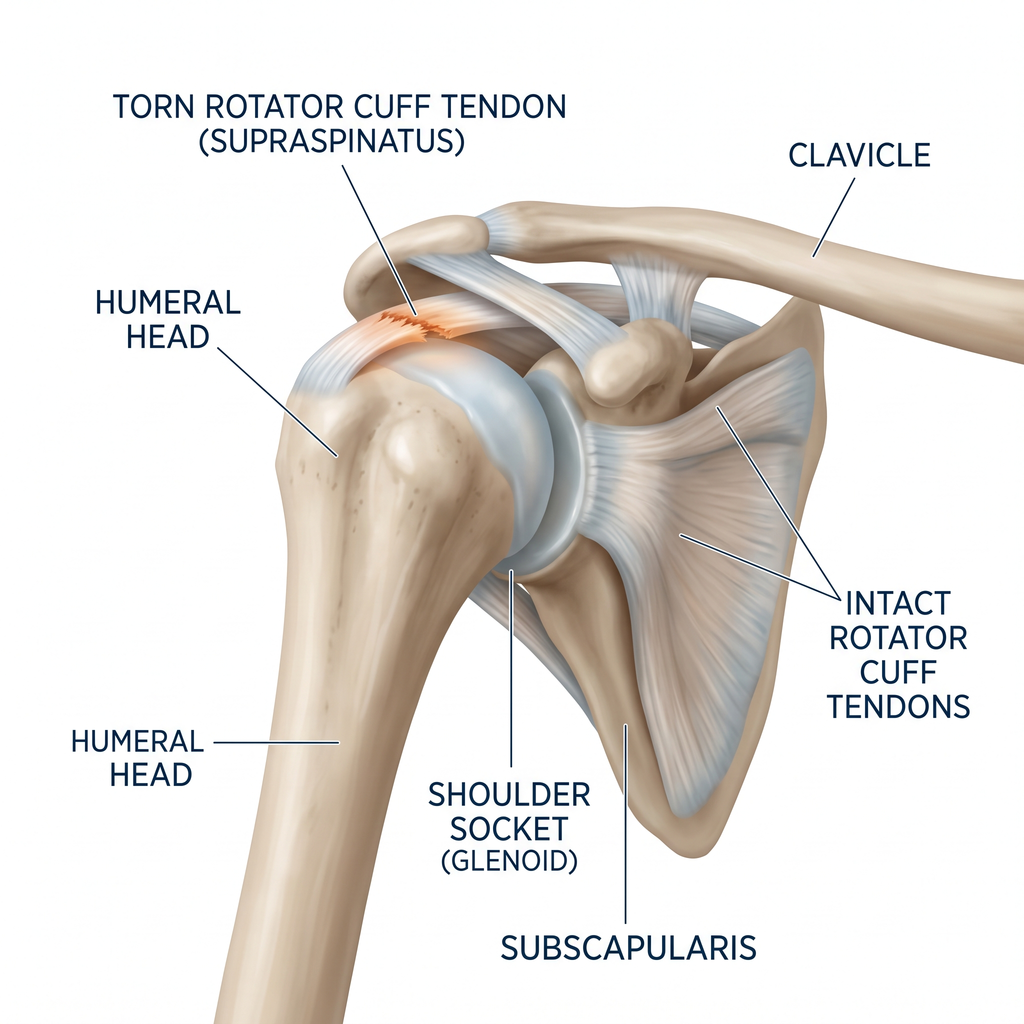
The rotator cuff is a group of four muscles and their tendons that keep the upper arm bone centred in the shoulder socket and help you lift and rotate your arm. Tears can develop from age-related wear, repeated overhead work or a sudden injury such as a fall. Common symptoms include night pain, weakness when lifting the arm and difficulty reaching overhead.
Rotator cuff tears are common. A 2026 systematic review reports that population-based imaging studies show a prevalence above 20% in adults, rising with age. That does not mean every tear needs surgery. Arthroscopic repair may be considered when a tear is large, follows an injury, or keeps causing symptoms despite rehabilitation.
Shoulder Labral Tears
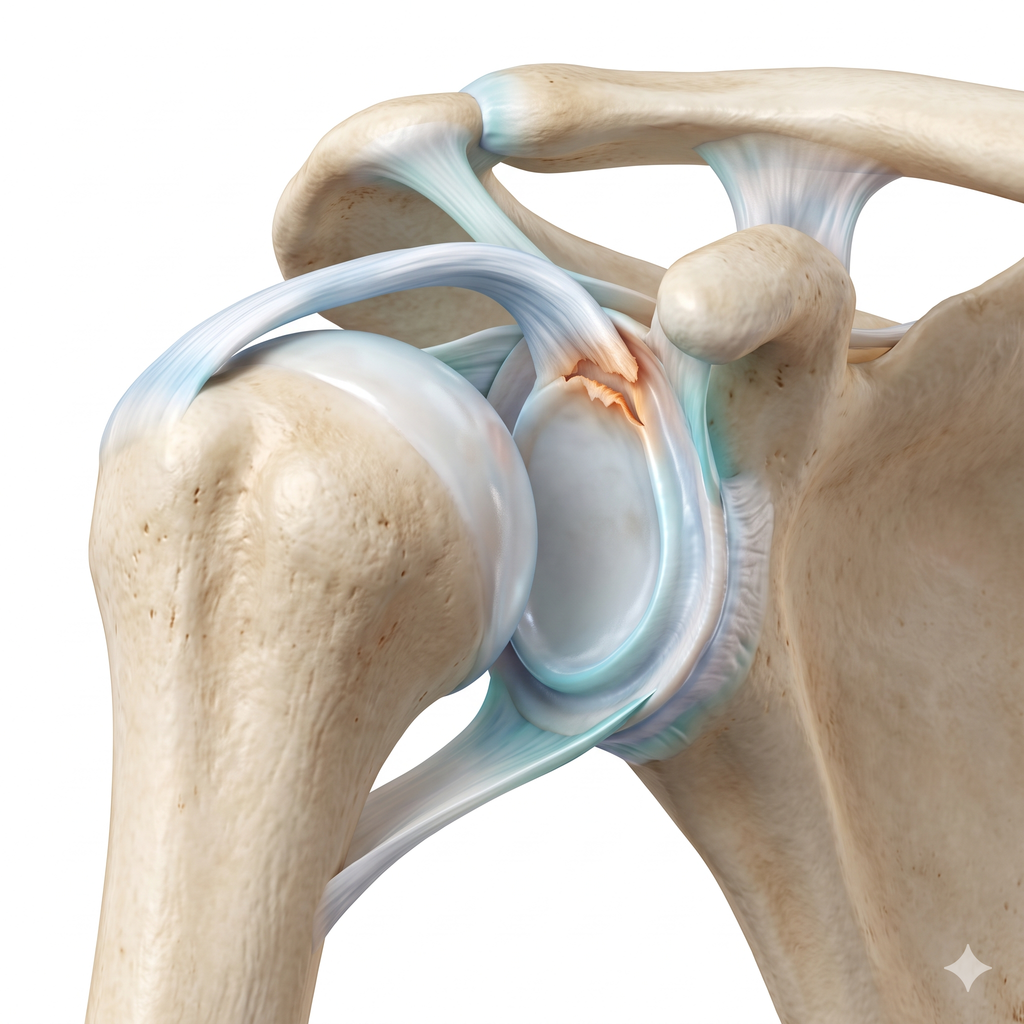
The labrum is a ring of tough cartilage around the shoulder socket that deepens the socket and adds stability. It can tear through a fall, a sudden pull on the arm or repetitive throwing. A SLAP tear affects the top part of the labrum, where the biceps tendon attaches. People may notice catching, clicking, deep pain or a feeling of looseness. When symptoms and examination support it, arthroscopy allows the surgeon to repair or trim the torn tissue.
Shoulder Instability and Recurrent Shoulder Dislocation
Instability means the ball of the shoulder moves more than it should. After a dislocation, the labrum and ligaments may be stretched or torn, and repeated dislocations can damage the joint further. In selected patients, arthroscopic stabilisation repairs these structures. Some patients, for example those with significant bone loss, may need a different operation, which is why proper imaging and assessment matter.
Shoulder Impingement and Bursitis
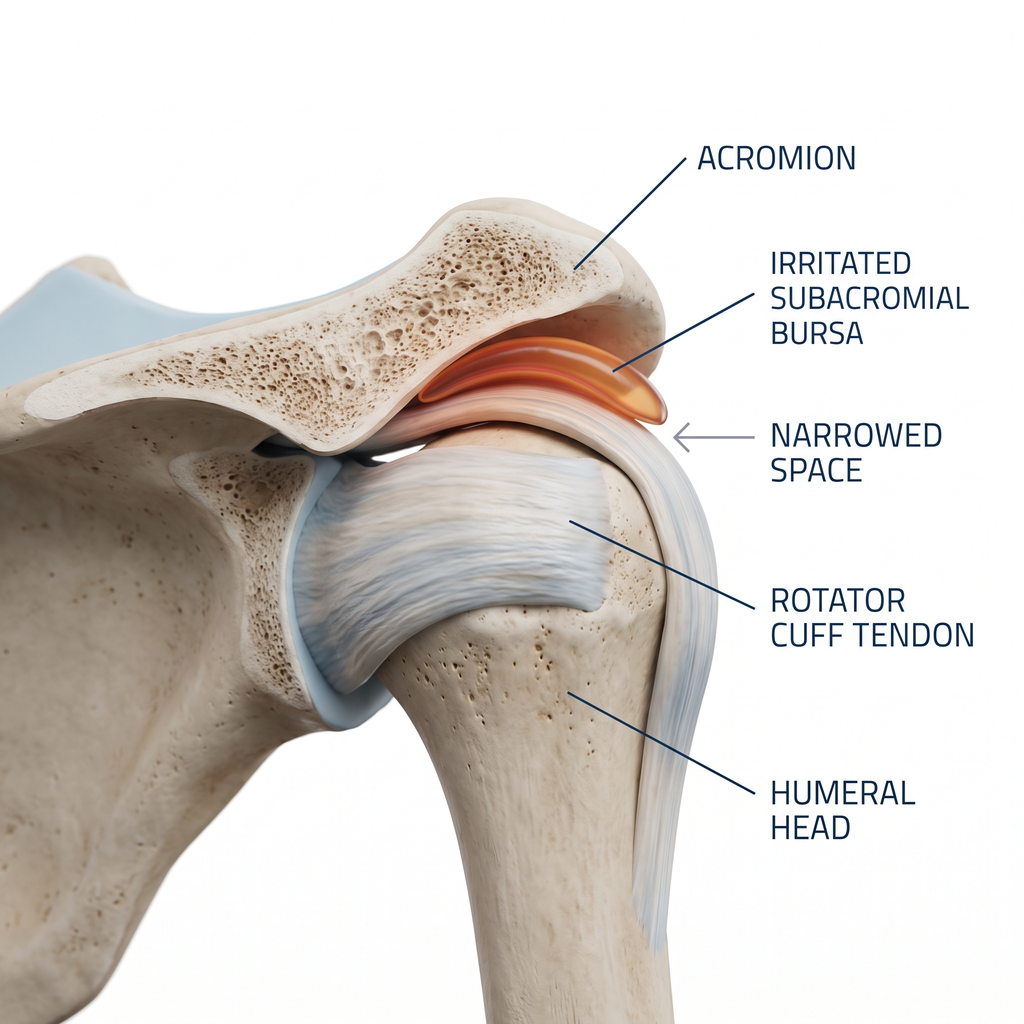
Impingement happens when tendons and a fluid-filled cushion called the bursa are pinched under the bony roof of the shoulder. Bursitis is inflammation of that cushion. Both can cause pain when raising the arm. Most cases are first treated with rest, medication, activity changes and exercises. Arthroscopy is usually discussed only when symptoms continue despite a proper trial of non-surgical care.
Selected Cartilage Damage and Loose Bodies
Small fragments of cartilage or bone can float inside the joint and cause catching or locking. Arthroscopy can often assess and remove loose bodies and treat selected cartilage injuries, depending on their size and location. Widespread shoulder arthritis is a different situation and may need other treatment options.
When Is Shoulder Arthroscopy Recommended?
Arthroscopy is usually recommended when a confirmed structural problem causes persistent pain, weakness or instability and non-surgical treatment has not helped enough, or when an injury needs early repair.
Your doctor combines your symptoms, a physical examination and imaging such as X-ray or MRI to reach a diagnosis. Physiotherapy, anti-inflammatory medication, activity modification and sometimes injections are often tried first. Some situations call for earlier specialist review, such as a traumatic tear in an active person, repeated dislocations or sudden loss of arm strength after an injury. Surgery is not automatically the best option for every patient.
Shoulder Arthroscopy vs Non-Surgical Treatment
Neither approach is better for everyone, and the evidence is mixed. A meta-analysis of seven randomised trials (326 patients) found surgery gave slightly better pain and function scores than physiotherapy for degenerative rotator cuff tears at one year, but the difference did not reach the level considered clinically important. These are group averages. Your own outcome depends on your condition, age, goals and rehabilitation.
| Treatment approach | Common purpose | Important considerations |
| Physiotherapy and exercise | Restore strength, movement and shoulder control | Often the first step; needs regular practice; may be enough for many partial tears and impingement |
| Medication, rest and activity changes | Reduce pain and inflammation | Short-term relief; does not repair a torn structure |
| Injections (when advised) | Settle pain so rehabilitation can progress | Relief may be temporary; use is individualised |
| Arthroscopic surgery | Repair or treat a structural problem confirmed by examination and imaging | Small incisions; needs anaesthesia and rehabilitation; carries surgical risks |
| Open surgery | Treat complex or very large problems when keyhole technique is unsuitable | Larger incision; chosen case by case |
Arthroscopy generally uses smaller incisions than open surgery, and AAOS notes that recovery is often faster, although full recovery can still take weeks to months.
What to Expect After Shoulder Arthroscopy
Recovery is gradual and depends on the procedure performed and how well the tissue heals. A simple clean-up usually needs shorter rehabilitation than a tendon or labral repair, which must be protected while it heals.
- Pain and swelling: managed with prescribed medication, ice and positioning advice.
- Sling: often prescribed for a period after repairs; your surgeon will advise how long.
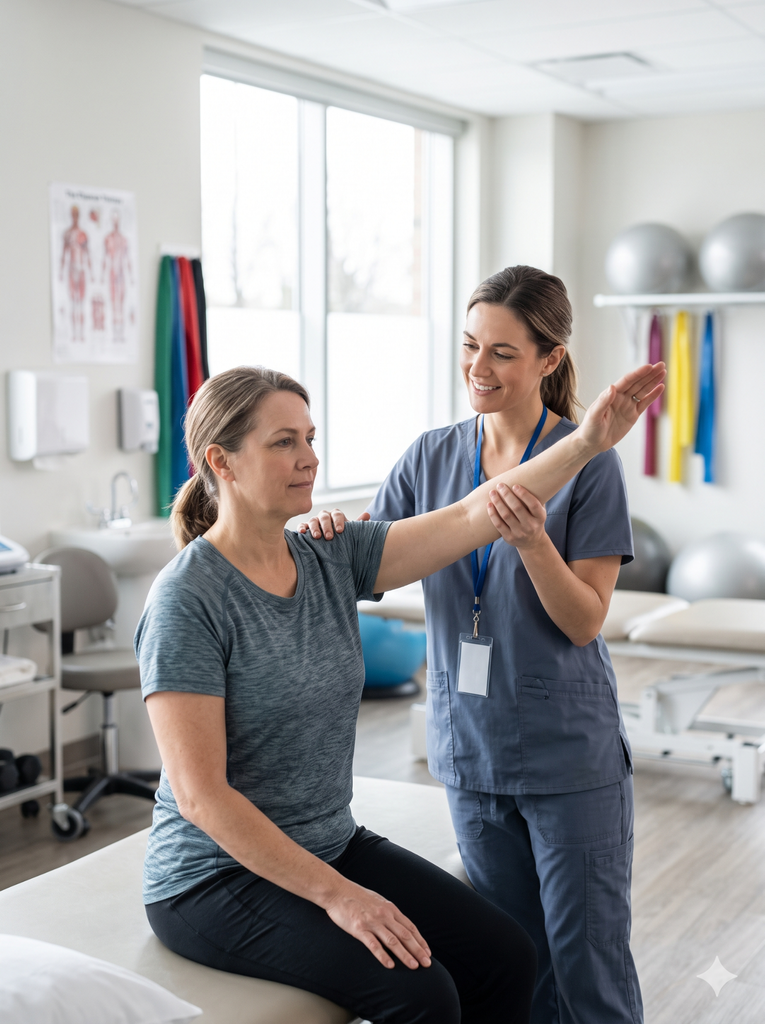
- Physiotherapy: starts with gentle movements and progresses to strengthening; following the plan matters.
- Daily activities: return gradually; driving, lifting and sport depend on your surgeon’s advice.
Because timelines differ from person to person, avoid comparing your progress with others.
When Should You Consult an Orthopedic Doctor?
Book a routine assessment if shoulder pain lasts more than a few weeks, disturbs your sleep, limits daily tasks, or if the shoulder feels weak, stiff or unstable.
Seek urgent medical attention for:
- Severe pain after a fall or accident
- A visibly deformed shoulder or a suspected dislocation
- Inability to move the arm
- New weakness, numbness or tingling in the arm or hand
- Sudden swelling with fever
If symptoms persist, you can consult an orthopedic specialist in Indore. Dr. Tarkit Modi’s clinic lists shoulder arthroscopy among its services, and a clinical evaluation can help decide whether non-surgical care or surgery suits your situation
FAQs
What is shoulder arthroscopy used for?
It is used to diagnose and treat problems inside the shoulder joint through small incisions. Common uses include repairing rotator cuff tears and labral tears, stabilising a shoulder that keeps dislocating, treating selected impingement cases and removing loose fragments. Whether it is suitable depends on your diagnosis and examination findings.
Which shoulder conditions can be treated with arthroscopy?
Conditions include rotator cuff tears, labral and SLAP tears, shoulder instability, recurrent dislocation, persistent impingement or bursitis, and selected cartilage injuries or loose bodies. Not every case in these groups needs surgery, and some complex problems may need a different operation.
Is shoulder arthroscopy always necessary for a rotator cuff tear?
No. Many rotator cuff tears are first managed with physiotherapy, medication and activity changes. Surgery is more likely to be discussed for larger tears, injury-related tears, or when symptoms persist despite rehabilitation. Your age, activity level and scan findings all influence the decision.
How long does recovery after shoulder arthroscopy take?
There is no single timeline. Recovery depends on the procedure and tissue healing, and a repair usually takes longer than a simple clean-up. AAOS says full recovery can take weeks to months. Your surgeon and physiotherapist will set milestones for your case.
Is shoulder arthroscopy better than physiotherapy?
Not universally. For some conditions, such as degenerative rotator cuff tears, studies show similar results at around one year. For others, like repeated dislocations or acute tears, surgery may be more appropriate. The better choice depends on your diagnosis, goals and response to treatment.
What are the possible risks of shoulder arthroscopy?
As with any surgery, risks include infection, bleeding, stiffness, nerve or blood vessel injury (uncommon), anaesthesia-related problems, and incomplete pain relief or a repaired tendon not healing. Your surgeon should explain risks specific to your procedure before you consent.
When should I consult an orthopedic doctor for shoulder pain?
See a doctor if pain lasts more than a few weeks, disturbs sleep, or comes with weakness or instability. Seek urgent care after a significant injury, if the shoulder looks deformed, or if you have new numbness, weakness or inability to move the arm.
11. SOURCES (confirm each URL and year before publishing)
- AAOS OrthoInfo, Shoulder Arthroscopy: https://www.orthoinfo.org/treatment/shoulder-arthroscopy/ (used for when arthroscopy is considered, conditions treated, and recovery taking weeks to months; excerpt only)
- Rotator cuff failure systematic review, Cureus, published 3 July 2026, DOI 10.7759/cureus.111998: https://www.ncbi.nlm.nih.gov/pmc/articles/PMC13429212/ (the over-20% prevalence figure comes from this review’s summary of population imaging studies)
- Conservative management vs surgical repair in degenerative rotator cuff tears, systematic review and meta-analysis (7 studies, 326 patients), European Review for Medical and Pharmacological Sciences: https://europeanreview.org/?p=24619 (publication year not shown in my results, so please confirm it)
- Counterpoints on mixed evidence: Huisstede et al., Manual Therapy 2011: https://repub.eur.nl/pub/23723 and a meta-analysis at https://pubmed.ncbi.nlm.nih.gov/27385156/ (background only, not cited in the blog)