Best Bilateral Hip Replacement Surgery in Indore
Home » Other Services » Best Bilateral Hip Replacement Surgery in Indore
Best Bilateral Hip Replacement Surgery in Indore
Simultaneous vs Staged Bilateral Hip Replacement
Before recommending a double hip replacement surgery, an orthopedic specialist in Indore will decide between two approaches:- Simultaneous Surgery: Both hips are replaced in one operation under a single anesthesia, meaning one hospital stay and one recovery period. This is generally suited to younger, healthier patients.
- Staged Surgery: The two hips are operated on separately, usually weeks to a few months apart, reducing strain on the body during each procedure. This is often preferred for older patients or those with additional health conditions.
Reasons for Bilateral Hip Damage
For the following causes, an orthopedic specialist in Indore could suggest bilateral hip replacement:- Bilateral Osteoarthritis: Age-related wear and tear that breaks down cartilage in both hips at a similar pace.
- Rheumatoid Arthritis: An autoimmune disease that typically damages joints symmetrically on both sides of the body.
- Avascular Necrosis: Reduced blood supply affecting both hip bones, causing bone tissue to weaken and collapse.
- Developmental Hip Dysplasia: Abnormal development of both hip joints that leads to early, progressive arthritis.
- Ankylosing Spondylitis: An inflammatory condition that stiffens and damages both hip joints over time.
The Signs of a Bilateral Hip Replacement
To ascertain whether a double hip replacement surgery is necessary, patients who exhibit the following symptoms should speak with an orthopedic doctor in Indore:- Persistent pain in both hips that gets worse with time.
- Stiffness or reduced range of motion on both sides.
- Difficulty walking, climbing stairs, or carrying out regular tasks.
- Pain in both hips that continues even while resting or sleeping.
- Trouble putting on shoes, sitting cross-legged, or getting in and out of a car.
- Little to no relief from medication, physiotherapy, or injections over time.
The Procedure for Surgery
The multi-step process of bilateral hip replacement calls for careful planning and precision. Here is a summary:- Preoperative Assessment: A thorough assessment, including blood and imaging tests, to confirm the patient’s fitness for surgery and decide between a simultaneous or staged approach.
- Anesthesia: Spinal or general anesthesia is administered to guarantee a pain-free procedure.
- Joint Access and Removal of Damaged Bone: An incision is made to access the hip joint, and the damaged ball and socket are carefully removed.
- Implant Placement: Durable metal, ceramic, or plastic components are firmly placed to recreate a functioning hip joint.
- Repeating the Process: In a single-session double hip operation, the same steps are repeated on the second hip immediately after the first.
- Closure and Recovery: Once the incisions are closed, the patient is transferred to recovery for close observation.
Benefits of Bilateral Hip Replacement
- Pain Relief: Gets rid of the ongoing discomfort caused by damage in both hip joints.
- Balanced Mobility: Restores movement evenly on both sides, avoiding the strain of walking with one healthy and one damaged hip.
- One Recovery Journey: A simultaneous procedure means going through rehabilitation once instead of twice.
- Extended Joint Life: Modern implants used in bilateral hip replacement can last 15 to 20 years or longer with proper care.
Frequently asked questions
Bilateral hip replacement refers to replacing both hip joints, either in one surgery (simultaneous) or in two closely planned surgeries (staged). “Two separate hip replacements” typically means single hip surgeries done months or years apart, unrelated in planning. A staged bilateral approach is medically coordinated, usually within weeks to a few months, as part of one treatment plan.
Yes, for suitable candidates. Simultaneous double hip replacement surgery is generally safe for younger patients in good overall health, with normal cardiac and pulmonary function. Dr. Modi conducts a thorough pre-surgical evaluation to confirm whether a patient can safely undergo both replacements in one session, or whether a staged approach is a better fit.
Hospital stay is usually 4–7 days, with assisted walking starting within 24–48 hours. Most patients resume light daily activities within 6–8 weeks and see continued improvement over 3–6 months, similar to single hip replacement recovery but managed across both joints at once.
Yes. A structured physiotherapy program is essential for regaining strength, balance, and range of motion in both hips simultaneously. Dr. Modi’s team designs a rehabilitation plan specific to bilateral recovery, since both sides are healing and building strength at the same time.
Dr. Modi evaluates each hip individually through clinical examination and imaging (X-rays/MRI). If both hips show significant joint damage causing pain and restricted movement, a bilateral hip replacement is usually recommended. If only one hip is severely affected, a single-sided total hip replacement may be sufficient.
Recovery varies by fracture type and location. Simple fractures may heal in 6-8 weeks, while complex fractures can take 3-6 months. Complete healing and remodeling may continue for up to a year.
Modern hip implants used in bilateral procedures are built to last 15–20 years or longer, depending on implant material, activity level, and overall bone health. Regular follow-ups with your orthopedic surgeon help monitor implant condition over the years.
Pain levels are managed the same way regardless of whether one or both hips are operated on, using a combination of anesthesia, medication, and post-operative pain management protocols. Some patients report that recovering from both hips at once feels more balanced than managing one healthy and one operated hip, since neither side is left compensating for the other.
Dr. Modi holds advanced fellowship training in joint replacement (FIJR) and arthroscopy (FIAS), with over 12 years of experience and a strong track record in complex procedures, including simultaneous and staged bilateral hip replacements. His patient-centered approach ensures a personalized surgical plan and dedicated rehabilitation support for both hips.
Book an Appointment
Phone
+91-8959000069
drmoditarkit@gmail.com
Dr. Modi's Joint and Trauma Clinic Indore
Gr. Floor, Dr.Modi's Joint And Trauma Clinic, 5-FA, Mahadev Totla Nagar Rd, nr. Bengali Square, Mahadeo Totla Nagar, Scheme 94, Indore, Madhya Pradesh - 452016
Timings 09:00am to 11:00am & 07:00pm to 09:00pm
Suyash Hospital Indore
Suyash Hospital, AB Rd, opposite MGM medical College, South Tukoganj, Indore, Madhya Pradesh - 452001
Timings 11:00am to 01:00pm
Expert Fracture Surgery in Indore by Dr. Tarkit Modi
Comprehensive Fracture Surgery in Indore: Advanced Treatment for All Types of Bone Fractures
Fracture surgery in Indore has advanced significantly with modern techniques and expert orthopedic care available at Dr. Modi’s Joint Clinic. Dr. Tarkit Modi, a leading orthopedic surgeon, specializes in comprehensive fracture management, offering both surgical and non-surgical treatments for all types of bone fractures. Whether dealing with simple fractures or complex trauma cases, patients receive personalized care using state-of-the-art technology and minimally invasive techniques to ensure optimal healing and faster recovery.
Fracture surgery in Indore encompasses various treatment approaches depending on the type, location, and severity of the fracture. Dr. Modi’s expertise covers everything from casting and splinting for simple fractures to advanced surgical procedures like open reduction and internal fixation (ORIF) for complex cases. The clinic’s comprehensive approach ensures that each patient receives the most appropriate treatment for their specific condition, promoting proper bone alignment, healing, and restoration of function.
Understanding Open Fracture Surgery: Emergency Care for Complex Injuries
Open fracture surgery represents one of the most critical areas of orthopedic trauma care, requiring immediate intervention to prevent complications. Open fractures, also known as compound fractures, occur when the broken bone pierces through the skin, creating an open wound that significantly increases the risk of infection. Dr. Modi’s clinic provides emergency care for open fractures, implementing urgent surgical protocols that include thorough debridement, irrigation, and stabilization procedures.
The management of open fracture surgery follows established protocols that begin with immediate wound cleaning and debris removal. Dr. Modi employs advanced surgical techniques, including debridement to remove contaminated tissue, copious irrigation with sterile solutions, and immediate antibiotic administration to minimize infection risk. The surgical approach may involve external fixation for initial stabilization, followed by internal fixation once the soft tissues have healed adequately.
Open fracture surgery outcomes depend heavily on the timing of intervention and the expertise of the surgical team. Studies indicate that antibiotic administration within 66 minutes of injury can reduce infection rates to nearly zero, emphasizing the importance of prompt treatment. Dr. Modi’s clinic maintains readiness for emergency fracture cases, ensuring that patients receive immediate care when time-critical situations arise.
Advanced Fracture Surgery Techniques and Procedures
Modern fracture surgery encompasses a wide range of surgical techniques tailored to specific fracture patterns and patient needs. Dr. Modi utilizes various approaches, including open reduction and internal fixation (ORIF), external fixation, intramedullary nailing, and minimally invasive techniques. Each surgical method is selected based on factors such as fracture location, complexity, patient age, and overall health status.
Fracture surgery procedures typically involve precise reduction of bone fragments followed by secure fixation using specialized implants. Internal fixation methods include plates and screws for surface fixation, intramedullary rods for long bone fractures, and specialized implants for joint-involving fractures. External fixation may be employed for contaminated wounds, severe soft tissue damage, or as a temporary measure before definitive internal fixation.
The success of fracture surgery depends on achieving anatomical reduction, stable fixation, and early mobilization when appropriate. Dr. Modi’s approach emphasizes precision in surgical technique, appropriate implant selection, and comprehensive post-operative care to optimize healing outcomes. Advanced imaging guidance and surgical planning contribute to improved accuracy and reduced complications in complex fracture cases.
Recovery and Rehabilitation After Fracture Surgery
Recovery from fracture surgery in Indore follows a structured timeline that varies depending on the type of fracture and surgical procedure performed. Most fractures heal within 6-8 weeks, though larger bones like the femur may require 3-6 months for complete healing. The healing process occurs in three distinct phases: inflammatory (first 1-2 weeks), reparative (2-6 weeks), and remodeling (months to years).
Post-operative care includes pain management, wound care, and graduated return to activity under Dr. Modi’s supervision. Physical therapy typically begins within the first few weeks after surgery, focusing on maintaining range of motion and preventing stiffness. Weight-bearing restrictions may apply initially, with gradual progression as healing advances and bone strength returns.
Factors that influence recovery include patient age, overall health, bone quality, and adherence to post-operative instructions. Dr. Modi provides personalized rehabilitation plans that optimize healing while minimizing complications. Nutrition plays a crucial role in bone healing, with adequate protein, calcium, vitamin D, and other nutrients supporting the recovery process.
Why Choose Dr. Tarkit Modi for Fracture Surgery in Indore
Dr. Modi’s Joint Clinic stands out as a premier destination for fracture surgery in Indore due to several key advantages. Dr. Tarkit Modi brings extensive experience in treating complex fractures using advanced surgical techniques and modern technology. The clinic’s patient-focused approach ensures individualized treatment plans tailored to each patient’s specific needs and lifestyle requirements.
The clinic offers comprehensive fracture care, including emergency services, advanced surgical options, and complete rehabilitation programs. State-of-the-art equipment and minimally invasive techniques contribute to improved outcomes with reduced pain and faster recovery times. Dr. Modi’s expertise in both traditional and cutting-edge surgical methods ensures that patients receive the most appropriate treatment for their condition.
Dr. Tarkit Modi’s expertise in fracture surgery in Indore provides patients with access to comprehensive orthopedic trauma care. From emergency open fracture surgery to complex reconstructive procedures, Dr. Modi’s Joint Clinic delivers exceptional surgical outcomes with personalized care and advanced treatment options. Contact the clinic today to schedule a consultation for expert fracture management and surgical care.
Your Trusted Partner in Joint Health and Trauma Care
Best Shoulder, Hip, Knee, and Orthopedic Surgeon in Indore
Restore mobility and live pain-free with advanced solutions in joint replacement, arthroscopy, and trauma care.
Years of Experience
Successful Surgeries
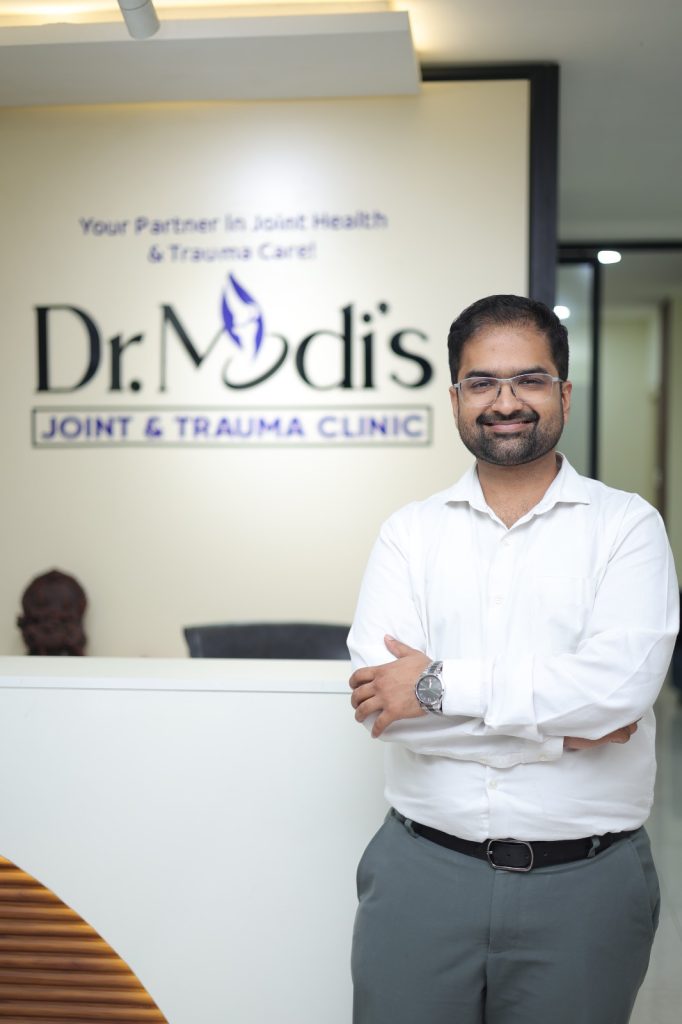
You're just 4 steps away from relieving your pain and reclaiming your life!
Make an Appointment
Get a Consultation
Get Treatment
Enjoy Pain-Free Life
What Our Patient Saying
Book an Appointment with Dr. Tarkit Modi -Orthopedic Surgeon in Indore
For appointments or inquiries, please fill out the form below and we will respond promptly. Dr Tarkit Modi is a trusted orthopedic surgeon in Indore providing expert care.
Phone
+91-8959000069
drmoditarkit@gmail.com
Dr.Modi's Joint and Trauma Clinic Indore
Gr. Floor, Dr.Modi's Joint And Trauma Clinic, 5-FA, Mahadev Totla Nagar Rd, nr. Bengali Square, Mahadeo Totla Nagar, Scheme 94, Indore, Madhya Pradesh - 452016
Timings 09:00am to 11:00am & 07:00pm to 09:00pm