

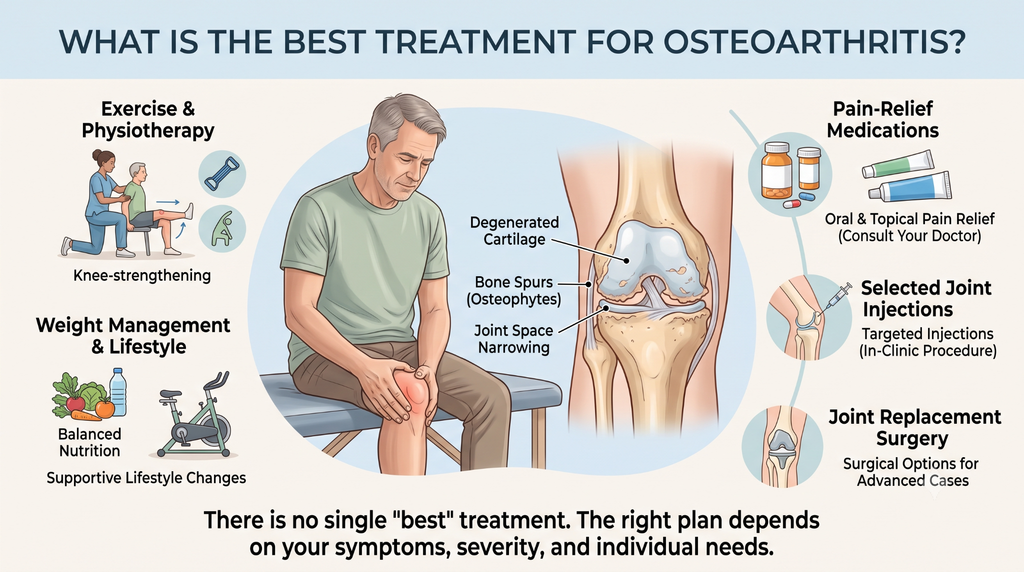
There is no single best treatment for osteoarthritis that suits everyone. The right plan depends on which joint is affected, how severe the symptoms are, and how much they limit your daily life. Most people start with exercise and physiotherapy, and weight management where it applies. Medicines can help with pain, and injections may be considered in selected cases. Joint replacement is usually discussed when advanced osteoarthritis causes significant pain and loss of function despite appropriate non-surgical treatment.
How Is Osteoarthritis Treated?
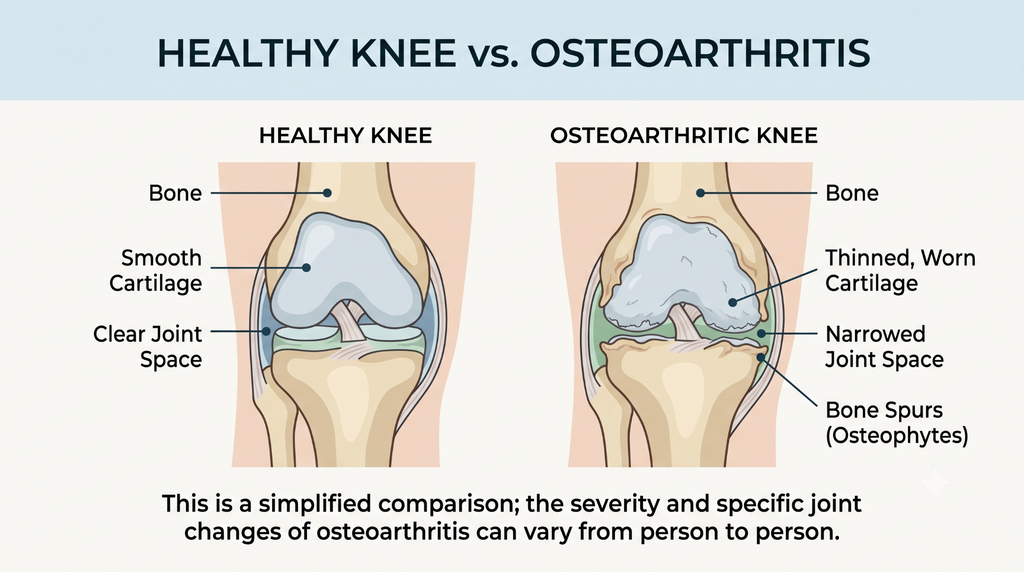
Osteoarthritis happens when the cartilage that cushions a joint gradually wears down. The bones may then rub against each other, which can cause pain, stiffness, and swelling. It most often affects the knees, hips, hands, and spine.
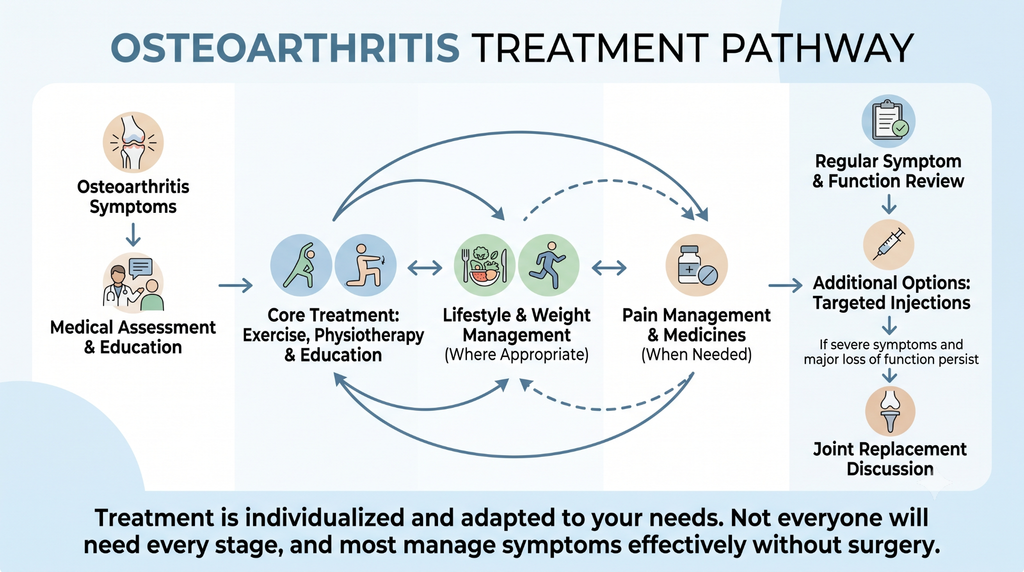
Treatment aims to reduce pain, keep the joint moving, and help you stay active. It does not usually reverse the joint changes already present. Current guidelines, including the NICE guideline on osteoarthritis (NG226), describe exercise, weight management where relevant, and education and support as the core of treatment. Medicines and procedures are added when needed.
Exercise and Physiotherapy for Osteoarthritis
Exercise is one of the most consistently recommended treatments for osteoarthritis. It may feel odd to move a painful joint, but strong muscles around the joint take load off the cartilage. Regular movement also helps with stiffness.
A physiotherapist can design a program that suits your joint and fitness level. This usually includes strengthening exercises, stretching, and general activity such as walking or cycling. NICE advises that exercise should be tailored to the person, and notes that supervised exercise is likely to benefit people more than unsupervised exercise.

Medicines for Osteoarthritis Pain
Medicines can ease pain so that you can keep exercising. They do not repair cartilage. Common categories include:
- Topical NSAIDs (gels or creams): NICE recommends offering these for knee osteoarthritis, and considering them for other joints.
- Oral anti-inflammatory medicines (NSAIDs): These may be considered if topical medicines are not enough. They can affect the stomach, kidneys, and heart in some people, so they need medical guidance.
- Other pain medicines: Their usefulness varies from person to person.
The right choice depends on your other health conditions and the medicines you already take. Please talk to a qualified doctor before starting any pain medicine regularly.
Weight Management and Lifestyle Changes
Extra body weight adds load on weight-bearing joints such as the knees and hips. For people living with overweight, NICE says that losing weight can reduce pain and improve function, and that any weight loss is likely to help. It also notes that losing around 10% of body weight is likely to be better than 5%.
This does not mean weight is the cause of your osteoarthritis, and it should never be a source of blame. Small, steady changes in food and daily activity are often a realistic place to start. Walking aids such as a cane, or supportive footwear, can also reduce strain on a painful joint.

Injections for Osteoarthritis
Injections may be considered when pain continues despite exercise and other measures. A corticosteroid injection into the joint can reduce inflammation and give short-term pain relief, which may make it easier to take part in physiotherapy. The relief is usually temporary, and injections do not rebuild cartilage.
Other injection types, such as hyaluronic acid or platelet-rich plasma (PRP), are also discussed. Evidence for these varies between studies and between joints, so results are less predictable. Your orthopedic doctor can explain which option, if any, fits your situation.
Can Osteoarthritis Be Treated Without Surgery?
Yes, many people manage osteoarthritis without surgery for a long time. Exercise, physiotherapy, weight management, pain medicines, and sometimes injections can keep symptoms under control, especially in early and moderate osteoarthritis.
Non-surgical treatment may become less effective if the joint is badly damaged. Signs of this include constant pain, pain at night, major stiffness, or difficulty with walking and daily tasks. At that point, it is reasonable to ask whether surgery should be discussed.
Can Osteoarthritis Be Cured?
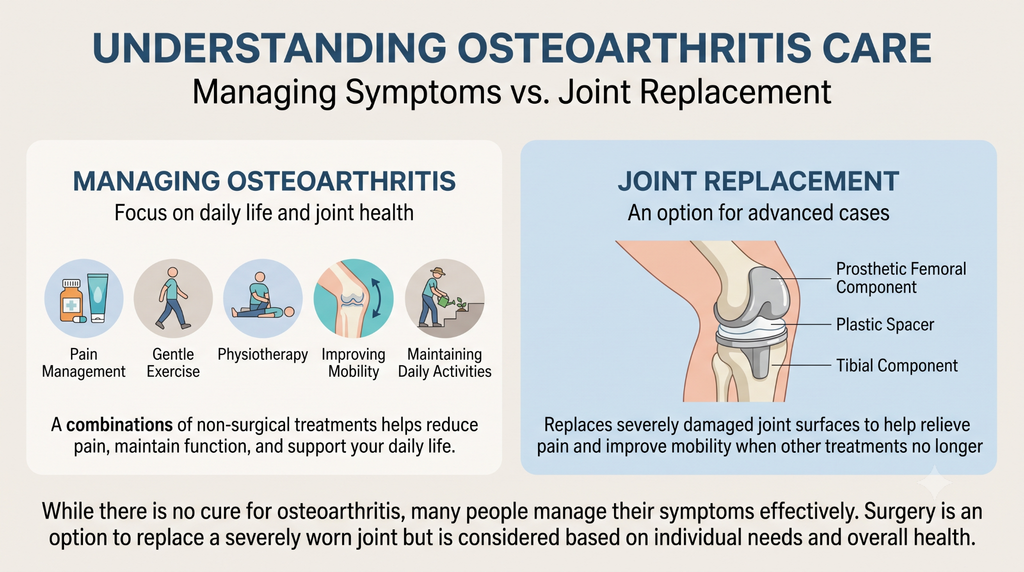
Osteoarthritis cannot currently be cured or reversed with any proven treatment. The aim of treatment is to control symptoms, protect function, and slow the impact on daily life. Joint replacement removes a badly damaged joint and replaces it with an implant, which is a different approach from curing the disease itself.
When Is Joint Replacement Considered for Osteoarthritis?
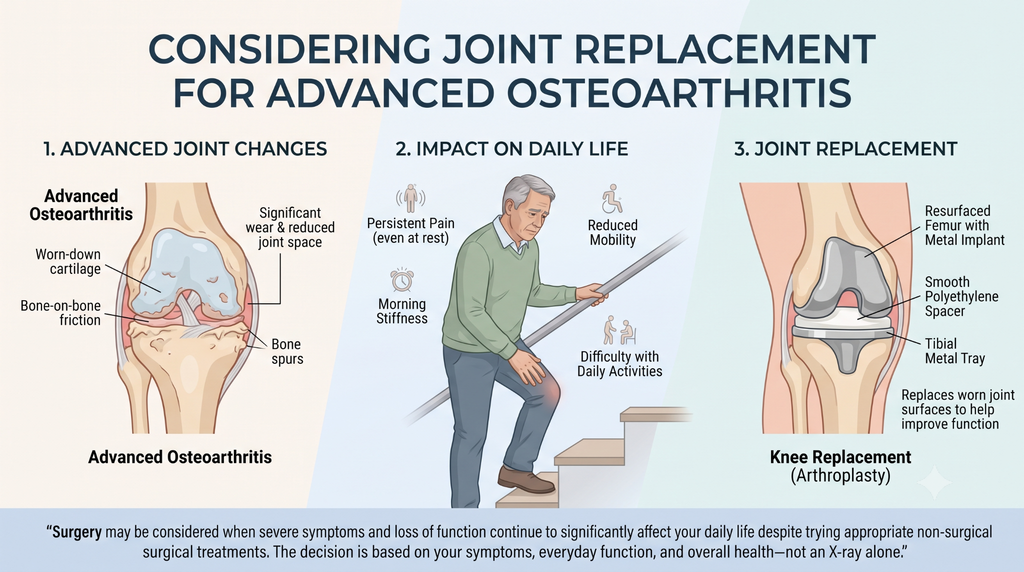
Joint replacement is considered when osteoarthritis causes substantial pain and loss of function that has not improved enough with appropriate non-surgical treatment. NICE advises considering referral for joint replacement when joint symptoms are substantially affecting quality of life.
The decision is based mainly on how you feel and function, not on X-ray findings alone. Some people with advanced changes on X-ray have mild symptoms, while others with milder changes have more pain.
- Knee replacement for osteoarthritis: may be considered when knee pain, stiffness, or deformity limits walking, stairs, or sleep despite other treatment.
- Hip replacement for osteoarthritis: may be considered when hip pain, often felt in the groin, limits walking, getting dressed, or rest.
Surgery has risks, and recovery takes time and effort. Your surgeon should explain these clearly before you decide.
How Does Osteoarthritis Treatment Change by Severity?
| Osteoarthritis situation | Common treatment approach |
| Mild or early symptoms | Exercise, physiotherapy, education, lifestyle measures, and appropriate pain management |
| Persistent symptoms | Review the diagnosis, optimize non-surgical treatment, and consider additional options such as injections |
| Advanced symptoms with loss of function | Specialist assessment and discussion of surgical options when appropriate |
Treatment does not always follow a fixed order. Some people move between stages, and some need different approaches for different joints.
How Do Doctors Decide Which Osteoarthritis Treatment Is Right for You?
An orthopedic doctor looks at the whole picture, not only the scan. Key factors include:
- Which joint is affected, and how severe the damage is
- Your symptoms and how they affect walking, sleep, work, and daily tasks
- Your age, general health, and any other medical conditions
- Your activity level and personal goals
- What you have already tried, and how well it worked
- Findings from the physical examination and, when needed, imaging such as an X-ray
NICE notes that osteoarthritis can often be diagnosed from your history and examination, and that X-rays are not always needed. The decision is shared between you and your doctor. Your goals matter as much as the scan.
Osteoarthritis Treatment in Indore
If you live in Indore and have joint pain that keeps coming back, an orthopedic doctor can help sort out the cause and explain your options. This applies to knee osteoarthritis treatment and hip osteoarthritis treatment alike. Dr. Tarkit Modi sees patients with osteoarthritis and can advise on whether continued non-surgical care or surgical options are more suitable for you.
When Should You See an Orthopedic Doctor for Osteoarthritis?
Consider an evaluation if you notice:
- Joint pain that lasts for weeks or keeps returning
- Stiffness that is getting worse
- Difficulty walking or climbing stairs
- Reduced range of movement
- Pain that disturbs sleep or daily activities
- Symptoms that continue despite exercise and self-care
Sudden severe pain, a hot and swollen joint, fever, or a joint that cannot bear weight needs prompt medical attention.
| Treatment option | Main purpose | When it may be considered | Important consideration |
| Exercise and physiotherapy | Reduce pain, improve strength and mobility | At all stages, usually from the start | Works best when done regularly; should be tailored to the joint |
| Medicines | Control pain and inflammation | When pain limits activity or exercise | Do not change the joint; need to be matched to your health and other medicines |
| Injections | Short-term pain relief | Persistent pain despite other measures | Relief is often temporary; evidence differs by injection type |
| Assistive devices (cane, braces, footwear) | Reduce load and improve stability | When walking or balance is affected | Useful as support, not a standalone treatment |
| Joint replacement | Replace a badly damaged joint to relieve pain and restore function | Advanced osteoarthritis with major symptoms despite non-surgical care | Major surgery with risks and a rehabilitation period |
FAQs
1. What is the best treatment for osteoarthritis?
There is no single best treatment for everyone. Most plans start with exercise, physiotherapy, and weight management where relevant, with medicines or injections added if needed. Joint replacement may be discussed when advanced osteoarthritis causes major pain and loss of function despite non-surgical care.
2. Can osteoarthritis be treated without surgery?
Yes. Many people control symptoms for years with exercise, physiotherapy, lifestyle changes, medicines, and sometimes injections. Surgery is usually considered only when these measures no longer give enough relief and daily life is significantly affected.
3. Can osteoarthritis be cured or reversed?
No proven treatment can currently cure or reverse osteoarthritis. Treatment focuses on reducing pain, keeping the joint moving, and protecting function. Joint replacement can relieve symptoms in advanced cases, but it replaces the damaged joint rather than curing the condition.
4. Is physiotherapy effective for osteoarthritis?
Physiotherapy is a core part of osteoarthritis care. A tailored program of strengthening and movement can reduce pain and improve function in many people. Results vary, and it works best when done consistently over time.
5. Can exercise make osteoarthritis better?
Exercise does not repair cartilage, but it can strengthen supporting muscles, ease stiffness, and reduce pain for many people. Gentle, regular activity is generally encouraged. If an exercise worsens pain, your physiotherapist can adjust it.
6. When does osteoarthritis require joint replacement?
Joint replacement is usually considered when pain, stiffness, or deformity substantially affects quality of life and non-surgical treatment has not helped enough. The decision depends on your symptoms and function, not X-ray findings alone.
7. What is the treatment for severe osteoarthritis?
Severe osteoarthritis is usually assessed by an orthopedic specialist. Options may include continued non-surgical care, injections for short-term relief, or joint replacement if pain and loss of function are major. The choice depends on your joint, health, and goals.
8. When should I see an orthopedic doctor for osteoarthritis?
See a doctor if joint pain lasts for weeks, stiffness is worsening, walking or stairs are becoming difficult, or pain affects sleep and daily activities. Sudden severe pain, fever, or a hot, swollen joint needs prompt medical attention.
Sources / References
- NICE guideline NG226: Osteoarthritis in over 16s: diagnosis and management (published October 2022) — core treatments, topical NSAIDs, weight-loss guidance, referral for joint replacement
- AAOS Clinical Practice Guideline: Management of Osteoarthritis of the Knee (Non-arthroplasty), third edition — non-surgical management
- Nonoperative Management Recommendations for Knee Osteoarthritis: A Review of Clinical Guidelines and Treatment Alternatives (PMC) — comparison of international guideline recommendations
- Google Search Central documentation and industry reporting on the FAQ rich result deprecation (May 7, 2026)