

If you’ve been told you may eventually need hip replacement but you’re not ready to move forward, you’re probably wondering what happens if you simply wait. The honest answer: it depends on your specific condition.
For some patients, delaying hip replacement treatment is medically reasonable mild-to-moderate hip arthritis can sometimes be managed for years with exercise, weight management, and other conservative care, and some research even suggests structured exercise programs can postpone the need for surgery.
For others, especially those with advanced joint damage, persistent pain, or worsening mobility, waiting may mean living with symptoms that increasingly affect daily life, and in some cases, added surgical complexity down the line. There’s no single answer that applies to everyone; it depends on your diagnosis, symptom severity, and how your hip has responded to treatment so far.
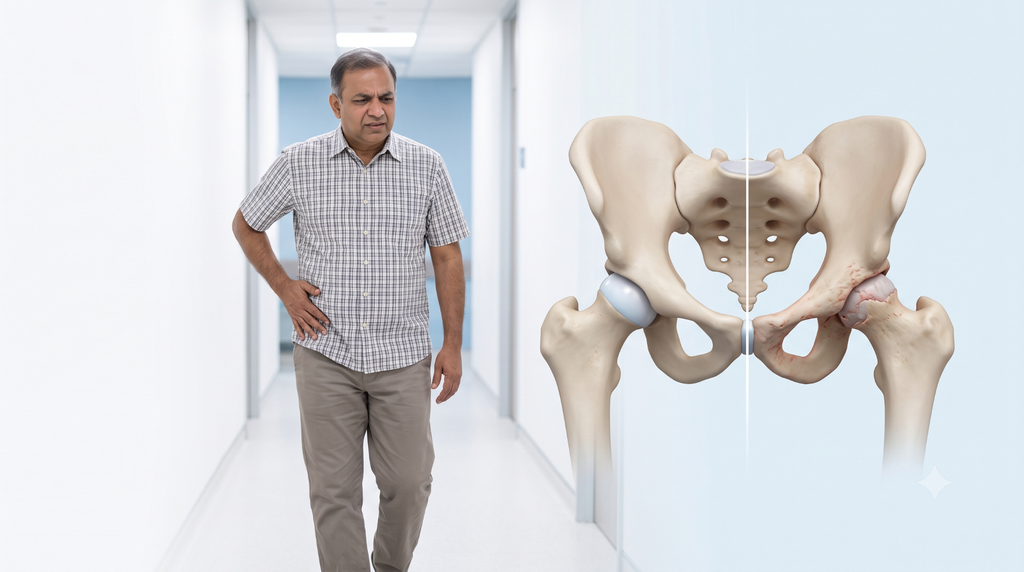
Can Delaying Hip Replacement Make Hip Pain Worse?
For some patients, yes, but not universally. Hip arthritis doesn’t progress at the same rate in everyone, and research following patients with hip osteoarthritis over time has found that only a portion of people with radiographic signs of arthritis eventually go on to need a hip replacement. That said, if your specific hip condition is actively worsening, more pain, more stiffness, less movement over time delaying treatment usually means living with those worsening symptoms for longer, rather than the underlying joint improving on its own.
How Does Hip Arthritis Progress Without Treatment?
Hip osteoarthritis involves gradual breakdown of the cartilage that cushions the joint. In some patients this progresses slowly over many years; in others it advances more quickly, particularly with continued high-impact activity or other joint stress factors.
Importantly, exercise itself does not damage the joint; some studies have found that structured, supervised exercise programs can actually help delay the need for hip replacement in patients with mild-to-moderate symptoms, rather than accelerating damage. This is why staying appropriately active, rather than avoiding movement out of fear, is often part of a doctor’s recommended approach.
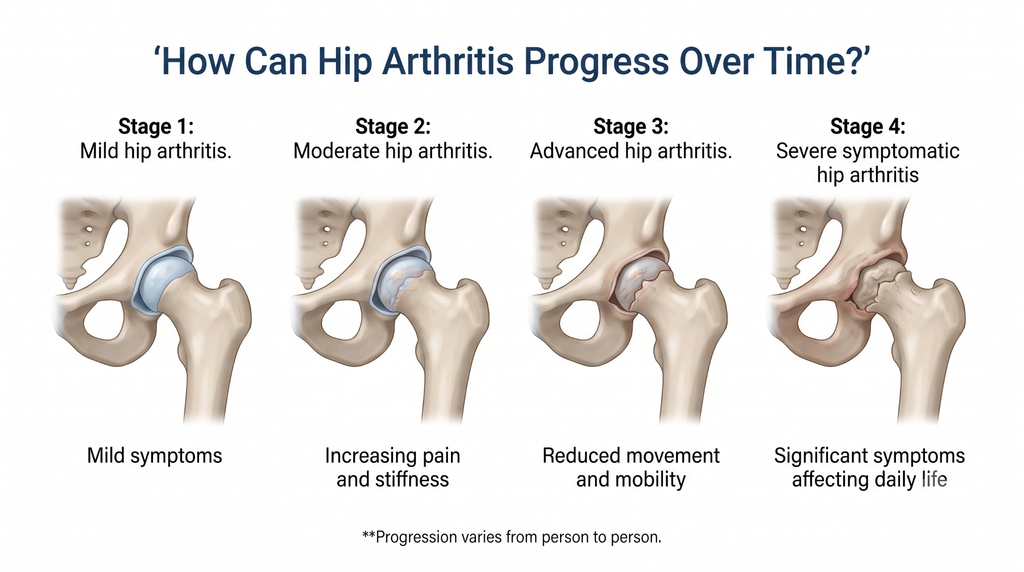
Can Delaying Hip Replacement Affect Mobility?
If the underlying joint damage continues to progress, reduced mobility is a common effect of untreated advanced hip arthritis stiffness, a shorter stride, and difficulty with movements like bending, squatting, or climbing stairs can all worsen over time. This isn’t automatic for everyone, but it’s one of the more consistent patterns seen when significant hip damage goes unaddressed for an extended period.
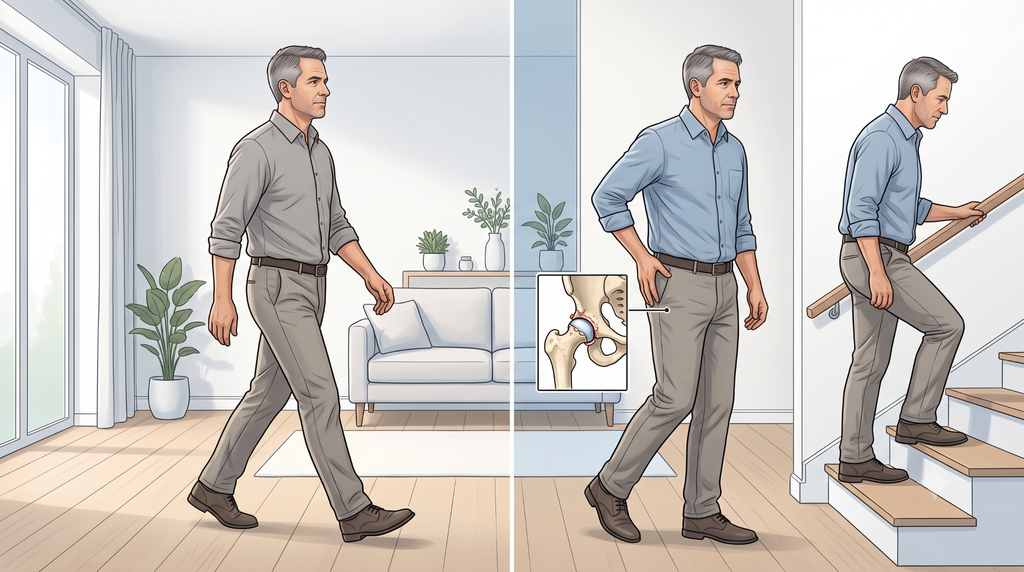
Can Delaying Hip Replacement Affect Daily Activities?
Yes, for patients whose hip condition is progressing, daily activities are often what’s affected first and most noticeably, walking longer distances, standing for extended periods, getting in and out of a car, putting on shoes and socks, or sleeping comfortably at night. Many patients describe gradually scaling back activities they enjoy simply to avoid pain, which can also affect overall fitness and quality of life over time.
Does Waiting Make Hip Replacement Surgery More Difficult?
This is a common concern, but the evidence doesn’t support a blanket answer. In some patients with significant, longstanding joint deformity or muscle weakness from years of reduced activity, surgery and rehabilitation can become more complex. In many other patients, particularly those with stable or slowly progressing arthritis, delaying surgery by choice doesn’t meaningfully change the technical difficulty of the operation itself.
What matters more is your specific joint anatomy, muscle condition, and overall health at the time of surgery, not simply how many months or years you waited. The orthopedic surgeon can assess whether your particular situation involves this kind of risk.
When Is Hip Replacement Treatment Usually Considered?
Hip replacement is typically considered when there is significant joint damage confirmed on imaging, combined with persistent pain, meaningful loss of mobility, and a noticeable impact on daily life, especially when appropriate non-surgical treatment hasn’t provided adequate relief. Age, activity level, and overall health also factor into the decision, but none of these alone determines whether surgery is necessary. It’s a combination of clinical findings and how the condition is actually affecting the person’s life.
Can You Manage Hip Problems Without Hip Replacement?
Many patients with mild-to-moderate hip arthritis manage their symptoms for extended periods without surgery. Common approaches include:
- Structured, appropriate exercise and physiotherapy to maintain strength and joint mobility
- Weight management, which reduces load on the hip joint
- Pain and anti-inflammatory medication, used under medical guidance
- Assistive devices like a cane, when helpful for stability and reducing joint strain
- Activity modification for movements that consistently worsen symptoms
These measures don’t reverse existing joint damage, but they can meaningfully improve comfort and function for a period of time, sometimes for years, depending on the individual.
When Should You See an Orthopedic Surgeon for Hip Pain?
It’s worth getting evaluated if hip pain is persistent, worsening, disturbing your sleep, or limiting activities you used to manage comfortably, even if you’re not sure you want surgery. An evaluation doesn’t commit you to any particular treatment; it simply gives you an accurate picture of what’s happening in your joint, so you can make an informed decision about whether continued conservative care or hip replacement treatment is the more appropriate next step.
When Should You Consult an Orthopedic Doctor in Indore?
If persistent hip pain, stiffness, or reduced mobility is starting to affect your daily routine, discussing your symptoms with an orthopedic specialist in Indore can help clarify where you actually stand whether that means continuing conservative management with monitoring, or considering hip replacement treatment. Dr. Tarkit Modi’s clinic can assess your hip condition and help you understand the options relevant to your specific case.
Comparison Table
| Situation | Possible Effect of Delay | What the Patient Should Consider |
| Mild symptoms | Often manageable with non-surgical care for a period | Regular monitoring and conservative treatment |
| Persistent pain | May increasingly interfere with sleep and daily activity | Review current treatment and reassess with a specialist |
| Increasing mobility problems | Daily tasks may become progressively harder | Orthopedic evaluation to assess joint condition |
| Severe symptoms despite treatment | Hip replacement may become the more appropriate option | Discuss timing and suitability with an orthopedic surgeon |
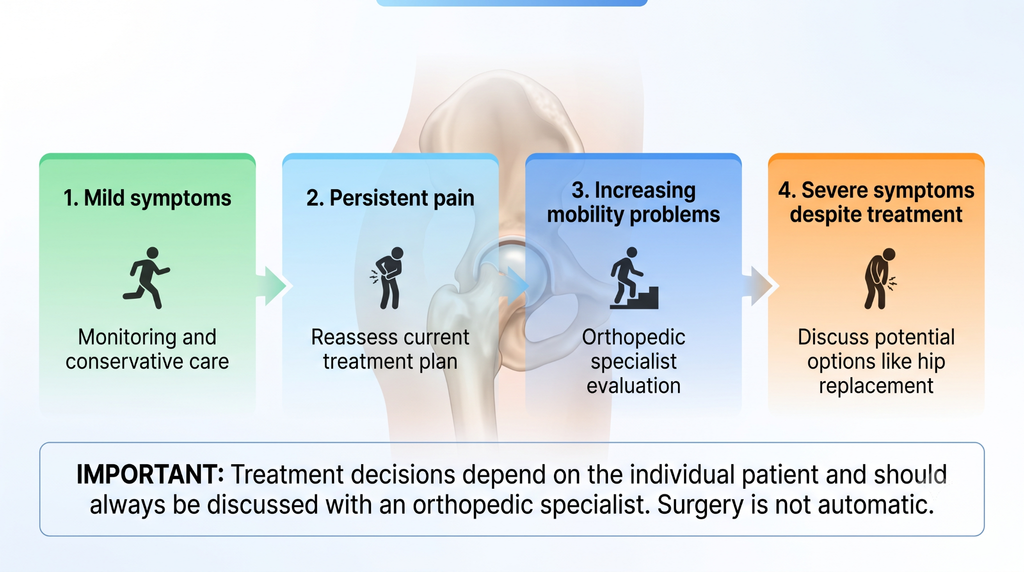
FAQs
1. What happens if you delay hip replacement?
It depends on your specific hip condition. Some patients manage well with conservative treatment for years, while others with progressing joint damage may experience worsening pain, stiffness, and reduced daily function the longer surgery is delayed.
2. Can delaying hip replacement make arthritis worse?
For some patients, yes, if the underlying arthritis is actively progressing, delaying treatment means living with worsening symptoms for longer. However, not everyone with hip arthritis progresses to needing replacement, and some research suggests appropriate exercise may even help delay surgery.
3. How do I know when I need a hip replacement?
This is usually based on a combination of persistent pain, significant joint damage on imaging, reduced mobility, and limited relief from non-surgical treatment. An orthopedic evaluation is the most reliable way to know where you stand.
4. Can hip pain be treated without surgery?
Yes, many patients manage hip pain through physiotherapy, appropriate exercise, weight management, medication, and assistive devices. These don’t reverse joint damage but can meaningfully improve comfort and function for a period of time.
5. Does delaying hip replacement affect mobility?
If the underlying joint damage is progressing, reduced mobility is a common effect over time, including stiffness and difficulty with movements like climbing stairs. This varies significantly between patients depending on how their specific condition progresses.
6. Can you wait too long for hip replacement?
For some patients with significant, longstanding joint deformity or muscle weakness, waiting can make surgery and rehabilitation more complex. This isn’t universal, though — it depends on the individual’s joint condition and overall health, which your surgeon can assess.
7. Does hip replacement become harder with age?
Age alone isn’t the determining factor overall health, joint condition, and muscle strength matter more. Research has shown that even patients with multiple long-term health conditions can have good outcomes from hip replacement when it’s clinically appropriate.
8. How long can someone live with severe hip arthritis?
This varies widely between individuals and depends on symptom severity, joint damage, and how well conservative treatment is working. Persistent, severe symptoms are a signal to get an orthopedic evaluation rather than something to simply endure indefinitely.
If persistent hip pain, stiffness, or reduced mobility is affecting your daily life, consider discussing your symptoms with an orthopedic specialist to understand whether continued non-surgical treatment or hip replacement treatment may be appropriate for your situation.