
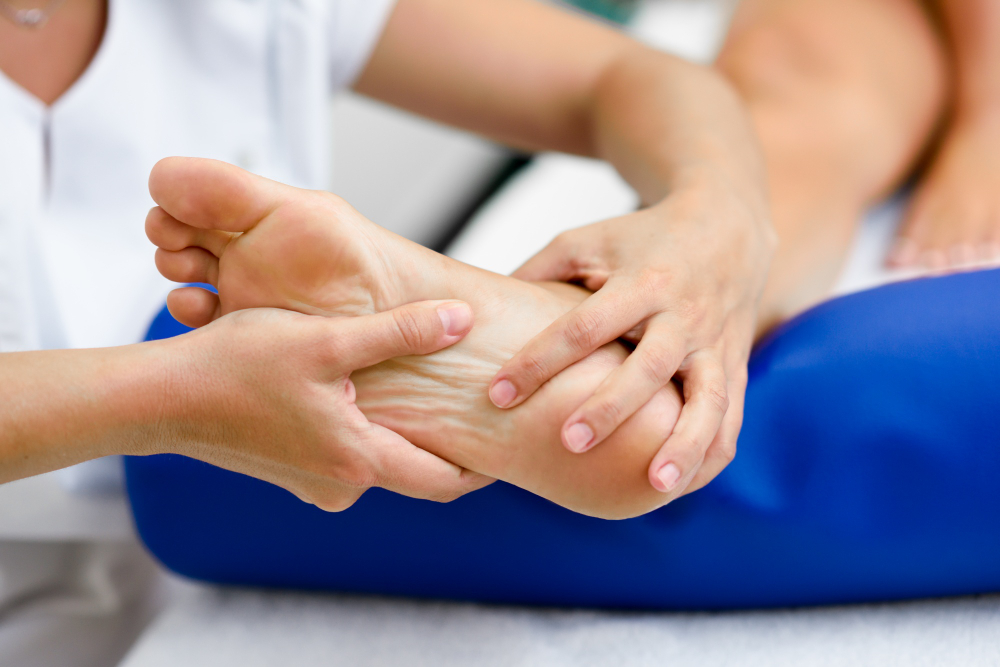
The best exercises for flat feet include the short-foot exercise, toe curls, towel scrunches, calf raises, heel walks, and balance exercises. These target the small muscles and tendons that support the foot arch, improving strength, stability, and comfort during standing and walking.
Overview
Exercises can help strengthen the muscles that support the foot arch and improve stability, balance, and comfort during daily movement. For flexible flat feet, exercises like the short-foot exercise have shown improvements in arch function and pain in clinical studies. However, exercises don’t reshape rigid flat feet or guarantee a permanent structural change, results vary by individual, and persistent pain should be evaluated by an orthopaedic doctor.
Flat feet are common, and for many people they cause no trouble at all. But if you’re dealing with foot fatigue, aching arches, or pain after standing or walking, targeted foot-strengthening exercises can genuinely help. Below is a practical, medically grounded guide to which exercises help, how to do them safely, and when flat feet need more than just exercise.
What Are Flat Feet?
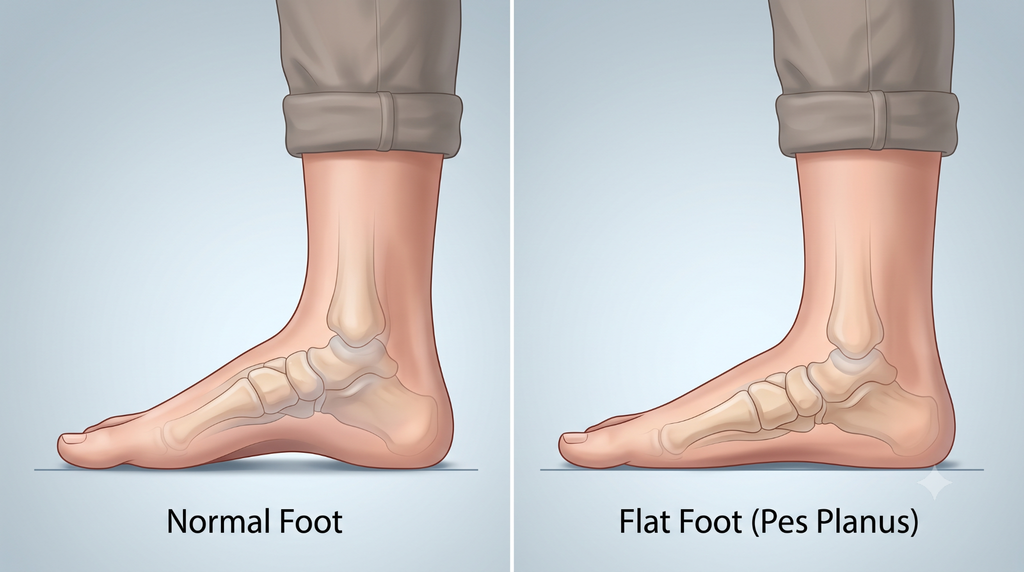
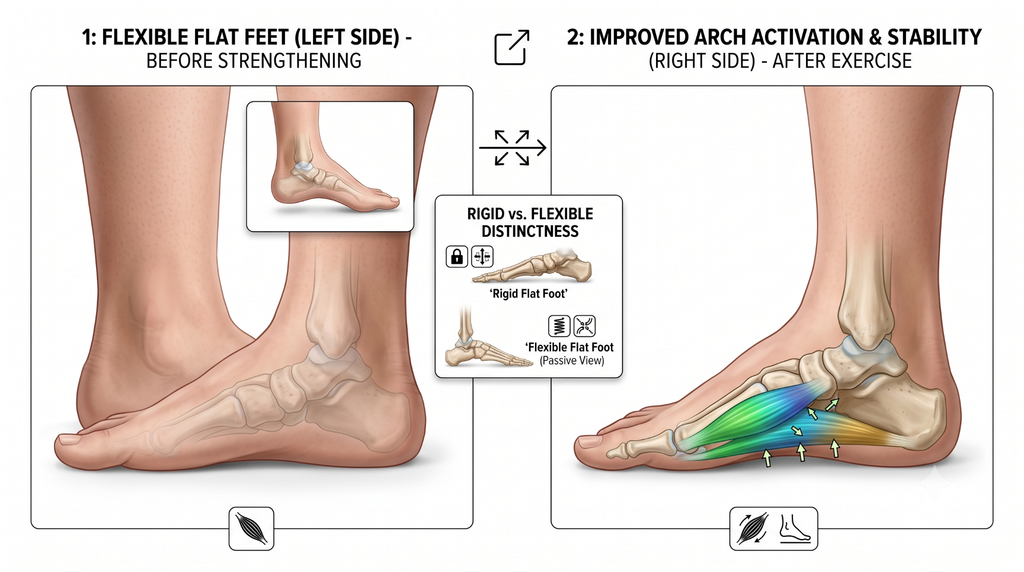
Flat feet (also called fallen arches) is a condition where the medial arch of the inner curve along the bottom of the foot is lower than usual or touches the ground when standing. Some people are born with flat feet, while others develop a flattened arch over time due to age, weight changes, tendon issues, or repetitive strain. Flat feet can be flexible (the arch appears when sitting but flattens on standing) or rigid (flat in both positions), and this distinction matters for treatment.
Can Exercises Help Flat Feet?
Yes , exercises can help strengthen the muscles that support the foot arch and improve stability, balance, and comfort during daily movement. However, exercises may not permanently change the underlying bone structure of every type of flat foot, especially rigid flat feet present from birth.
For flexible flat feet, research on short-foot and intrinsic foot muscle exercises has shown improvements in arch height, foot function, and pain levels in several small clinical studies. The evidence is genuinely encouraging, though results vary between individuals, and larger, more consistent research is still developing in this area.
Best Exercises for Flat Feet
These exercises target the small (intrinsic) muscles of the foot and the tendons that support the arch. Start gently, especially if you have pain, and build up gradually.
1. Short-Foot Exercise
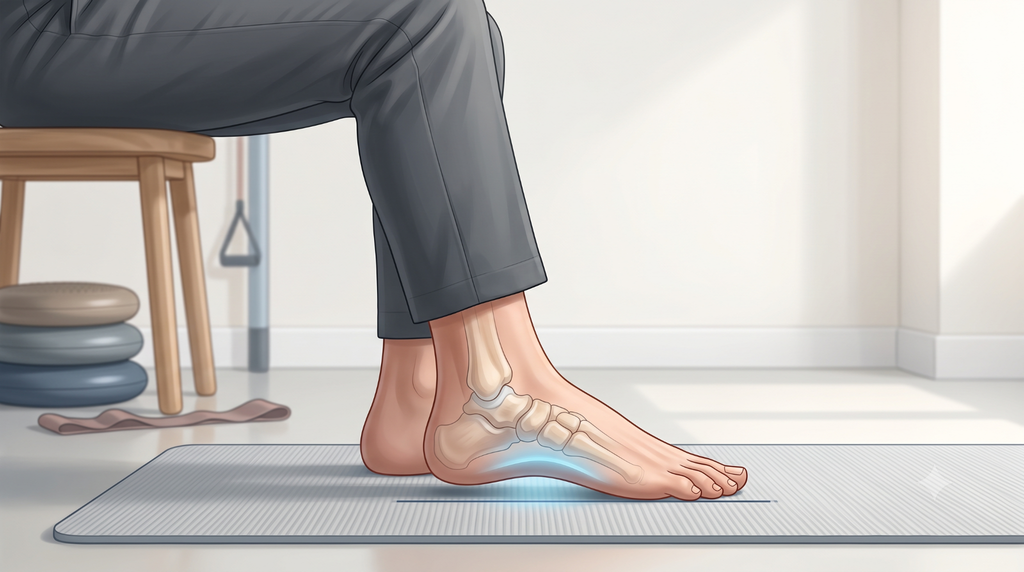
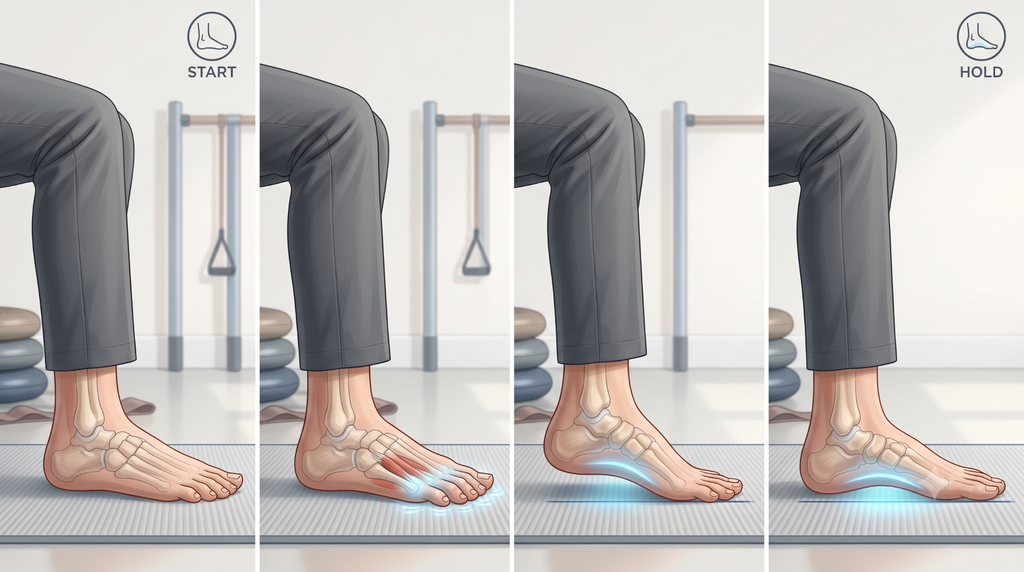
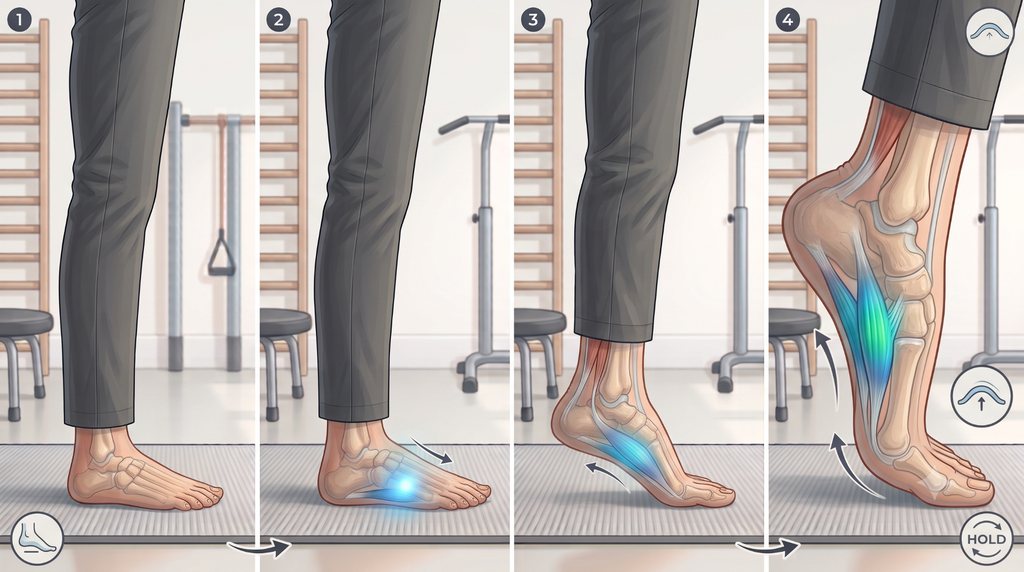
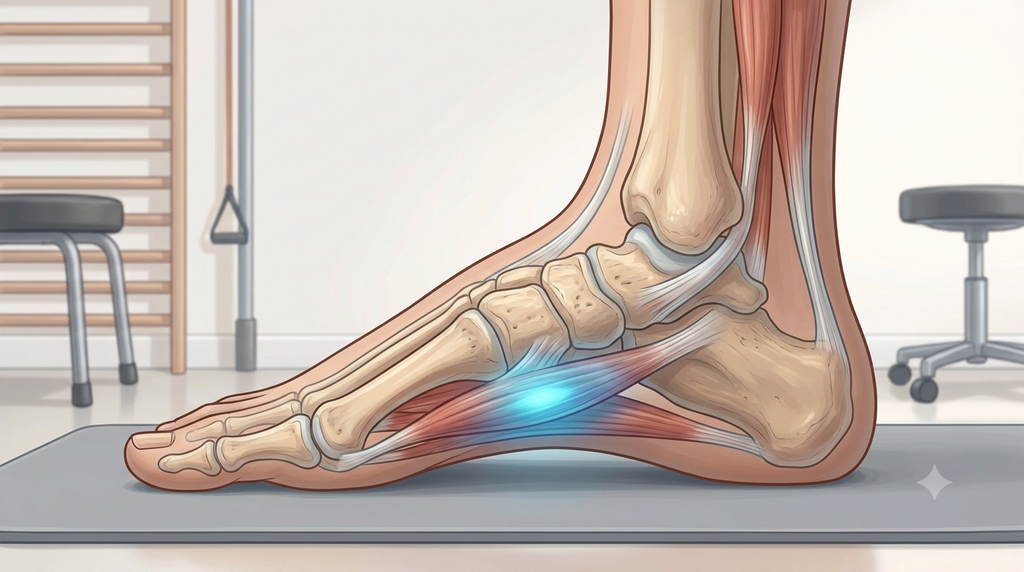
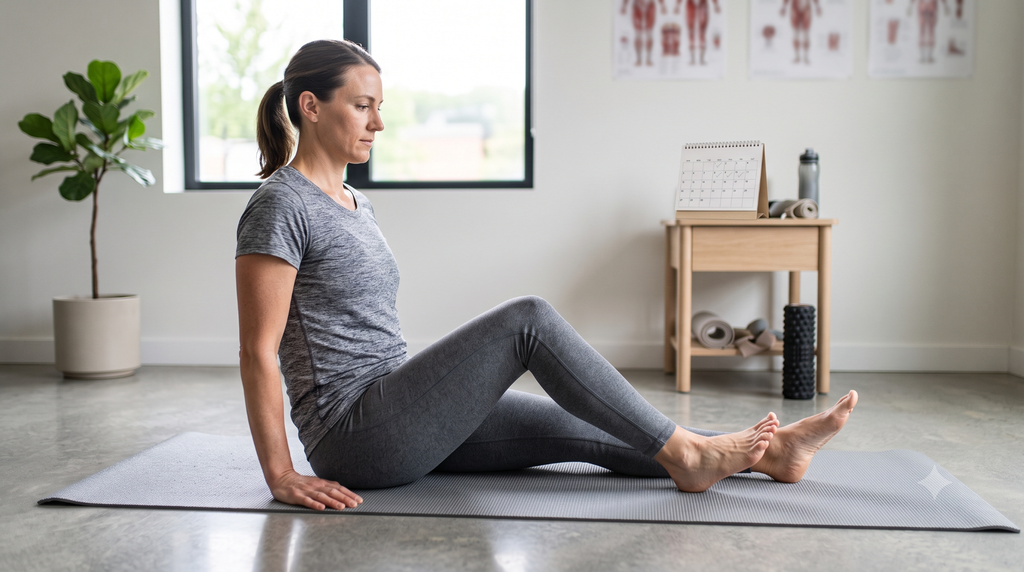
Sit or stand with your foot flat on the floor. Without curling your toes, try to shorten your foot by drawing the ball of your foot toward your heel, gently lifting the arch. Hold for 5 seconds, relax, and repeat 10 times per foot. This is one of the most studied exercises for flat feet and directly targets the muscles that support the arch.
2. Toe Curls
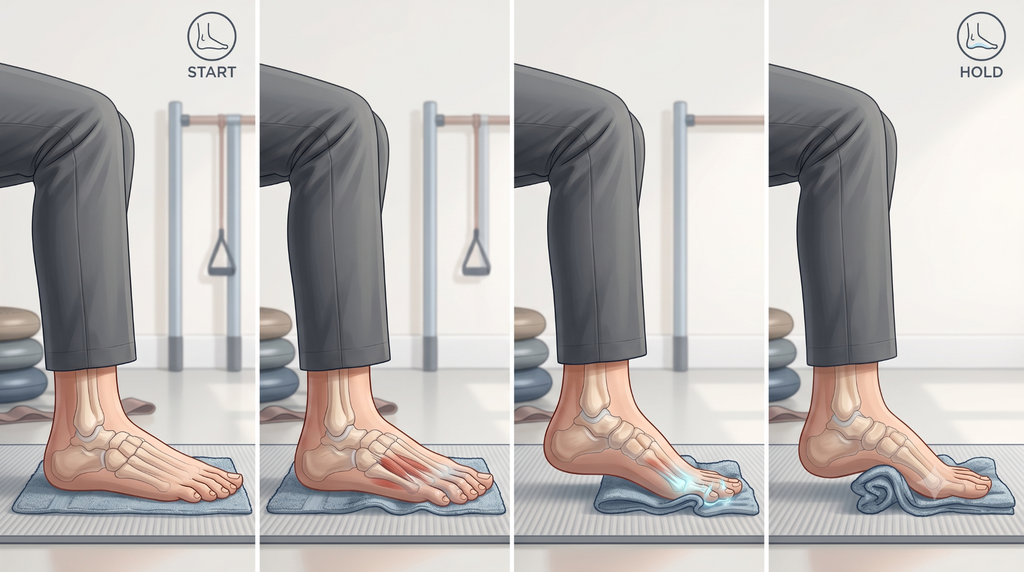
Sit with a small towel flat under your foot. Use your toes to scrunch the towel toward you, then release. Repeat 10–15 times per foot. This strengthens the muscles along the sole of the foot.
3. Towel Scrunches
A variation of toe curls using a longer towel on a smooth floor grip and pull the towel toward you using only your toes. This builds endurance in the same muscle group.
4. Calf Raises
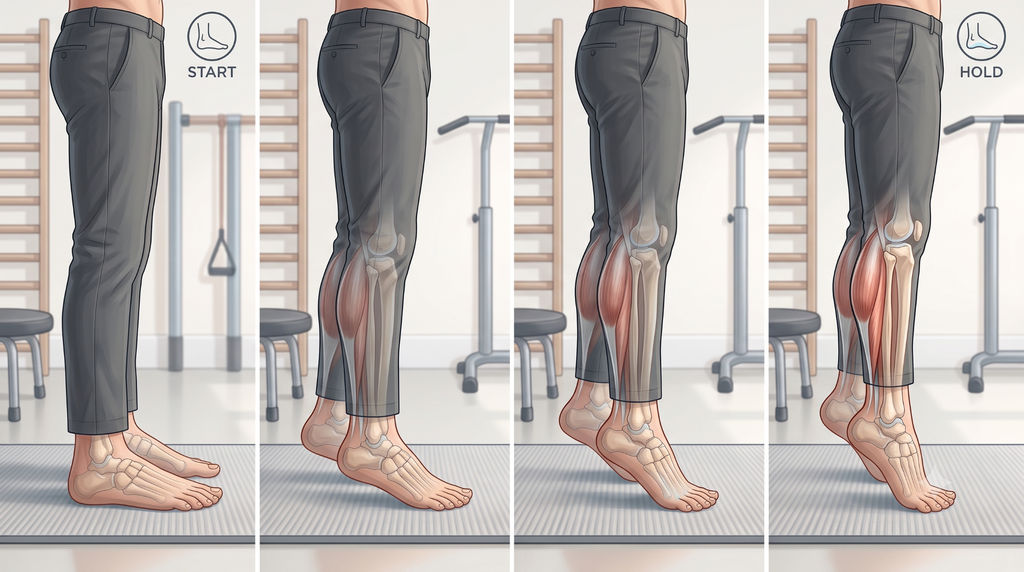
Stand near a wall for balance, rise onto the balls of both feet, hold briefly, then lower slowly. Do 10–15 repetitions. Strong calf muscles support ankle and foot mechanics, which indirectly helps arch stability.
5. Heel Raises and Heel Walks
Walk a short distance on your heels with toes lifted, then switch to walking on your toes (heels lifted). This strengthens the muscles around the ankle and foot that help control pronation (the inward rolling of the foot).
6. Arch Lifts (Foot Doming)
Similar to the short-foot exercise, this focuses on “doming” the arch upward while keeping toes and heel in contact with the floor. It’s often taught as a beginner-friendly entry point before progressing to standing short-foot exercises.
7. Ankle and Foot Mobility Exercises
Simple ankle circles, toe spreads, and gentle stretching of the calf and plantar fascia keep the foot flexible, which supports better exercise technique and reduces stiffness.
8. Balance Exercises
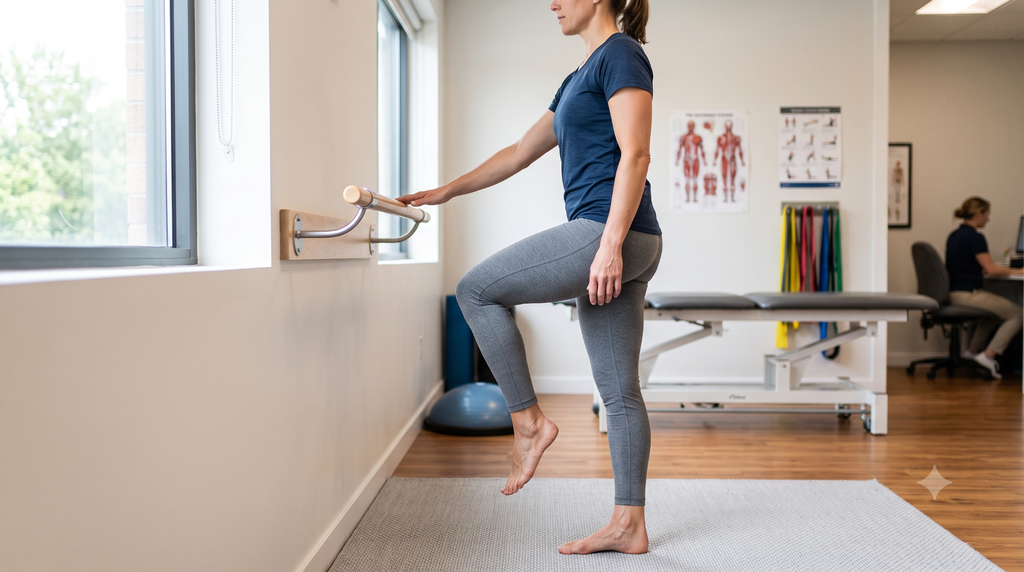
Standing on one foot (near a support for safety) for 20–30 seconds challenges the small stabilizing muscles of the foot and ankle. Progress only if it’s comfortable and pain-free.
Common mistakes to avoid: curling the toes instead of using the intrinsic foot muscles, moving too fast, and pushing through sharp or worsening pain. If an exercise causes pain rather than mild fatigue, stop and modify it.
How Often Should You Do Flat Feet Exercises?
Many exercise protocols studied for flat feet use short daily sessions for example, a few sets of 5–10 repetitions once or twice a day, done consistently over several weeks. Results build gradually; expecting immediate change usually leads to frustration and, in some cases, overuse discomfort. It’s reasonable to start with a light daily routine and gradually increase repetitions as tolerated. A physiotherapist or your orthopaedic doctor can tailor frequency to your specific foot and symptoms.
Can Exercise Correct Flat Feet Permanently?
Exercise can meaningfully improve foot strength, arch stability, balance, and comfort and for many people with flexible flat feet, that translates to real symptom relief. However, exercise does not reshape rigid or structural flat feet, and it isn’t a guaranteed permanent “fix” for every case. Think of it as building supportive strength around the foot’s structure, not rebuilding the structure itself. Some people also benefit from combining exercises with supportive footwear or orthotics, based on their doctor’s assessment.
Exercises to Avoid or Modify With Flat Feet
High-impact activities like running on hard surfaces or repetitive jumping can aggravate symptoms in some people with symptomatic flat feet, especially early in a strengthening program. If a specific exercise increases pain rather than mild muscle fatigue, ease off, reduce repetitions, or switch to a lower-impact variation. People with existing tendon problems, recent injury, or significant pain should get a professional assessment before starting a new exercise routine.
When Should You See an Orthopaedic Doctor for Flat Feet?
See a doctor if you notice persistent foot or ankle pain, swelling, difficulty walking or standing for normal periods, symptoms that are worsening rather than improving, flattening that develops suddenly or only on one side, or new flat-foot symptoms appearing in adulthood. These can sometimes indicate tendon dysfunction or other conditions that need more than a home exercise routine.
Flat Feet Exercises vs Orthotics vs Medical Treatment
No single approach fits every case; the table below shows how these options typically fit together.
Flat feet don’t have to limit an active life, and for many people, targeted foot-strengthening exercises genuinely improve comfort, balance, and function. That said, exercise works differently depending on whether your flat feet are flexible or rigid, and it isn’t a universal fix. If foot pain persists, worsens, or limits your daily activities, it’s worth getting an orthopaedic evaluation to understand what’s happening in your feet and what combination of treatment actually fits your case.
For patients in Indore, Dr. Tarkit Modi’s orthopaedic clinic can assess flat feet and related foot pain and recommend a plan suited to your specific condition.
| Approach | Main Purpose | When It May Help |
| Exercises | Strength and stability of foot muscles | Mild-to-moderate symptoms, flexible flat feet, functional weakness |
| Supportive footwear | Improve comfort and support during daily activity | Everyday use, especially for people on their feet often |
| Orthotics | Support foot mechanics and reduce strain | Selected symptomatic cases, based on doctor’s assessment |
| Medical assessment | Identify underlying tendon or structural problems | Persistent, worsening, or one-sided symptoms |
FAQs
1. What are the best exercises for flat feet?
Short-foot exercises, toe curls, towel scrunches, calf raises, and balance exercises are commonly recommended. They work by strengthening the muscles that support the foot arch and improving overall foot stability.
2. Can exercises fix flat feet?
Exercises can improve strength, stability, and comfort, especially for flexible flat feet, but they don’t change the underlying bone structure in every case. Think of them as building support around the foot rather than reshaping it.
3. Can flat feet exercises reduce foot pain?
Yes, for many people. Strengthening the muscles that support the arch can reduce strain during standing and walking, which often eases discomfort. Results vary depending on the cause and severity of the flat feet.
4. How often should I exercise for flat feet?
Many programs use short daily sessions, such as a few sets of 5–10 repetitions once or twice a day, done consistently over several weeks. A physiotherapist or orthopaedic doctor can suggest a frequency suited to your feet.
5. Can children do exercises for flat feet?
Yes, many children with flexible flat feet can benefit from simple, age-appropriate foot exercises. Since children’s feet are still developing, it’s best to have a doctor confirm the type of flat foot before starting a routine.
6. Can flat feet cause knee or back pain?
Flat feet can sometimes affect walking mechanics in ways that contribute to strain further up the leg, including the knees. Not everyone with flat feet develops this, and any related pain should be properly evaluated rather than assumed.
8. When should I see a doctor for flat feet?
See a doctor if you have persistent pain, swelling, difficulty walking, worsening symptoms, one-sided changes, or new flat-foot symptoms appearing in adulthood. Early assessment helps identify the cause and the right treatment approach.