

Physiotherapy matters after total hip replacement surgery because the operation replaces the joint but does not restore the strength, balance and walking pattern around it. A guided exercise programme helps you move safely, rebuild strength and return to daily activities. Your surgeon and physiotherapist will adjust it to your needs.
Total hip replacement surgery replaces a worn or damaged hip joint with an artificial one. The usual reasons are arthritis of the hip, avascular necrosis (loss of blood supply to the hip bone) or injury. The new joint relieves pain, but the muscles around it have often been weak and stiff for a long time. Rehabilitation helps them catch up. In this article I explain how physiotherapy fits into recovery, what it involves and what to discuss with your surgeon.
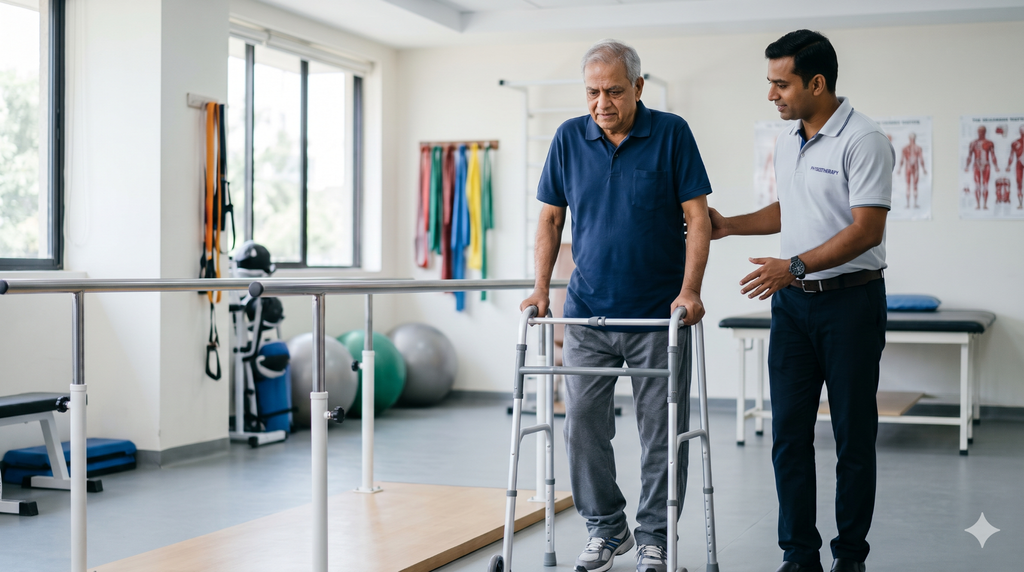
Why Is Physiotherapy Important After Total Hip Replacement Surgery?
Pain before surgery and swelling afterwards weaken the muscles around the hip. The American Academy of Orthopaedic Surgeons (AAOS) notes that these muscles also become short and tight when the hip has not been moving normally. Physiotherapy restores movement, strengthens the muscles that steady the hip, improves balance and helps you return to everyday tasks such as walking, climbing stairs and standing up from a chair.
A physiotherapist also teaches you safe ways to move while the tissues heal. The NHS says that following the exercises early in recovery helps long-term strength and movement in the hip.
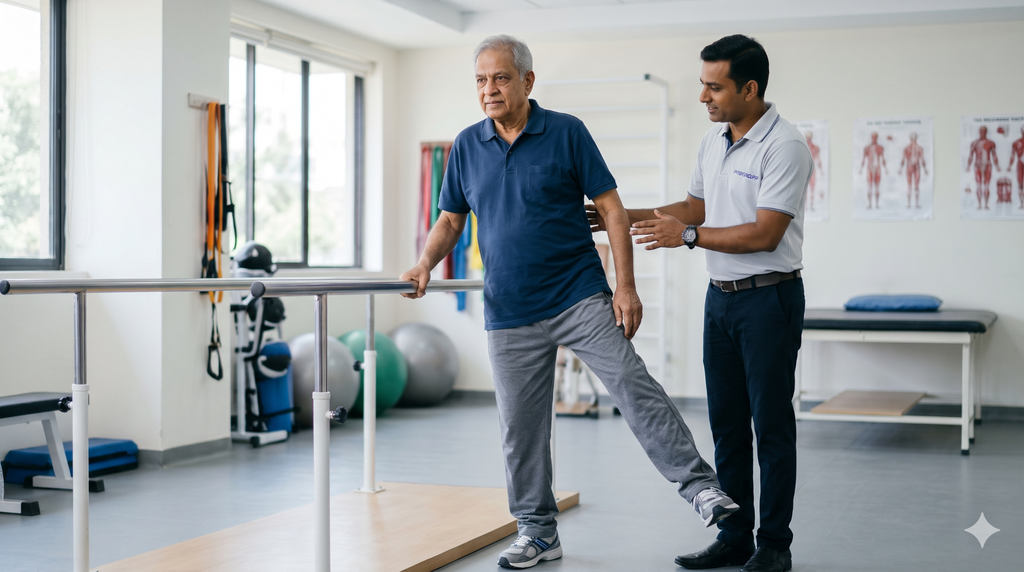
When Should Physiotherapy Start After Hip Replacement Surgery?
In many hospitals a physiotherapist helps patients stand and walk on the day of surgery or the day after. AAOS advises starting ankle exercises immediately after the operation. The exact timing depends on your health, the type of surgery and your surgeon’s protocol.
NICE guidance on joint replacement says people having hip or knee replacement should be given advice on rehabilitation before surgery and before they leave hospital. If you are waiting for surgery, ask whether exercises beforehand would help in your case.
What Exercises Are Included in Hip Replacement Rehabilitation?
Your programme will be individual to you. These are the broad groups of exercises, and your physiotherapist will choose and progress them.
Early circulation and movement exercises
Ankle pumps, gentle knee bending and buttock squeezes keep the blood moving and wake up the muscles. They are usually the first exercises. AAOS says ankle exercises begin immediately after surgery and continue until you are fully recovered.
Strengthening exercises
The thigh and buttock muscles are strengthened step by step. This includes the hip abductors, which steady your pelvis when you walk. A small meta-analysis of four studies (137 patients) reported improved hip abductor strength after exercise following discharge, although the number of patients was limited.
Balance and walking practice
Standing balance, shifting your weight and walking practice come next, with a frame, crutches or stick as advised. AAOS says your surgeon and physical therapist may suggest exercising for 20 to 30 minutes a day, or two to three times daily, during early recovery.
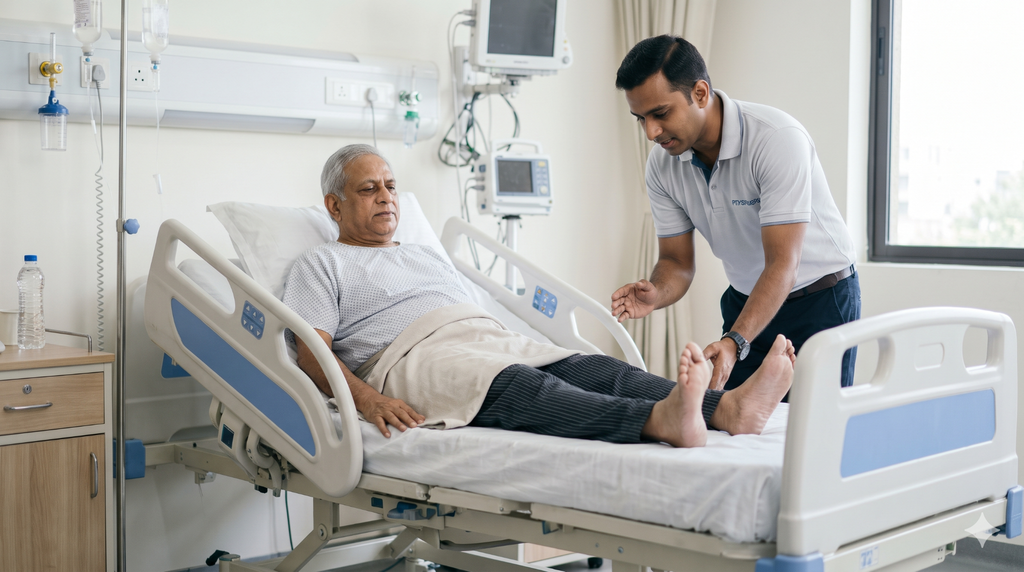
How Does Physiotherapy Help Improve Walking and Mobility?
Walking depends on strong hip muscles, good balance and a confident pattern of movement. Physiotherapy practises each part: standing tall, taking even steps, turning safely, managing kerbs and stairs and using your walking aid correctly until you no longer need it. Your physiotherapist watches how you move and corrects habits, such as limping, that can slow your progress.
Research results are mixed on how much extra benefit structured programmes add. A systematic review of 32 studies in JAMA Network Open found low- to moderate-quality evidence that postoperative exercise programmes did not improve self-reported physical function compared with usual care or minimal intervention. Other reviews report gains in gait and strength. The studies differ in programme design, timing and patient groups, so they cannot say which programme suits you.
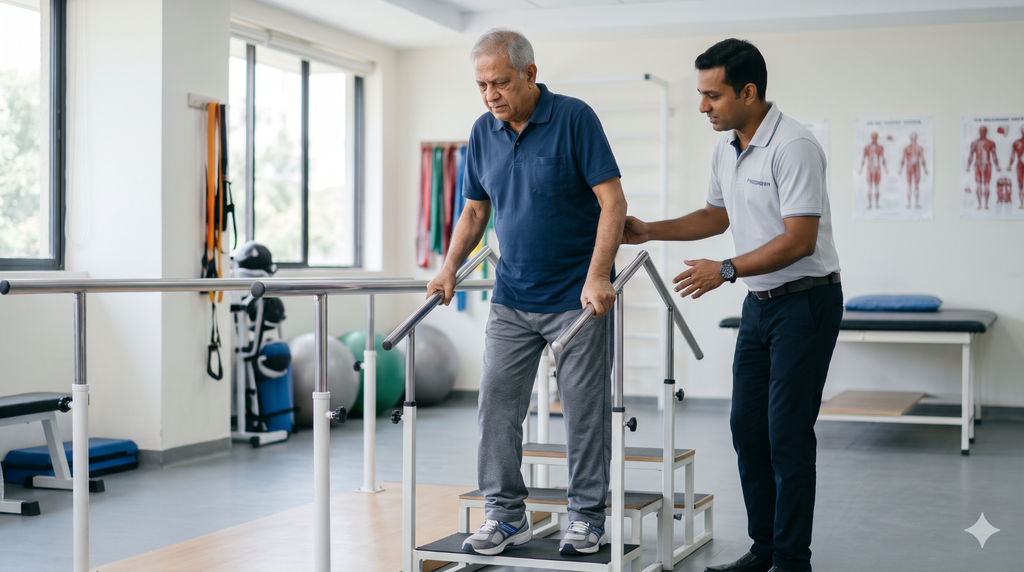
The same applies to supervision. Meta-analyses of randomised trials found supervised exercise no more effective than home exercise for pain, function and quality of life after discharge. NICE advises supervised group or individual outpatient rehabilitation for people who have difficulty managing daily activities. I would discuss the level of supervision with you individually.
How Long Does Physiotherapy Take After Total Hip Replacement?
There is no single timeline. The NHS says recovery can take several months and varies with age and general health. Formal sessions may last some weeks, while home exercises usually continue for longer. The table shows general stages, which overlap and move at different speeds for different people.
| Rehabilitation stage | Main focus | Common activities | Rehabilitation goals |
| Early hospital stage | Safe movement, circulation, pain control | Ankle pumps, buttock squeezes, standing, short walks with an aid | Stand and walk safely with an aid and understand your precautions |
| Early home stage | Building a daily routine | Prescribed exercises, walking, stair practice, daily tasks | Walk further with less help and manage routine tasks |
| Strengthening and balance stage | Muscle strength, balance, walking pattern | Progressive resistance exercises, balance practice | Better walking and endurance, less reliance on aids |
| Return-to-activity stage | Confidence and long-term fitness | Low-impact activity as your surgeon allows | Resume work and leisure activities as cleared by your surgeon |
Factors that influence recovery include your age, general health, fitness and muscle strength before surgery, the surgical approach, other joint problems, support at home and how consistently you exercise.
What Happens If You Skip Physiotherapy After Hip Replacement?
Research does not show exactly what happens when people skip rehabilitation, so I would not want to predict an outcome for you. The muscles around your hip are weaker after surgery. Without a plan, you may recover strength and walking more slowly, miss advice on safe movement and have no one to review warning signs.
If cost, travel or time makes sessions difficult, tell your surgical team early. They can adjust the plan, for example with a home programme that has been taught and reviewed.
Tips for a Safe Recovery After Total Hip Replacement Surgery
- Follow the hip precautions your surgeon gives you. They vary with the surgical approach and surgeon.
- Use your walking aid as instructed and increase activity gradually.
- Expect some swelling or soreness after exercise, and report pain that keeps increasing.
- Prepare your home with a firm chair with arms, a raised toilet seat or commode (low or Indian-style toilets are difficult after surgery), clear walkways and bathroom handrails.
- Ask which movements to avoid, including floor sitting and squatting.
Seek emergency care for chest pain, sudden breathlessness, a fall or inability to bear weight. If you are still deciding on surgery, it helps to understand what happens if hip replacement is delayed.
Physiotherapy is a central part of recovery after total hip replacement. It helps rebuild strength, balance and walking so that your new joint can do its job. The pace and amount of supervision depend on you, so follow the plan set by your surgeon and physiotherapist. If you have questions about hip replacement or your recovery, you are welcome to arrange an assessment with me at my clinic in Indore.
FAQs
The operation replaces the joint, but the surrounding muscles are weak after surgery and may already be weak before it. Physiotherapy guides safe early movement, builds strength and balance, and teaches you how to protect the new hip. The size of the benefit varies, so your surgeon should tailor the plan.
Why is physiotherapy necessary after total hip replacement surgery?
When can I start physiotherapy after hip replacement?
Many hospitals help patients stand and walk on the day of surgery or the day after, and AAOS advises starting ankle exercises immediately. Your surgical team decides the exact timing for you. Ask what to do before discharge and how follow-up will be arranged.
How long should I continue physiotherapy?
No single answer fits everyone. The NHS says recovery can take several months and varies with age and general health. Formal sessions may last some weeks, and home exercises usually continue for longer. Your surgeon and physiotherapist will set milestones and advise when to stop.
Can I walk normally after hip replacement surgery?
Many people return to walking comfortably as strength and balance improve, but the pace and final result vary with health, fitness and the surgery performed. Your physiotherapist can assess your walking pattern and tell you what is realistic for you.
What happens if I do not exercise after hip replacement?
Research does not show exactly what happens, so no firm prediction is possible. The hip muscles are weakened by pain and surgery, and without a plan you may recover strength and walking more slowly and miss safety advice. Discuss any difficulty following your plan with your surgical team.
Which exercises help improve mobility after hip replacement?
Early exercises commonly include ankle pumps, buttock squeezes and short walks with an aid. Strengthening and balance work follow as healing allows. AAOS says your surgeon and physical therapist may advise exercising for 20 to 30 minutes, two to three times daily, early on.
Can physiotherapy help me return to daily activities?
Physiotherapy practises the tasks you need, such as stairs, getting in and out of bed, using chairs and toilets and walking outdoors. Your surgeon decides when driving, work and leisure are safe. AAOS describes a gradual return to everyday activities as part of full recovery.
REFERENCES
- NICE guideline NG157, joint replacement (primary), published 4 June 2020, updated 1 July 2025: https://www.nice.org.uk/guidance/NG157
- NICE QS206, statement 5, postoperative rehabilitation advice (date not seen): https://www.nice.org.uk/guidance/qs206/chapter/Statement-5-Postoperative-rehabilitation
- NHS, recovering from a hip replacement (date not seen): https://www.nhs.uk/tests-and-treatments/hip-replacement/recovering-from-a-hip-replacement/
- AAOS, total hip replacement exercise guide (review date not seen): https://orthoinfo.aaos.org/en/recovery/total-hip-replacement-exercise-guide
- Saueressig et al., JAMA Network Open, systematic review of 32 studies (about 2021; confirm year): https://jamanetwork.com/journals/jamanetworkopen/fullarticle/2776913
- Hansen et al., Clinical Rehabilitation, 2018, meta-analysis of supervised versus home exercise (study count reported as six or seven; confirm): https://pesquisa.bvsalud.org/ses/resource/pt/mdl-30073856
- Chaudhry et al., Cureus, 19 September 2022: https://pmc.ncbi.nlm.nih.gov/articles/PMC9484297
- Coulter et al., systematic review of 4 studies (n=137) on hip abductor strength, via thesis abstract (journal year not seen): https://openresearch-repository.anu.edu.au/items/95c1a1f5-4f41-41bd-89b0-6d8fb901d7d2