
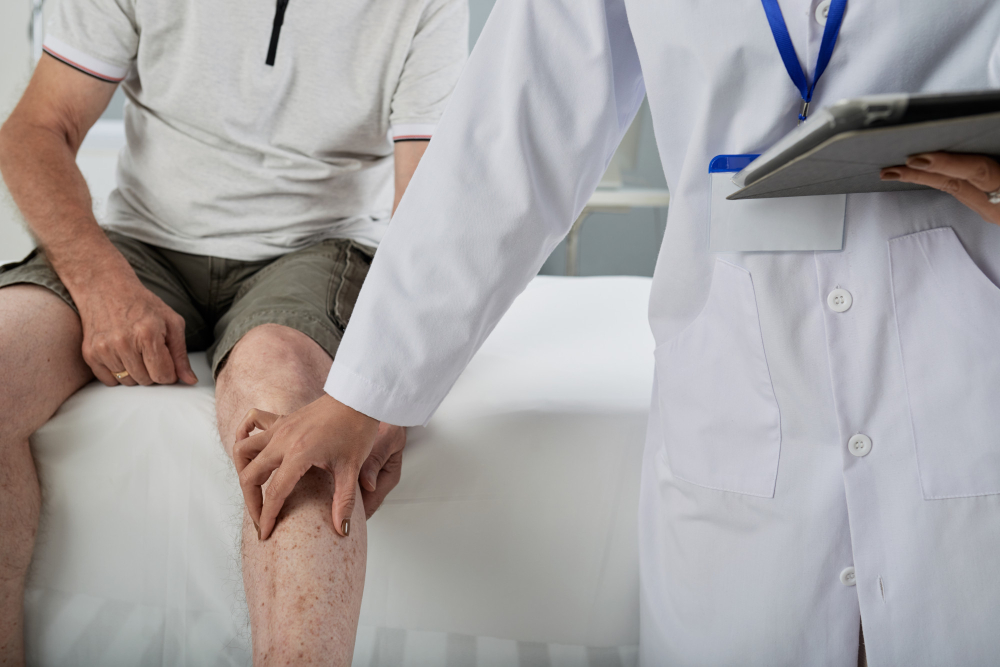
How long a dislocated joint takes to heal depends mostly on which joint is injured. Pain often settles within days to a few weeks once the joint is put back in place. The ligaments around it usually need about six weeks or longer to heal, and full strength can take three months or more. Fractures, nerve injury, treatment and rehabilitation all change the timeline.
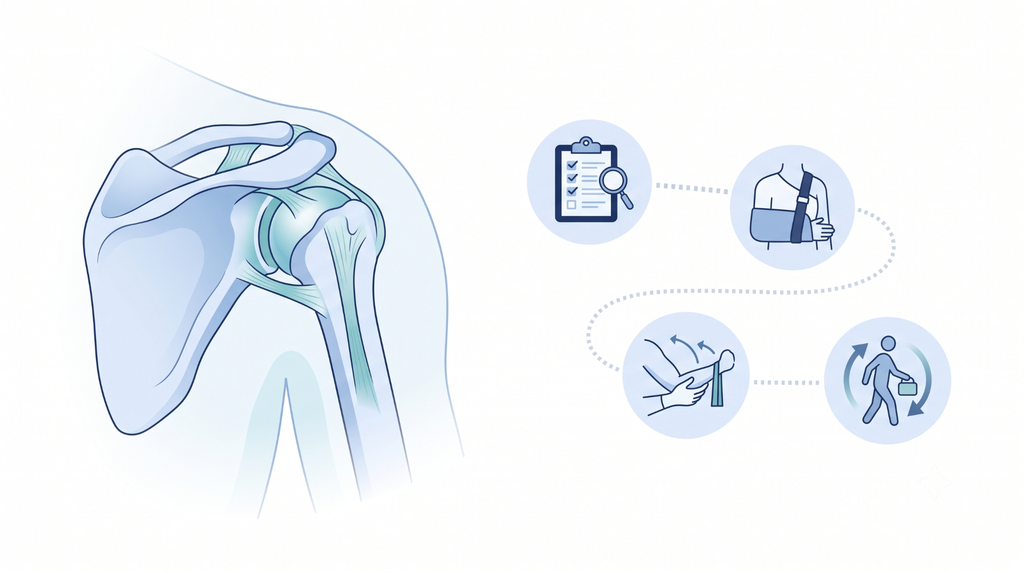
How Long Does a Dislocated Joint Take to Heal?
There is no single recovery time for every dislocation. Pain and swelling often improve within days to a few weeks once the joint has been realigned, a step doctors call reduction. The ligaments and joint capsule usually need about six weeks or longer to heal. Regaining full strength and normal movement can take three months or more.
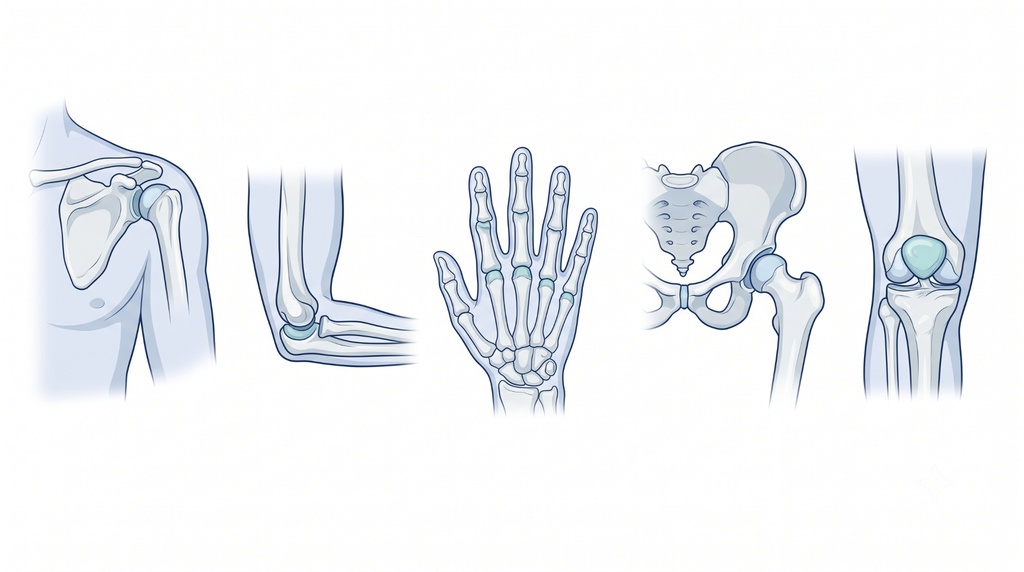
Joint Dislocation Recovery Timeline by Joint
These ranges come from patient information from health services and hospitals, and describe typical, uncomplicated cases.
| Joint | Typical recovery | Why it varies |
| Shoulder | Sling for a few days to about 3 weeks. Most daily activities resume within about 2 weeks. Full recovery is quoted at roughly 6–16 weeks, depending on the source; heavy lifting and shoulder-heavy sport wait 6 weeks to 3 months. | Fracture, torn cartilage rim, age, earlier dislocations |
| Elbow (simple, no fracture) | Short splint or sling, then early guided movement. Usual daily activities often return by about 3 months. | Stiffness is common; splinting beyond 3 weeks is linked to more stiffness |
| Finger | Ligaments heal in about 6 weeks, often with buddy taping (strapping to the next finger). Mild pain and swelling can take 12–18 months to clear fully. | Fracture, which finger joint, stiffness |
| Hip | A medical emergency. Crutches for about a week or two, limited movement for the first few weeks, then physiotherapy. Follow-up checks, sometimes with scans, at around 6 to 12 weeks. Sources give no single full-recovery range. | Injury to the bone’s blood supply, nerve injury, fracture |
| Kneecap (patella) | First-time, non-surgical: about 6–12 weeks of bracing and physiotherapy. After stabilising surgery: about 4–6 months. | Loose ligaments, shape of the knee groove, cartilage injury |
What Factors Affect Joint Dislocation Recovery Time?
- Severity of the dislocation
A simple dislocation, with no broken bone, generally recovers faster than a complex one.
- Damage to nearby structures
Injury to ligaments, cartilage, nerves, blood vessels or bone adds time. After a hip dislocation, loss of blood supply to the bone (avascular necrosis) can make recovery much longer.
- Whether surgery is required
Surgery may be needed for fractures, an unstable joint or repeated dislocations. Recovery then takes longer.
- Age, health and previous dislocations
Your age and how well the tissues healed affect recovery and the chance of another dislocation.
- Physiotherapy and following advice
Skipping physiotherapy can leave the joint weak, stiff or unstable and slow recovery.
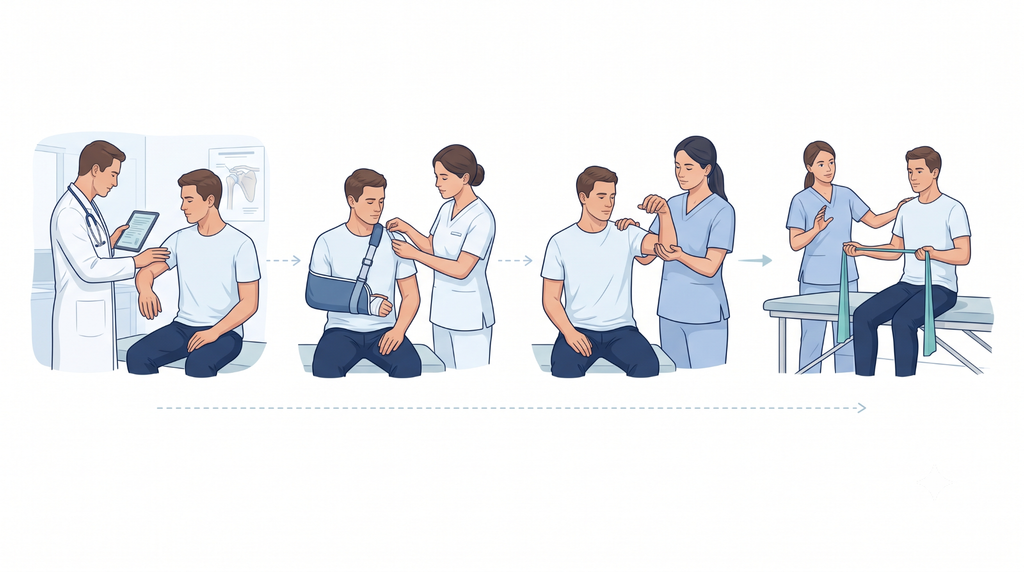
What Happens During Recovery After a Joint Dislocation?
Recovery usually moves through these stages:
- Assessment and reduction: a doctor examines the joint, usually arranges an X-ray, and puts the joint back in place.
- Support: a sling, splint, brace or tape, only for as long as advised.
- Gentle movement: guided motion to prevent stiffness.
- Physiotherapy: strengthening and balance work to rebuild stability.
- Return to activity: work, driving and sport restart when your doctor confirms the joint is stable and strong.
How to Care for a Dislocated Joint During Recovery
- Follow your doctor’s instructions and attend every follow-up visit.
- Use a sling, brace or splint only as directed, and stop when advised.
- Take prescribed medicines as directed. Ice wrapped in a cloth for 15 to 20 minutes at a time can ease pain and swelling.
- Start movement and exercises only when you are told to.
- Avoid heavy lifting, sport and awkward positions until you are cleared.
When Should You See an Orthopedic Doctor?
Any suspected dislocation needs prompt medical assessment. Do not try to force a dislocated joint back into place yourself. Go to an emergency department immediately if:
- The limb is cold, pale, blue, numb or weak
- Pain is severe or getting worse
- The skin is broken or bone is visible
- A hip is suspected: treatment is ideally needed within six hours
After treatment, see your doctor if swelling or pain increases, movement is not improving, or the joint feels loose or gives way.
Can a Joint Dislocate Again After It Heals?
Yes, it can, but it is not inevitable. A joint that has dislocated once may be less stable, especially if the ligaments healed loosely. Risk depends on the joint, your age and how well you complete rehabilitation. For the kneecap, estimates of a second dislocation after a first one range from about 30% to 50%, and are higher in teenagers and people with certain knee anatomy. If a joint keeps slipping or feels unstable, ask an orthopedic doctor to assess it.
Healing time depends on the joint, the severity of the injury, any damage to nearby tissues, and how closely rehabilitation is followed. Prompt assessment and completed physiotherapy give the joint the best chance of recovering well. If you or a family member in Indore has a suspected dislocation, consult an orthopedic doctor such as Dr. Tarkit Modi for assessment and a recovery plan.
Frequently Asked Questions
How long does a dislocated joint take to heal?
Ligaments usually need about six weeks to heal, and full strength often takes three months or longer. The exact time depends on the joint and on any fracture or nerve injury. An orthopedic doctor can estimate your timeline after examining the joint and X-rays.
Can a dislocated joint heal completely?
Many do, especially simple dislocations treated early and followed by proper rehabilitation. Some people have lasting stiffness, swelling or looseness, and finger joints may stay swollen for many months.
Can I walk after a joint dislocation?
It depends on the joint. After a shoulder, elbow or finger dislocation you can usually walk normally if no other injury is present. After a hip, knee or kneecap dislocation you may need crutches or a brace; for a hip, about a week or two is typical.
When can I return to exercise after a dislocation?
Only when swelling has settled, movement and strength have returned, and your doctor or physiotherapist agrees. After a shoulder dislocation, heavy lifting and shoulder-heavy sport are usually avoided for six weeks to three months.
Does every joint dislocation require surgery?
No. Most simple dislocations are treated by putting the joint back, supporting it briefly, and physiotherapy. Surgery may be considered for fractures, nerve or blood vessel injury, an unstable joint or repeated dislocations.
What happens if a dislocated joint is left untreated?
The joint may stay out of place, causing ongoing pain, stiffness and instability, and sometimes harming nerves, blood vessels or cartilage. A dislocated hip is an emergency, because delays beyond about six hours raise the risk of permanent damage to the bone’s blood supply.