

Avascular necrosis (AVN) of the hip, also called osteonecrosis of the femoral head happens when part of the bone loses its blood supply and begins to break down. Catching this before the femoral head actually collapses matters a great deal, because it changes what treatments are realistically on the table.
Core decompression is used in early-stage hip AVN because it’s a hip-preserving procedure aimed at relieving pressure inside the bone and supporting blood flow before the femoral head loses its shape. It isn’t a cure, and it doesn’t work the same way once collapse has already happened which is exactly why identifying AVN early makes such a difference.
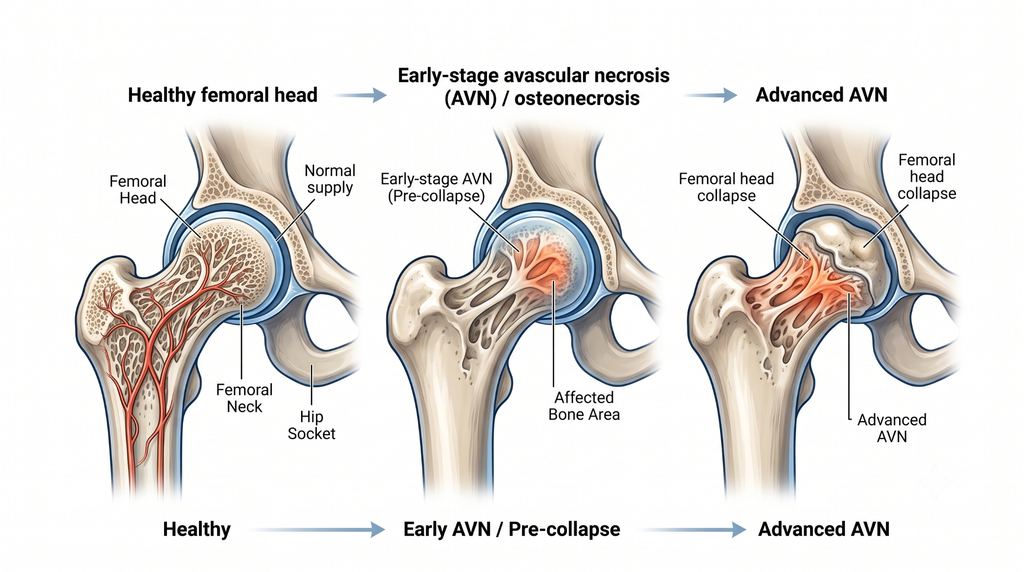
What Is Hip AVN or Osteonecrosis of the Femoral Head?
The femoral head is the ball-shaped top of the thighbone that fits into the hip socket. It depends on a steady blood supply to stay healthy. When that blood supply is disrupted due to trauma, prolonged steroid use, excessive alcohol use, certain blood or clotting disorders, or sometimes no identifiable cause at all the bone tissue in the femoral head can begin to die. Over time, this weakened bone can lose its structural integrity and the femoral head can flatten or collapse, which damages the smooth joint surface and can eventually lead to arthritis.
Early AVN often causes vague groin or hip pain, sometimes only with activity, which is one reason it’s easy to miss in its earliest stages.
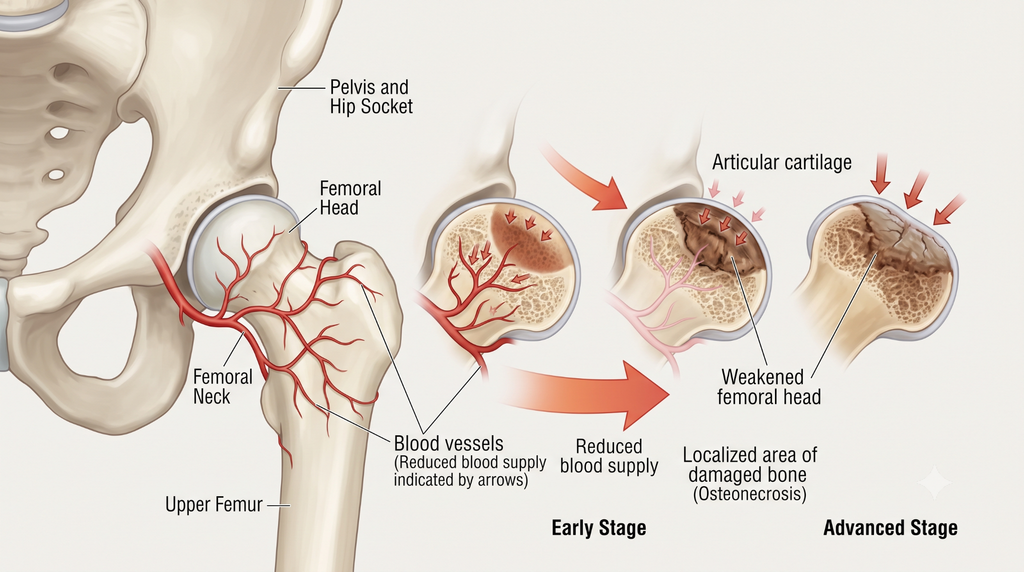
Why Is Core Decompression Used for Early-Stage Hip AVN?
Core decompression is considered a hip-preserving option for selected patients with osteonecrosis diagnosed before the femoral head has structurally collapsed. The idea is to relieve pressure that builds up inside the dying bone and to create conditions that may support blood flow and new bone healing with the goal of protecting the femoral head’s shape rather than treating it after damage has already occurred.
This is why staging matters so much. Once collapse has taken place, the procedure’s rationale protecting a joint surface that’s still intact no longer applies in the same way, and other treatments are generally considered instead.
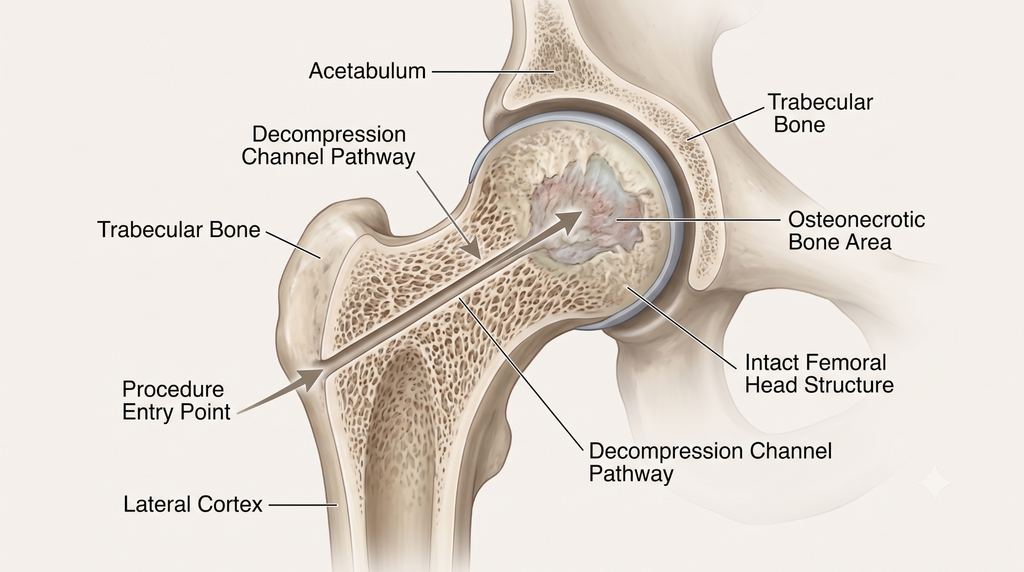
How Does Core Decompression Work?
During the procedure, the surgeon drills one or more small channels through healthy bone into the necrotic (dead or dying) area of the femoral head. This is believed to reduce the pressure that builds up inside the affected bone, and it may help stimulate blood vessel growth and new bone formation in the treated area. Some surgeons combine core decompression with additional techniques, such as bone grafting or injecting concentrated bone marrow cells into the decompression channel, though the added benefit of these combinations is still being studied and isn’t considered definitively established. The exact biological mechanism isn’t fully settled, and results can vary depending on lesion size, location, and how early the disease is caught.
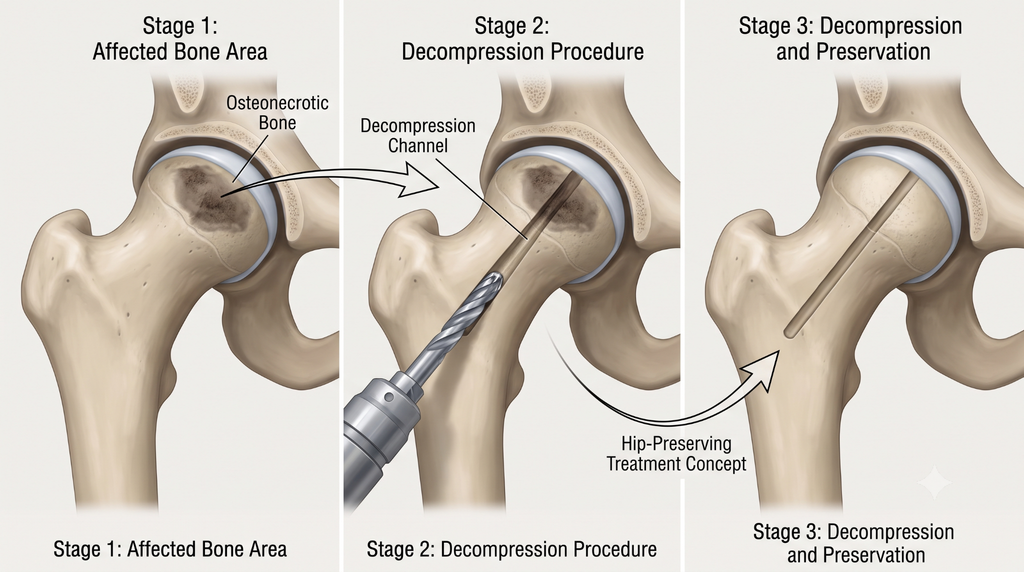
Who May Be Considered for Core Decompression?
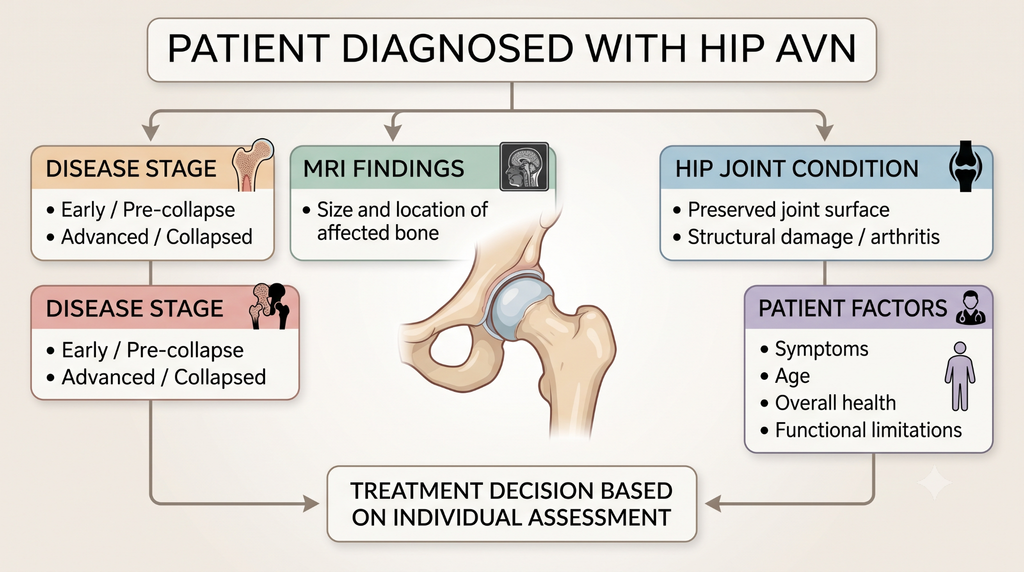
Suitability depends on several factors evaluated together, not any single test result. Surgeons typically look at:
- Disease stage: pre-collapse (early ARCO/Ficat stages) versus already-collapsed femoral head
- Size and location of the affected area on MRI
- Symptoms and how much they’re affecting daily activity
- Age and overall health
- Whether there’s already secondary arthritis in the joint
Core decompression is generally considered in pre-collapse disease (early ARCO or Ficat stages) and is not typically recommended once significant collapse or advanced arthritis has developed. This is a decision that has to be individualized rather than applied as a blanket rule.
Why Is Early Diagnosis Important in Hip AVN?
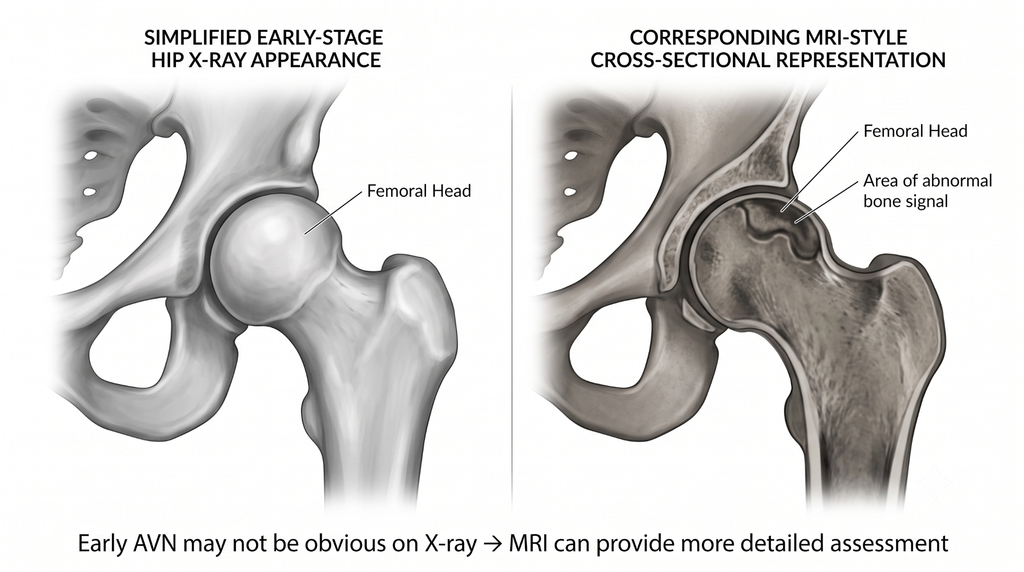
Early-stage AVN can be genuinely difficult to catch based on symptoms alone, since pain may be mild, intermittent, or mistaken for a muscle strain. Plain X-rays often look normal in the earliest stages, while MRI can detect changes in the bone well before collapse occurs, which is why MRI is typically the imaging of choice when AVN is suspected.
Staging systems like ARCO and Ficat use these imaging findings to categorize how advanced the disease is, which in turn shapes which treatments are realistically available. Delayed diagnosis can mean the disease has already progressed toward collapse by the time it’s identified, narrowing the treatment options.
Core Decompression vs Total Hip Replacement for AVN
| Factor | Core Decompression | Total Hip Replacement |
| Main purpose | Hip preservation | Joint replacement |
| Typical role | Selected early/pre-collapse disease | Advanced disease, collapse, or significant joint damage |
| Femoral head | Preserved | Replaced |
| Goal | Delay or avoid progression to arthroplasty in selected patients | Restore function when the damaged joint needs replacing |
| Suitability | Depends on stage and other individual factors | Depends on severity, joint damage, and patient factors |
Can Core Decompression Prevent Hip Replacement?
The intention behind core decompression is to preserve the native hip and potentially delay or avoid the need for hip replacement in selected patients with early-stage disease. It is not a guarantee. Outcomes vary based on lesion size, disease stage at the time of treatment, and individual healing response; some patients do well long-term, while others eventually progress and require hip replacement regardless.
What Happens If Hip AVN Has Already Caused Femoral Head Collapse?
Once significant collapse, deformity, or secondary arthritis has developed, the joint surface is no longer intact enough for a hip-preserving procedure like core decompression to make the same clinical sense. At this stage, total hip replacement is often the treatment considered, depending on the extent of damage and the patient’s symptoms and overall health. This is a different clinical picture from early, pre-collapse disease, which is part of why the timing of diagnosis matters so much.
What Does Recovery After Core Decompression Involve?
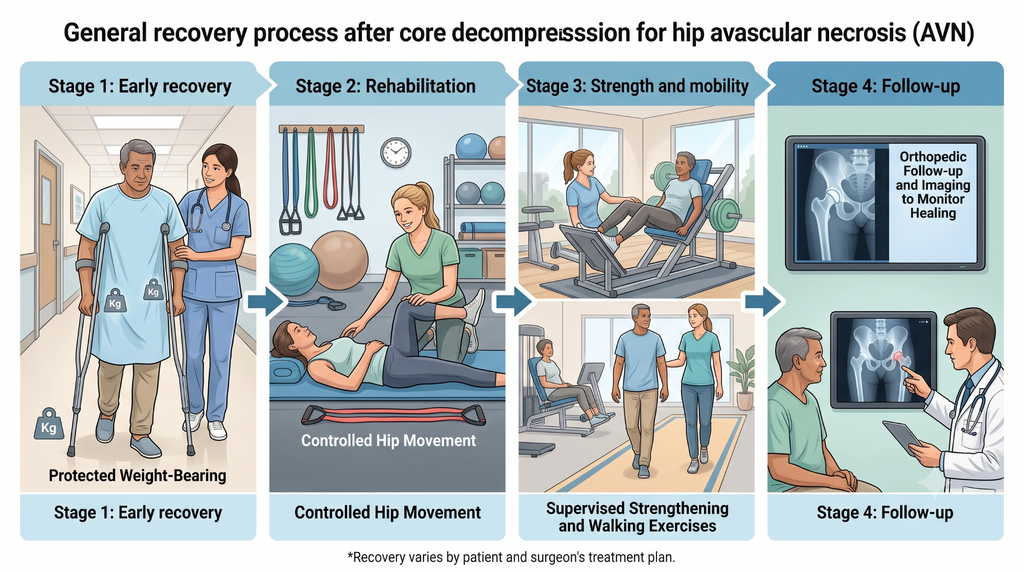
Recovery generally includes a period of protected weight-bearing, meaning limited pressure on the treated leg while the bone heals, followed by a structured physiotherapy program to gradually restore strength and movement. Return to full activity happens in stages, and follow-up imaging is typically used to monitor healing. Recovery time varies between patients depending on lesion size, overall health, and how the bone responds, so it’s best discussed individually with your surgeon rather than assumed from a general timeline.
When Should You See an Orthopedic Surgeon for Hip AVN?
Persistent hip or groin pain, especially pain that worsens with walking or standing, reduced hip movement, or unexplained hip pain in someone with known risk factors like prolonged steroid use is worth getting evaluated. Diagnosis requires a clinical assessment along with appropriate imaging, usually starting with an X-ray and, if AVN is suspected, an MRI.
Core Decompression for Hip AVN in Indore
For patients in Indore experiencing persistent hip pain or already diagnosed with AVN, consulting an orthopedic specialist allows for proper staging through clinical assessment and imaging, and a discussion of which treatment options genuinely fit the stage and extent of the disease. Dr. Tarkit Modi’s orthopedic clinic can assess hip pain and AVN-related symptoms and help determine whether hip-preserving treatment or another approach is appropriate.
FAQs
1. What is core decompression for AVN?
Core decompression is a surgical procedure where small channels are drilled into the affected area of the femoral head to relieve internal bone pressure and support blood flow. It’s generally used as a hip-preserving option in early-stage AVN, before the femoral head collapses.
2. Why is core decompression used for early-stage AVN?
It’s used before femoral head collapse because the goal is to protect a joint surface that’s still structurally intact. Once collapse occurs, the procedure’s rationale no longer applies the same way, which is why disease stage matters so much.
3. Can core decompression prevent hip replacement?
It may help delay or avoid hip replacement in some patients with early-stage disease, but this isn’t guaranteed. Outcomes vary based on lesion size, stage, and individual healing response.
4. Is core decompression effective after femoral head collapse?
Core decompression is generally not recommended once significant collapse has occurred, since the procedure’s benefit relies on treating bone before the joint surface is structurally damaged. Advanced disease is usually managed differently, often including total hip replacement.
5. How is early-stage AVN diagnosed?
Diagnosis typically involves a clinical exam along with imaging — an X-ray first, and an MRI if AVN is suspected, since MRI can detect changes before they’re visible on X-ray. Staging systems like ARCO or Ficat use these findings to classify how advanced the disease is.
6. How long does recovery take after core decompression?
Recovery generally includes a period of limited weight-bearing followed by physiotherapy, with gradual return to full activity. The exact timeline varies between patients and is best discussed with your surgeon based on your specific case.
7. What happens if AVN is left untreated?
Untreated AVN can progress from an early, pre-collapse stage to femoral head collapse and eventually arthritis, though the rate of progression varies between individuals. Persistent hip pain shouldn’t be ignored, since earlier evaluation generally preserves more treatment options.
8. When is hip replacement needed for AVN?
Hip replacement is typically considered once there’s significant femoral head collapse, joint deformity, or secondary arthritis that makes hip-preserving treatment no longer suitable. The decision depends on the extent of damage and the patient’s symptoms and overall health.