
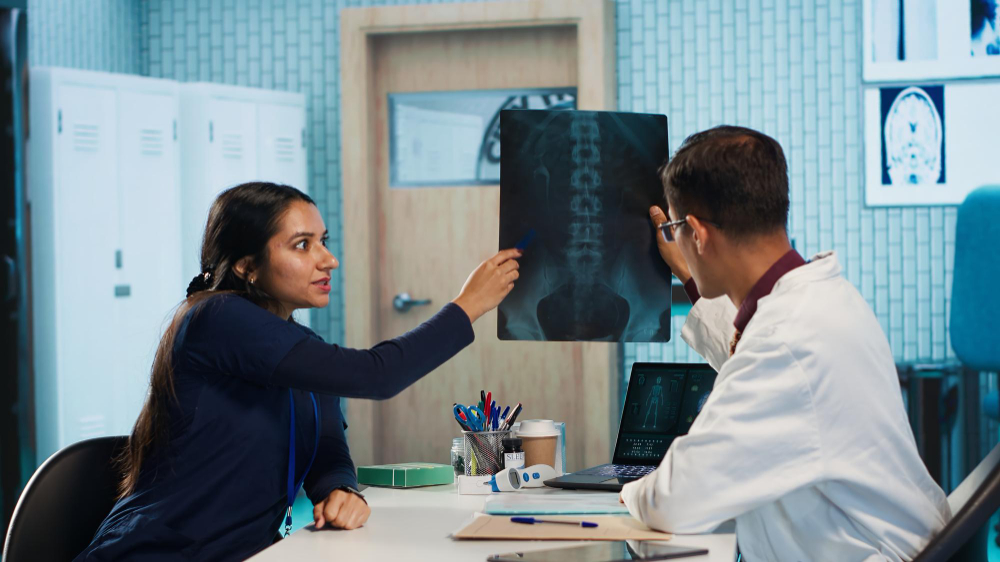
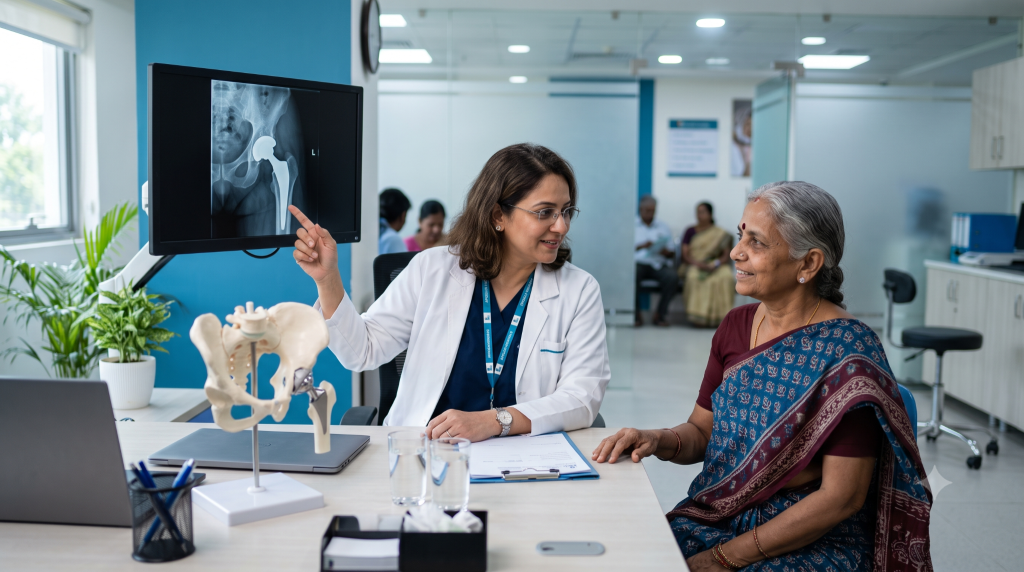
Mrs. Sunita Rathore, 67, walked into Dr. Tarkit Modi’s clinic in Indore three weeks after her hip replacement, worried about a small change she’d noticed. Her leg felt warmer than usual, and a dull ache had returned after days of feeling fine. She almost brushed it off as “just recovery.” But something told her to get it checked. That instinct was right; early evaluation caught a mild infection before it became serious. Her recovery stayed on track, and today she walks pain-free.
Stories like Sunita’s are common in orthopedic practice. Most hip replacement recoveries go smoothly. But knowing which symptoms are normal and which need urgent attention can make all the difference.
What Are the Warning Signs After Hip Replacement Surgery?
Warning signs include worsening pain instead of improving pain, fever above 100.4°F, increasing redness or discharge from the wound, sudden calf or leg swelling, new difficulty walking, a hip that feels like it’s “popping out,” and chest pain or breathlessness. Any of these need prompt medical evaluation, not a wait-and-watch approach.
What Is Hip Replacement Surgery?
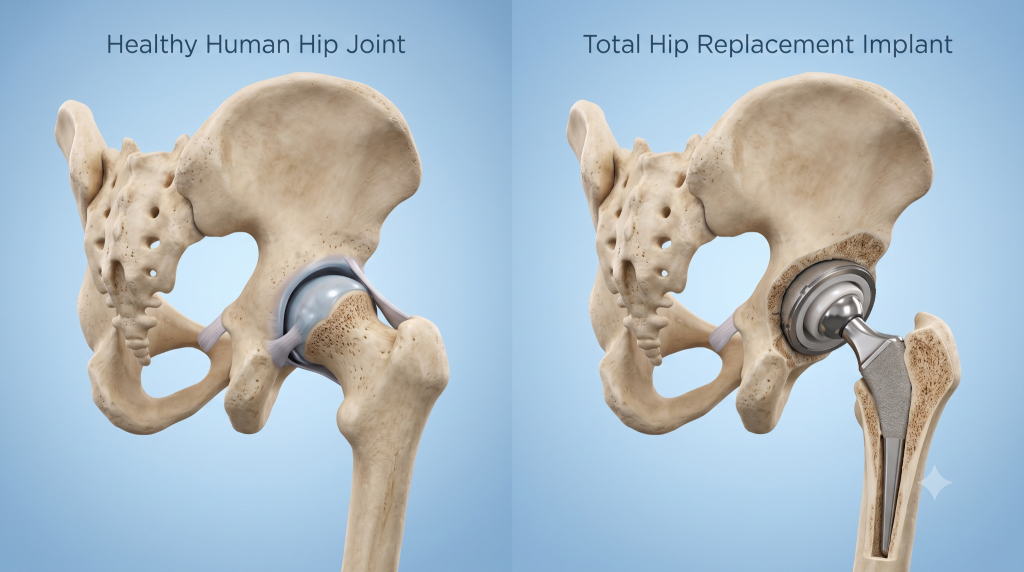
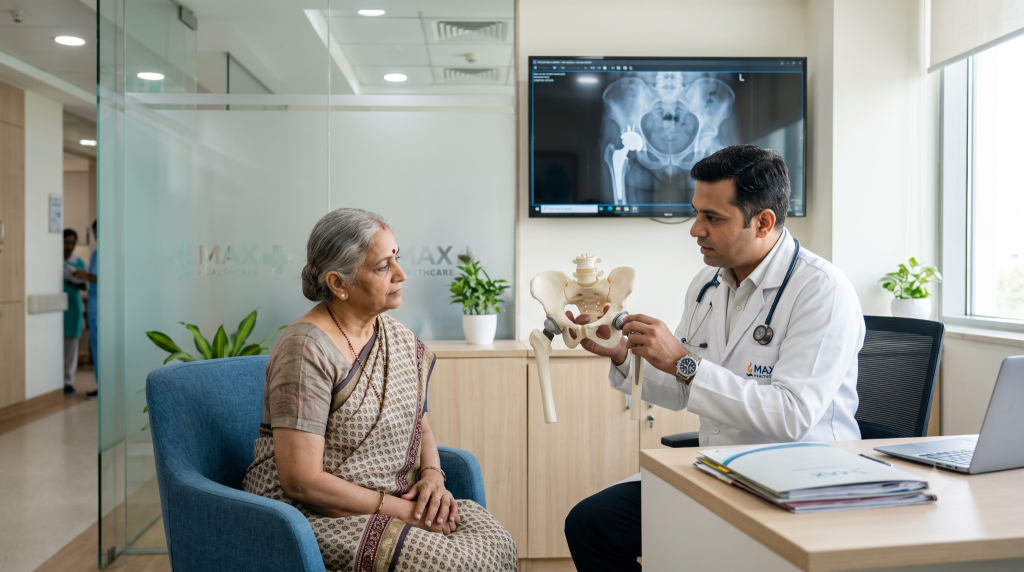
Total hip replacement surgery removes the damaged ball-and-socket joint of the hip, formed by the top of the femur and part of the pelvis, and replaces it with an artificial hip implant. It’s one of the most successful procedures in modern orthopedics, commonly done for advanced arthritis, avascular necrosis, or hip fractures, and it restores mobility for most patients within a few months.
What Is Normal During Hip Replacement Recovery?
Recovery after hip surgery isn’t symptom-free. Some discomfort, swelling, and fatigue are part of normal healing. The key is direction: normal symptoms gradually improve, while warning signs get worse or appear suddenly.
| Normal Recovery Symptoms | Warning Signs |
| Mild swelling that reduces daily | Sudden, one-sided leg swelling |
| Soreness that eases with rest and medicine | Sharp pain that keeps intensifying |
| Slight redness right at the incision line | Spreading redness, warmth, or pus-like discharge |
| Low-grade tiredness | Fever, chills, or feeling generally unwell |
| Stiffness that improves with physiotherapy | Sudden loss of ability to bear weight |
| Occasional clicking sound from the implant | Hip feels like it’s shifting or “giving way” |
Why Early Detection Matters?
Catching complications early changes outcomes. Data from the American Joint Replacement Registry shows infection is the leading cause of hip revision surgery overall, and research published through AAOS highlights that periprosthetic joint infection affects roughly 1–2% of first-time hip replacements, rising to 4–5% after revision surgery, according to the American Association of Hip and Knee Surgeons (AAHKS).
Deep vein thrombosis (DVT) risk is also well documented, which is why modern protocols pair early mobilization with blood thinners. Acting on symptoms within the first 24–48 hours, rather than waiting, is consistently linked to simpler treatment and better long-term joint survival.
7 Warning Signs After Hip Replacement Surgery You Should Never Ignore
1. Persistent or Worsening Pain
What it means: Pain that should be fading instead stays sharp or gets worse after the first two weeks.
Why it happens: This can point to infection, implant loosening, or inflammation deep in the joint.
Who’s at risk: Patients with diabetes, obesity, or a history of joint infections.
When to call: If pain increases day over day instead of easing, or wakes you at night.
Prevention: Follow the prescribed pain and antibiotic schedule; don’t skip follow-ups.
Treatment: Ranges from adjusted medication to imaging and, in infection cases, further intervention.

2. Fever and Chills
What it means: A temperature above 100.4°F (38°C), especially with chills, can signal a systemic infection.
Why it happens: Bacteria may have entered the surgical site or bloodstream.
Who’s at risk: Patients with weakened immunity or delayed wound healing.
When to call: Same day, fever after hip replacement should never be observed at home.
Prevention: Good wound hygiene and completing prescribed antibiotics fully.
Treatment: Blood tests, wound assessment, and targeted antibiotics if infection is confirmed.

3. Increasing Redness or Wound Discharge
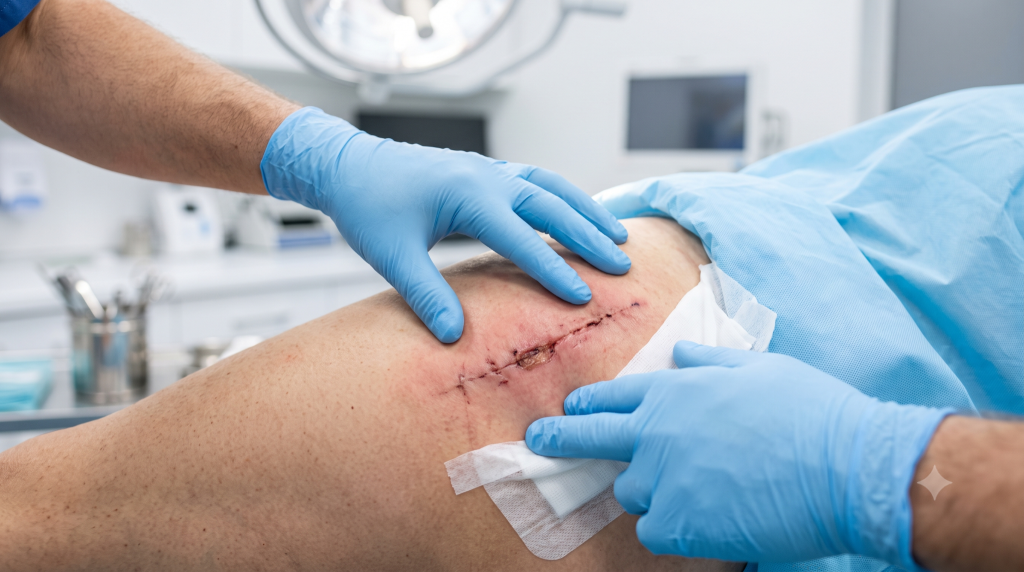
What it means: The incision looks angrier over time more red, warm, swollen, or leaking fluid.
Why it happens: This is a classic sign of surgical site infection.
Who’s at risk: Smokers, diabetics, and patients with poor nutrition.
When to call: As soon as discharge changes color, smells unusual, or redness spreads.
Prevention: Keep the dressing clean and dry; avoid touching the wound unnecessarily.
Treatment: Wound cultures, dressing changes, oral or IV antibiotics.
4. Sudden Swelling in the Leg
What it means: New, one-sided swelling in the calf or thigh may indicate deep vein thrombosis (DVT).
Why it happens: Reduced mobility after surgery slows blood flow, encouraging clot formation.
Who’s at risk: Patients with a prior clotting history, obesity, or limited early movement.
When to call: Immediately, especially if swelling comes with warmth or tenderness.
Prevention: Blood thinners as prescribed, calf exercises, and early walking.
Treatment: Anticoagulant therapy under close monitoring; hospitalization if severe.
5. Difficulty Walking After Initial Recovery
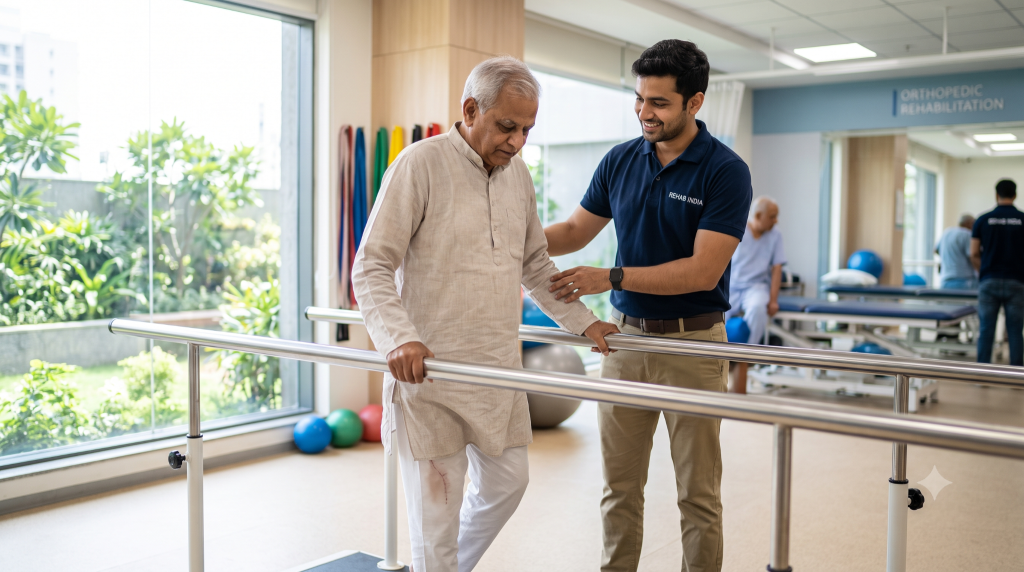
What it means: A step backward in mobility after you’d already been walking with support.
Why it happens: Could reflect implant loosening, muscle weakness, or an evolving infection.
Who’s at risk: Patients who skip physiotherapy or resume activity inconsistently.
When to call: If walking suddenly feels harder than it did a few days earlier.
Prevention: Stay consistent with physiotherapy and prescribed walking aids.
Treatment: Physical therapy reassessment, X-rays if implant issues are suspected.
6. Hip Dislocation Symptoms
What it means: A sudden “pop,” visible leg shortening, or the hip locking in an odd position.
Why it happens: Certain movements deep bending, crossing legs, twisting can dislodge a new implant.
Who’s at risk: Patients in the first 6–12 weeks post-surgery, before soft tissue has fully healed.
When to call: This is an emergency go to the hospital immediately.
Prevention: Follow hip precautions strictly; use raised chairs and toilet seats.
Treatment: Closed reduction under sedation, sometimes revision surgery for repeat dislocations.
7. Shortness of Breath or Chest Pain (Medical Emergency)
What it means: Sudden breathlessness, chest pain, or a racing heart can indicate a pulmonary embolism a clot that has traveled to the lungs.
Why it happens: An untreated DVT can break loose and travel through the bloodstream.
Who’s at risk: Anyone with untreated leg swelling or a personal/family history of clots.
When to call: Call emergency services immediately — do not drive yourself.
Prevention: Adherence to blood thinners and early, gentle mobilization.
Treatment: Emergency hospitalization, oxygen support, and anticoagulation therapy.
Hip Replacement Recovery Timeline
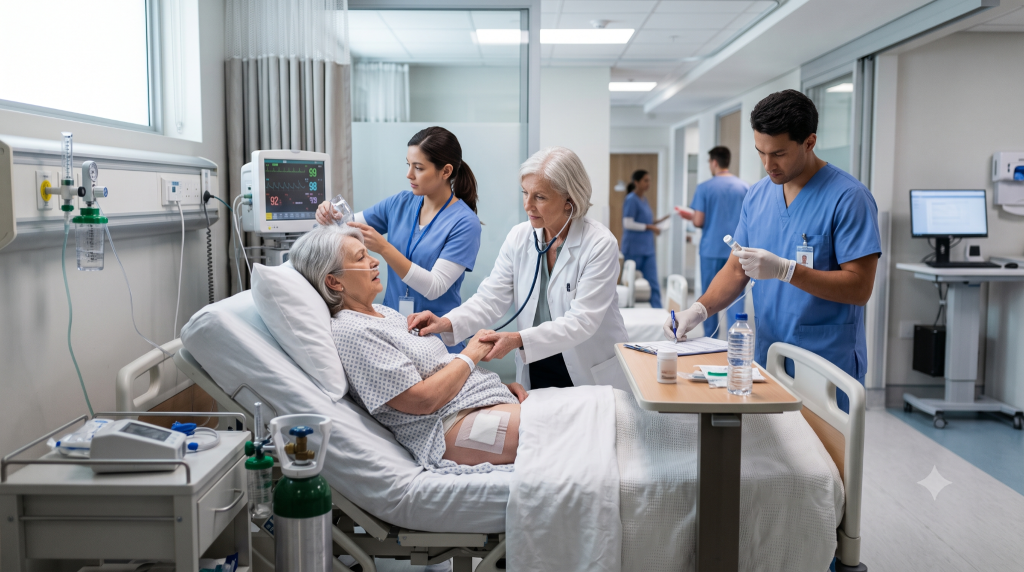
| Week | Healing Stage | Expected Recovery | Activities Allowed | Doctor Visit |
| Week 1 | Early healing | Pain managed with medication, wound care | Walking with walker, basic exercises | Yes — post-op check |
| Week 2–3 | Tissue repair | Swelling reduces, stitches/staples removed | Short walks, physiotherapy starts | Suture removal visit |
| Week 4–6 | Strengthening | Improved balance and confidence | Walking with cane, light household tasks | Follow-up X-ray |
| Week 7–12 | Functional recovery | Most daily activities resume | Driving (if cleared), stairs, longer walks | Progress review |
| Month 3–6 | Full rehabilitation | Near-normal strength and gait | Most sports, extended activity | Final clearance visit |
Normal vs Emergency Symptoms
| Normal | Emergency |
| Manageable pain with medicine | Pain that keeps escalating despite medicine |
| Mild swelling | Sudden one-leg swelling with warmth |
| Slight fatigue | High fever with chills |
| Stiffness improving with therapy | Hip that feels unstable or “gives way” |
| Occasional implant clicking | Chest pain or breathlessness |
Common Recovery Mistakes
- Ignoring a low fever, hoping it will pass on its own
- Skipping physiotherapy sessions once pain reduces
- Stopping prescribed medicines early without medical advice
- Smoking, which slows healing and raises clot risk
- Putting full weight on the hip before cleared to do so
- Dismissing leg swelling as “just part of recovery”
- Missing scheduled follow-up appointments
Recovery Tips
- Take blood thinners exactly as prescribed
- Do calf-pump exercises even while resting in bed
- Use walking aids until your surgeon says otherwise
- Avoid deep bending, leg-crossing, and twisting motions
- Keep the wound clean, dry, and unbandaged only when advised
- Attend every physiotherapy and follow-up session
- Eat protein-rich meals to support tissue healing
Myth vs Fact
| Myth | Fact |
| “No pain means no problem, ever.” | Pain that returns after improving can still signal infection or loosening. |
| “Swelling always means the surgery failed.” | Mild swelling is normal, but sudden one-sided swelling needs urgent review. |
| “You should avoid walking as much as possible.” | Early, guided mobilization actually lowers complication risk. |
| “Once the stitches are out, you’re fully healed.” | Soft tissue and bone continue healing for months after stitch removal. |
| “Fever after surgery is just the body’s normal reaction.” | Fever, especially with chills, should always be evaluated promptly. |
| “Hip replacements never dislocate if you’re careful.” | Dislocation can still happen, especially within the first 3 months. |
When Should You Visit an Orthopedic Surgeon in Indore?
If you notice any of the warning signs above, don’t wait for your next scheduled visit. Dr. Tarkit Modi, an experienced orthopedic surgeon in Indore specializing in hip and joint replacement, trauma care, and arthroscopy, recommends same-day evaluation for fever, spreading redness, sudden swelling, or any dislocation-like symptoms. As a bone specialist in Indore, he emphasizes that timely evaluation is almost always simpler to manage than a delayed one.
Recovery after hip replacement is a journey, and most patients heal beautifully with the right care and attention. But your body will tell you when something isn’t right the key is listening early. If you or a loved one is noticing any of these warning signs, don’t wait it out. Reach out to Dr. Tarkit Modi’s clinic in Indore for a timely evaluation. A quick check today can protect years of pain-free mobility tomorrow.
FAQs
1. How much pain is normal after hip replacement surgery?
Some soreness and aching for 4–6 weeks is normal, especially with activity. It should steadily improve, not worsen. Pain that spikes suddenly or returns after easing needs evaluation.
2. When should I worry about swelling after hip replacement?
Mild swelling in the first few weeks is expected. Worry if swelling is sudden, one-sided, or paired with warmth and tenderness; this could indicate a blood clot.
3. Can an infection occur months after surgery?
Yes. While most infections appear early, periprosthetic joint infections can develop months or even years later, especially after a subsequent illness or dental procedure.
4. How long does hip replacement recovery take?
Most patients walk with support within days and resume most daily activities by 6–12 weeks. Full strength and rehabilitation typically take 3–6 months.
5. Can I walk immediately after surgery?
Yes, most patients begin walking with a walker or crutches within 24 hours, under physiotherapist guidance, as early mobilization supports healing.
6. What should I avoid after hip replacement?
Avoid deep bending, crossing your legs, twisting the hip, sitting on low chairs, and high-impact activities until your surgeon confirms it’s safe.
7. When can I climb stairs?
Most patients can manage stairs carefully within 1–2 weeks, using the “good leg leads up, operated leg leads down” technique, once approved by their physiotherapist.
8. How long should I use a walker?
Typically 2–6 weeks, transitioning to a cane as strength and balance improve. Your surgeon will guide the exact timeline based on your progress.
9. What causes hip replacement failure?
Common causes include infection, implant loosening, dislocation, and wear over time. Regular follow-ups help catch these issues before they become serious.
11. Is leg swelling normal after hip replacement surgery?
Mild, gradually improving swelling is normal. Sudden or one-sided swelling is not and should be checked the same day to rule out a blood clot.
12. How do I know if my hip replacement is failing?
Warning signs include persistent pain, reduced mobility, a feeling of instability, or unusual sounds from the joint. An X-ray and clinical exam can confirm implant status.