
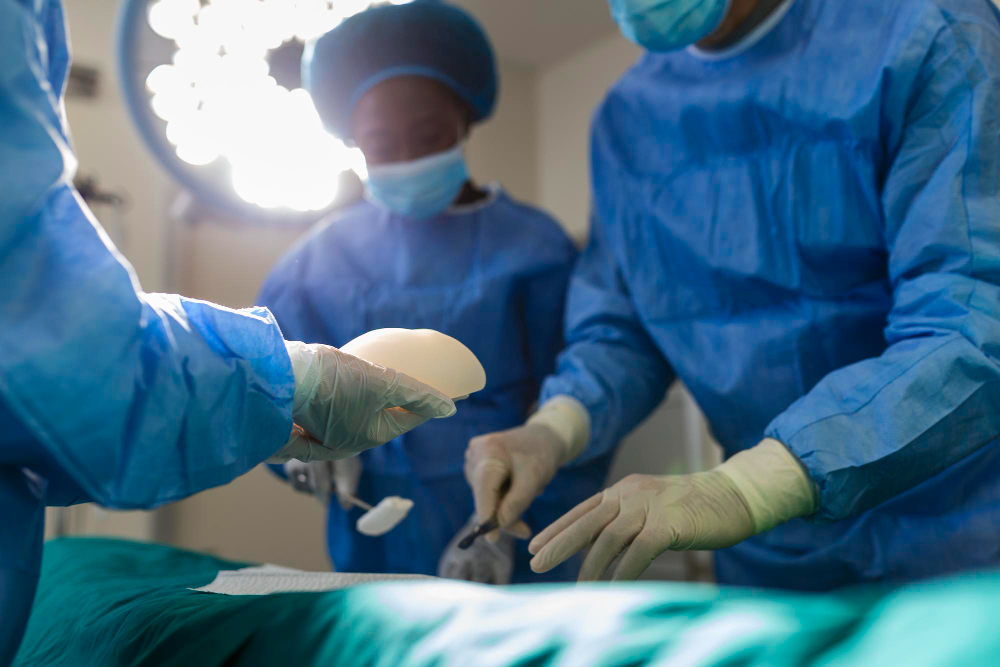
After hip replacement surgery, follow physiotherapy, use walking aids, sleep in recommended positions, and attend follow-up appointments. Don’t cross your legs, sit on low chairs, twist your hip suddenly, or skip exercises. Following these dos and don’ts after hip replacement surgery helps prevent complications and speeds up full recovery.
Hip replacement surgery recovery requires careful precautions for 3–6 months. Patients should follow physiotherapy, walk regularly with support, eat protein-rich foods, and attend all follow-up visits. They must avoid crossing legs, sitting on low surfaces, twisting movements, and heavy lifting. Most patients walk within 24 hours of surgery and return to normal activities within 3–6 months.
Dr. Tarkit Modi, an orthopaedic surgeon in Indore, provides personalised hip replacement recovery plans for patients to ensure safe, successful rehabilitation and long-term joint health.
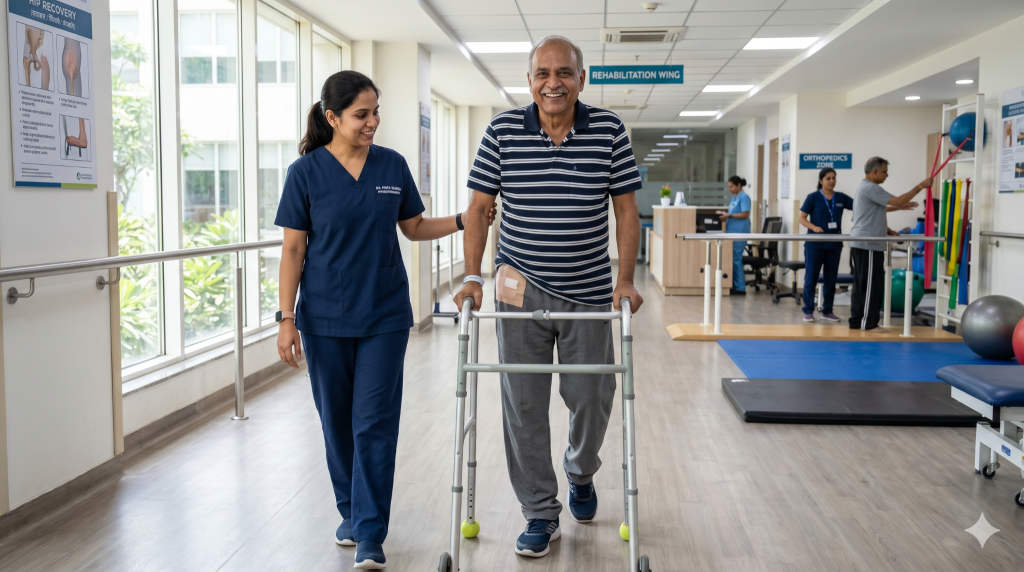
Dos and Don’ts After Hip Replacement Surgery
When 68-year-old Ramesh Verma, walked into Dr Tarkit Modi’s clinic, he could barely take ten steps without pain. Years of severe arthritis had worn out his hip joint completely. Six months after his total hip replacement surgery, he was back to his morning walks, climbing stairs at home, and attending his grandson’s school function, pain-free.
His secret? He followed every recovery guideline carefully.
Hip replacement surgery gives you a new joint. But how well you recover depends largely on what you do and what you avoid in the weeks and months that follow.
(Insert Dos vs Don’ts Comparison Table infographic here)
DO: Follow physiotherapy, walk daily, use walking aids, sleep correctly, eat well, attend follow-ups.
DON’T: Cross your legs, sit on low chairs, twist your hip, lift heavy objects, skip exercises, smoke or drink alcohol.
What Happens During Hip Replacement Surgery?
In a hip replacement surgery, the damaged ball-and-socket joint is removed and replaced with an artificial implant made of metal, ceramic, or plastic. The procedure relieves chronic pain and restores normal movement.
Doctors recommend hip replacement when:
- Severe osteoarthritis has destroyed the hip joint
- Rheumatoid arthritis causes persistent pain and stiffness
- A hip fracture (common in elderly patients) cannot heal on its own
- Other treatments like medication and physiotherapy have stopped working
The surgery is one of the most successful procedures in modern medicine. According to the National Joint Registry data, over 95% of total hip replacements are still functioning well at 10 years. In India, joint replacement surgeries have grown significantly, with orthopaedic specialists reporting steadily rising success rates due to improved implant technology and rehabilitation protocols.
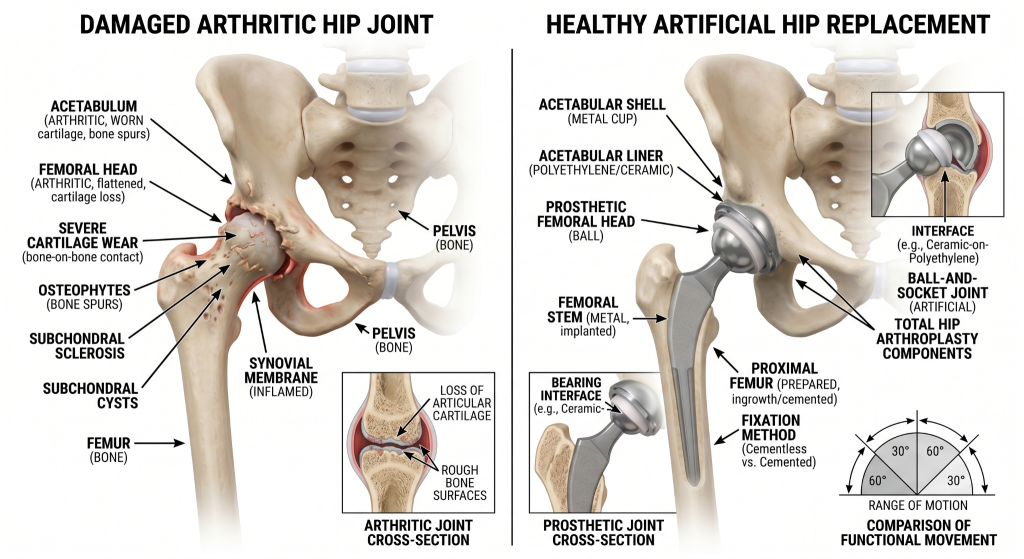
Why Do Following Recovery Guidelines Matter?
Many patients feel significant relief from pain within days of surgery and assume they can return to normal life immediately. This is one of the most common and dangerous mistakes.
Your new hip joint needs time to bond with surrounding bone and muscle. The tissues around the implant are healing. Ignoring guidelines during this window can lead to:
- Hip dislocation — the artificial joint slipping out of place
- Blood clots — a serious complication that can be life-threatening
- Infection — which may require revision surgery
- Implant loosening — reducing the lifespan of your replacement
Following proper post-hip replacement care gives you faster healing, fewer complications, better long-term mobility, and a hip replacement that can last 20–25 years or more.
Top Dos After Hip Replacement Surgery
| Do | Why It Matters |
| Follow your physiotherapy schedule | Rebuilds muscle strength and restores joint movement |
| Walk regularly with support | Prevents blood clots and improves circulation |
| Use a walker or crutches as advised | Protects the new joint while it heals |
| Sleep on your back with a pillow between your legs | Keeps the hip in correct position and prevents dislocation |
| Eat protein-rich foods (eggs, dal, paneer, chicken) | Supports tissue repair and muscle recovery |
| Stay well hydrated | Aids healing and reduces clot risk |
| Attend every follow-up appointment | Allows your surgeon to monitor implant health and catch problems early |
| Maintain a healthy weight | Reduces stress on the new joint and extends its life |
| Do ankle pumps and prescribed exercises in bed | Keeps blood flowing and prevents stiffness |
| Keep your wound clean and dry | Prevents infection at the surgical site |
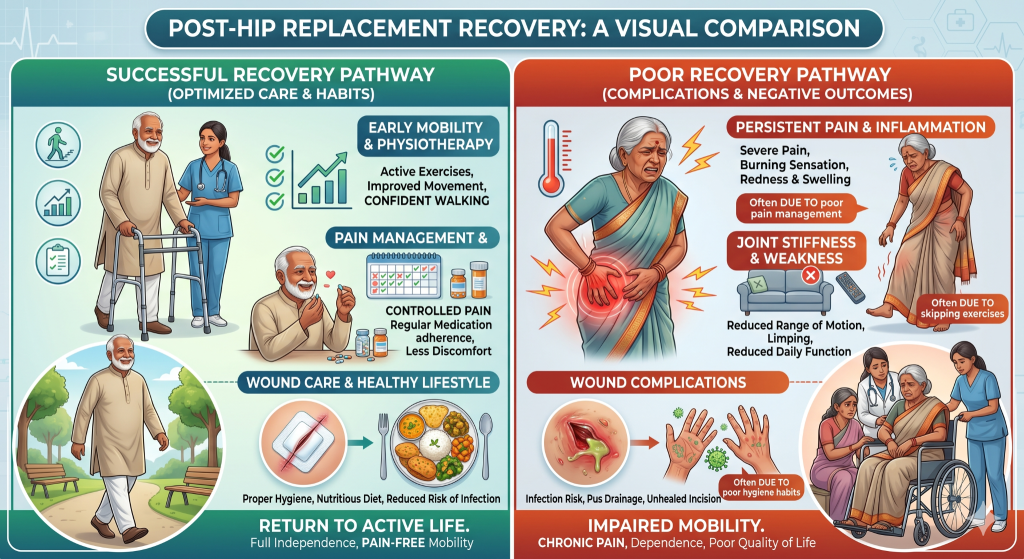
Important Don’ts After Hip Replacement Surgery
| Don’t | Possible Risk |
|---|---|
| Cross your legs at the knee or ankle | Can dislocate the new hip joint |
| Sit on low chairs, sofas, or Indian-style toilets | Forces the hip into dangerous angles |
| Twist or rotate your hip suddenly | High risk of dislocation |
| Lift heavy objects (more than 5 kg) | Strains healing muscles and implant |
| Ignore pain, swelling, or redness | May indicate infection or dislocation |
| Skip physiotherapy sessions | Leads to stiffness, weakness, and poor recovery |
| Drive before your surgeon gives clearance (typically 6–8 weeks) | Impairs your ability to brake safely; risk of accident |
| Smoke or consume alcohol | Slows healing, increases infection risk, weakens bone |
| Bend forward past 90 degrees at the hip | Can pop the new joint out of position |
| Sleep on the operated side without advice | Puts pressure on the healing joint |
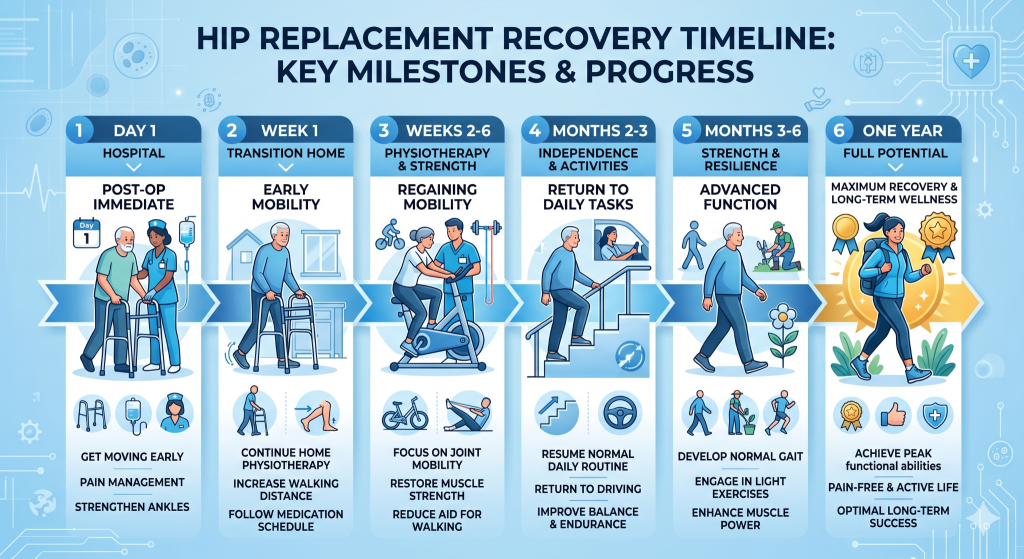
Hip Replacement Recovery Timeline
| Recovery Phase | What Patients Can Expect |
| Day 1–2 (Hospital) | Standing and walking short distances with a walker begins within 24 hours of surgery |
| Week 1 | Discharge from hospital; walking with support at home; basic physiotherapy exercises begin |
| Weeks 2–6 | Increasing walking distance daily; wound heals; physiotherapy intensifies; pain reduces significantly |
| Months 2–3 | Walking without aids for most patients; returning to light daily activities; driving may resume with clearance |
| Months 3–6 | Resuming normal household activities, light work, and climbing stairs comfortably |
| 1 Year | Full recovery for most patients; return to regular exercise, travel, and an active lifestyle |
Every patient recovers at a slightly different pace. Elderly patients or those with diabetes or osteoporosis may need additional time and support.
Best Exercises After Hip Replacement Surgery
Exercise is not optional; it is essential. The right exercises rebuild the muscles that support your new hip and restore your natural walking pattern.
Ankle Pumps
Flex your foot up and down while lying in bed. Do this from Day 1. It keeps blood flowing and reduces clot risk.
Heel Slides
Lying flat, slowly slide your heel toward your buttocks and back. This gently restores hip movement without strain.
Standing Hip Abduction
Holding a support, slowly lift your operated leg to the side. This strengthens the muscles around the hip joint.
Walking Program
Start with short, supervised walks and gradually increase distance every few days. Walking is the single most important rehabilitation exercise.
Warning Signs You Should Never Ignore
Seek immediate medical attention if you experience any of the following:
- Fever above 101°F (38.3°C) possible sign of infection
- Severe or sudden swelling in the leg may indicate a blood clot (DVT)
- Redness, warmth, or discharge from the wound: signs of surgical site infection
- Sudden inability to bear weight or walk: possible dislocation
- Chest pain or shortness of breath: emergency: possible pulmonary embolism
- Numbness or tingling in the leg: nerve involvement requiring assessment
- A popping sensation in the hip: may indicate dislocation
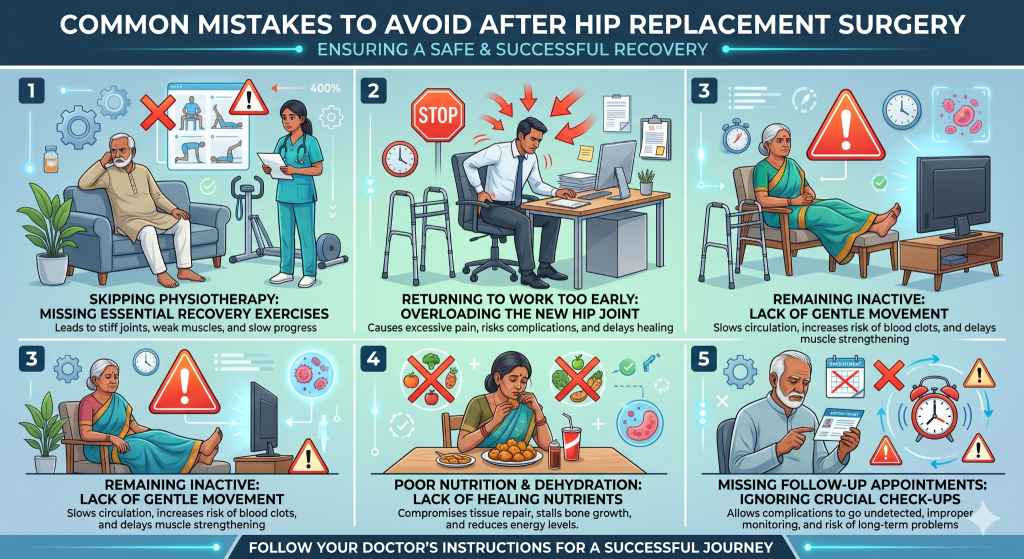
Common Recovery Mistakes Patients Make
Even motivated patients make avoidable mistakes. Here are the most common ones seen in recovery:
Stopping exercises too early. Pain reduces quickly, and many patients assume they no longer need physiotherapy. This leads to muscle weakness and stiffness months later.
Returning to work too soon. Desk jobs may be possible at 6–8 weeks, but physically demanding work requires 3–6 months. Rushing back risks injury.
Skipping follow-up appointments. Problems like early implant loosening or internal healing issues show no outward symptoms. Only imaging and examination can detect them.
Poor nutrition. Recovery requires significantly more protein and micronutrients than a normal diet. Patients who eat poorly heal slowly and lose muscle mass.
Remaining inactive out of fear. Some patients avoid movement because they fear hurting the new joint. Controlled movement and guided exercise are what make recovery successful not rest alone.
When to Consult an Orthopaedic Surgeon in Indore?
You should contact your hip replacement specialist in Indore if:
- Pain is increasing rather than decreasing after the first two weeks
- You notice any of the warning signs listed above
- You have questions about returning to work, driving, or exercise
- You feel anxious or uncertain about your recovery progress
- Your follow-up appointment is due (do not postpone these)
Hip replacement surgery can give you your life back your mobility, your independence, and your freedom from pain. But the surgery is only the beginning. The quality of your recovery depends on how carefully you follow your rehabilitation plan in the weeks and months ahead.
Every precaution has a reason. Every physiotherapy session matters. Every follow-up appointment protects your investment in your health.
Dr. Tarkit Modi, Orthopedic Surgeon in Indore, provides advanced hip replacement treatment and personalized rehabilitation guidance to help patients return to an active and pain-free life. With decades of experience in joint replacement treatment in Indore, Dr. Modi and his team support patients from initial consultation through complete recovery.
Book your consultation with Dr. Tarkit Modi today and get a personalized hip replacement recovery plan designed specifically for you.
Frequently Asked Questions (FAQs)
How long does it take to recover from hip replacement surgery?
Most patients achieve basic independence within 6 weeks and return to full normal activities within 3–6 months. Complete internal healing of the bone around the implant takes up to one year.
Can I sit cross-legged after hip replacement surgery?
No. Sitting cross-legged places the hip in an extreme rotated position and significantly increases the risk of dislocation. This position should be avoided for at least 6–12 months, and in many cases permanently.
When can I walk after hip replacement surgery?
Most patients begin walking with a walker within 24 hours of surgery. This early mobilization is intentional; it prevents blood clots and speeds recovery.
When can I drive after hip replacement surgery?
Driving is generally not recommended for 6–8 weeks after surgery, and only after your surgeon confirms that your reaction time and leg strength are sufficient for safe braking. Do not drive before getting clearance.
What foods help recovery after hip replacement?
Focus on high-protein foods eggs, paneer, dal, chicken, fish to support muscle and tissue repair. Calcium-rich foods like milk and curd support bone health. Vitamin C (citrus fruits, amla) aids wound healing. Iron-rich foods help rebuild blood after surgery.
Is physiotherapy mandatory after hip replacement surgery?
Yes, absolutely. Physiotherapy after hip replacement is not optional. It restores strength, flexibility, and balance in the muscles around the new joint. Skipping physiotherapy significantly increases the risk of a poor outcome, stiffness, and falls.
Can elderly patients recover fully after hip replacement surgery?
Yes. Age alone is not a barrier to good recovery. Many patients in their 70s and 80s achieve excellent outcomes with proper care, supervised physiotherapy, and healthy nutrition. Dr. Tarkit Modi has successfully performed hip replacements on elderly patients across Madhya Pradesh with very high satisfaction rates.
What should I avoid after hip replacement surgery?
Avoid crossing your legs, sitting on low surfaces, bending past 90 degrees at the hip, lifting heavy objects, twisting movements, smoking, alcohol, and skipping physiotherapy. Follow your surgeon’s specific list of hip dislocation precautions.
What are the warning signs of complications after hip replacement surgery?
Warning signs include fever above 101°F, severe swelling, wound redness or discharge, chest pain, shortness of breath, sudden inability to walk, and a popping sensation in the hip. Seek immediate medical care if any of these occur.
Which orthopedic surgeon in Indore should I consult for hip replacement recovery?
Dr. Tarkit Modi is a leading orthopedic surgeon in Indore specializing in total hip replacement surgery and post-operative rehabilitation. His clinic serves patients from across Madhya Pradesh seeking advanced joint replacement treatment in Indore with personalized recovery plans.