

Many patients ask: “Does my joint pain or fracture really need surgery?” The good news is that surgery is not always required for orthopaedic problems. Most common conditions, like knee pain, back strain, and minor fractures, respond well to non-surgical treatments first. An orthopaedic surgeon in Indore can guide you through conservative options before recommending surgery.
Early, personalised care makes all the difference. Whether you’re dealing with sports injuries or chronic joint pain, understanding your options empowers you to make informed decisions about your health
.
Is Surgery Always Necessary for Orthopaedic Problems?
No, surgery is not always necessary for orthopaedic problems. Studies show that 70-80% of common orthopaedic conditions can be effectively managed without surgery through physiotherapy, medications, and lifestyle changes. Only when conservative treatments fail after 3-6 months, or in cases of severe structural damage, does surgery become the recommended path.
This approach prioritises your natural healing ability first. Non-surgical treatments preserve joint function, avoid surgical risks, and often provide faster return to daily activities. An orthopaedic surgeon in Indore evaluates each case individually, considering your age, activity level, and pain severity before suggesting any procedure.
The goal remains simple: achieve pain relief and restore function with the least invasive method possible.
Common Orthopaedic Conditions That Often Do NOT Require Surgery
Many orthopaedic issues heal naturally or respond excellently to conservative care. Here’s what responds best to non-surgical treatment.
Knee Pain and Early Arthritis
Early knee osteoarthritis and mild joint pain affect millions, but 85% of early-stage cases improve significantly with non-surgical care. Patients often notice reduced pain within 6-8 weeks of consistent physiotherapy.
Effective non-surgical options include:
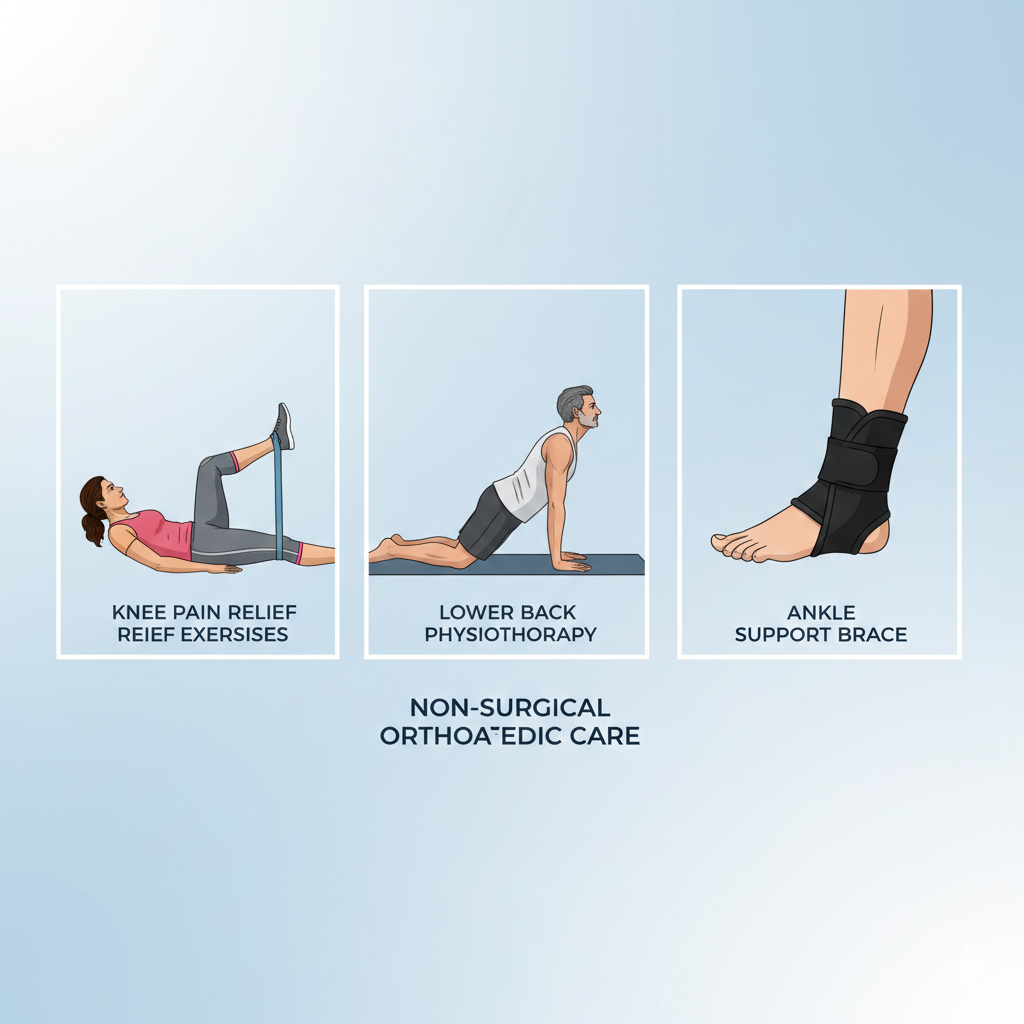
- Physiotherapy for joint pain: Strengthens quadriceps and hamstrings, improving knee stability
- Low-impact exercises like swimming or stationary cycling
- Weight management (every 1 kg lost reduces knee load by 4 kg)
- Anti-inflammatory medications and ice therapy
- Bracing or orthotics for better joint alignment
Patients in their 40s and 50s with early arthritis frequently avoid surgery entirely through these methods.
Back Pain and Muscle Strain
90% of acute back pain cases resolve within 6 weeks without surgery. Most back pain stems from muscle strain, poor posture, or disc irritation rather than structural damage requiring operation.
Proven conservative treatments:
- Physical therapy focusing on core strength and flexibility
- Postural correction and ergonomic adjustments
- Heat/ice therapy alternating for pain relief
- Short-term pain medications
- Spinal injections for severe nerve irritation
Chronic cases often improve with structured physiotherapy programs, avoiding surgery in 75% of patients.
Minor Fractures and Soft Tissue Injuries
Simple fractures (hairline cracks) and soft tissue injuries (sprains, strains) typically heal beautifully without surgery. Greenstick fractures in children and non-displaced fractures in adults respond well to casting or bracing.
Typical recovery protocol:
- Immobilisation with casts, splints, or functional braces (4-8 weeks)
- Early physiotherapy to prevent stiffness
- Gradual weight-bearing progression
- Calcium and vitamin D supplementation for optimal bone healing
When Does an Orthopaedic Surgeon in Indore Recommend Surgery?
While conservative care works for most cases, certain situations require surgical intervention for optimal outcomes. Surgery becomes necessary when non-surgical treatments fail or when structural damage threatens long-term joint function.
Severe Joint Damage or Advanced Arthritis
End-stage osteoarthritis, where cartilage is completely worn away, often requires joint replacement. Patient’s experience:
- Bone-on-bone grinding
- Severe pain limits walking distances
- Joint deformity or instability
- Failure of 6+ months of physiotherapy and injections
Complex Fractures and Sports Injuries
Unstable fractures (displaced bone fragments) and complete ligament tears (like ACL ruptures in active patients) often need surgery for proper alignment and stability.
Surgical indications:
- Fractures involving joint surfaces
- Multiple fracture fragments
- Ligament tears causing knee instability
- Sports injuries in patients under 40 who want to return to athletic activities
Recovery advantage: Surgical patients often return to sports faster than those with chronic instability.
Long-Term Pain Affecting Daily Life
When pain persists despite optimal conservative care, surgery addresses the root cause. Decision factors include:
- Patient age and activity demands (younger, active patients benefit more from ligament repair)
- Lifestyle impact (inability to work, climb stairs, or sleep)
- Diagnostic imaging showing correctable structural problems
- Quality of life reduction persisting 6+ months
Non-Surgical vs Surgical Treatment – A Simple Comparison
Understanding treatment differences helps patients make informed choices. Here’s a clear comparison:
| Treatment Type | Recovery Time | Cost Range | Risk Level | Suitable For |
| Physiotherapy + Medications | 6-12 weeks | Low (₹5,000-15,000) | Minimal | Early arthritis, muscle strains, minor fractures |
| Injections (Steroid/PRP) | 2-6 weeks relief | Medium (₹10,000-25,000) | Low | Moderate joint pain, tendon issues |
| Casting/Bracing | 4-8 weeks | Low (₹3,000-10,000) | Very Low | Simple fractures, stable injuries |
| Arthroscopic Surgery | 3-6 months | Medium (₹80,000-1.5L) | Moderate | Ligament tears, meniscus damage |
| Joint Replacement | 6-12 months | High (₹2-4L) | Higher | End-stage arthritis, severe joint damage |
| Fracture Fixation | 3-6 months | Medium-High (₹1-2.5L) | Moderate | Complex, displaced fractures |
Expert Advice from an Orthopaedic Surgeon in Indore
Dr. Tarkit Modi follows a personalised, stepwise approach prioritising non-surgical success whenever possible. Every patient receives:
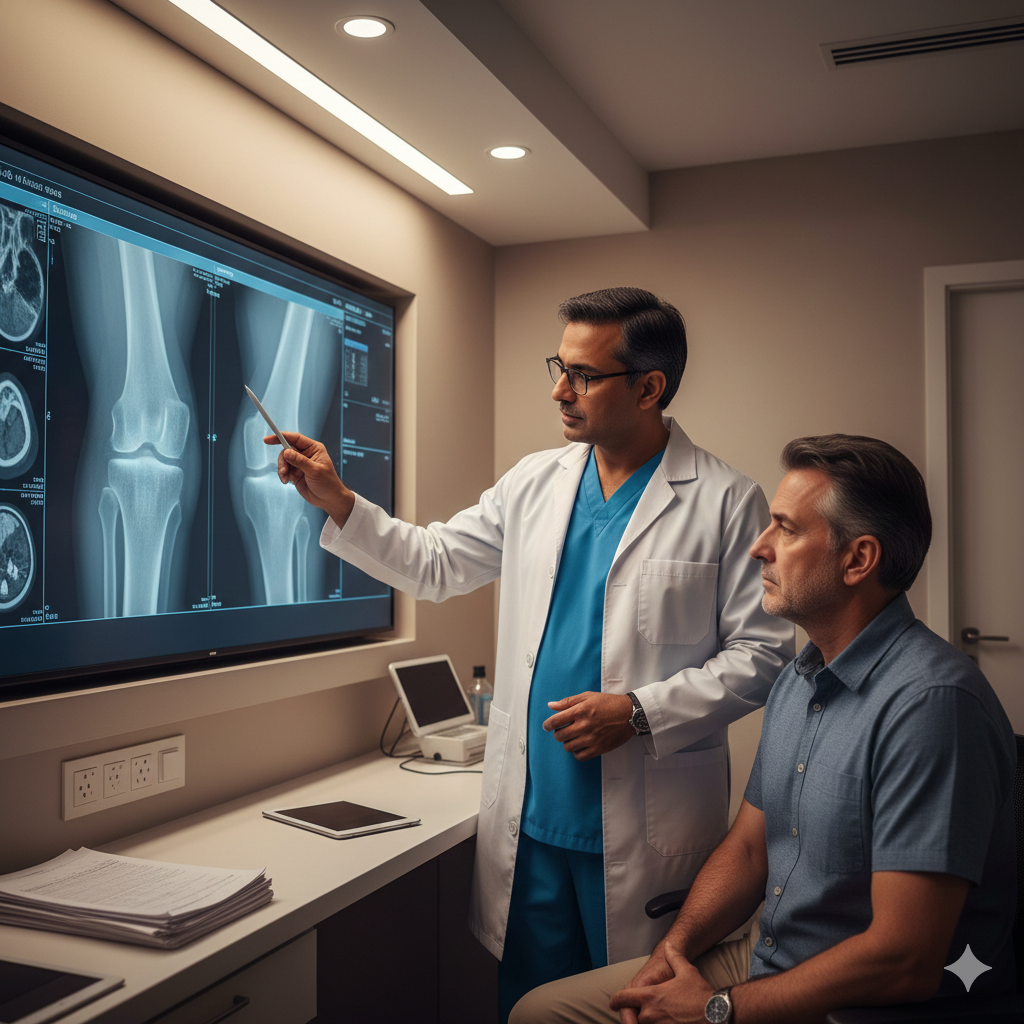
- Comprehensive evaluation (X-rays, clinical exam, lifestyle assessment)
- Custom treatment plan matching their specific needs and goals
- Clear timelines for when to expect improvement
- Regular progress monitoring with treatment adjustments
- Surgical consideration only after conservative failure
Frequently Asked Questions (FAQs)
Is surgery the only option for knee pain?
No, surgery is rarely the first option for knee pain. 85% of early knee osteoarthritis cases improve with physiotherapy, weight management, and injections within 8-12 weeks. Surgery only becomes necessary for advanced, bone-on-bone arthritis unresponsive to 6 months of conservative care.
When should I consult an orthopaedic surgeon in Indore?
Consult when pain persists beyond 2 weeks despite rest and medication, limits daily activities, or is accompanied by swelling, instability, or deformity. Early evaluation prevents progression and often avoids surgery entirely.
Can physiotherapy alone fix joint pain?
Physiotherapy alone resolves 70-80% of early joint pain when combined with proper exercise, weight management, and posture correction. Consistency over 6-12 weeks typically yields excellent results for arthritis, strains, and minor injuries.
How do I know if my fracture needs surgery?
Simple fractures (no displacement) heal in casts; complex fractures (displaced fragments, joint involvement) require surgery. An orthopaedic surgeon uses X-rays to determine stability. Most fractures (70%) heal without surgery.
What are the risks of delaying orthopaedic surgery when needed?
Delaying necessary surgery risks permanent joint damage, muscle wasting, chronic pain, and complex reconstructions. However, rushing into surgery without trying conservative care exposes patients to unnecessary surgical risks. Proper timing balances both concerns.
How successful is non-surgical treatment for back pain?
90% of acute back pain resolves within 6 weeks with conservative care. Chronic cases show 70% improvement with structured physiotherapy. Surgery helps only 5-10% of back pain patients with specific structural problems.
Posted by : Dr. Tarkit Modi
MBBS, MS (Orthopaedics) , FIJR, FIAS- (Fortis Hospital,Delhi)
Specialist in Joint Replacement and Arthroscopy, Shoulder, Hip, Knee & Orthopedic Surgeon in Indore