
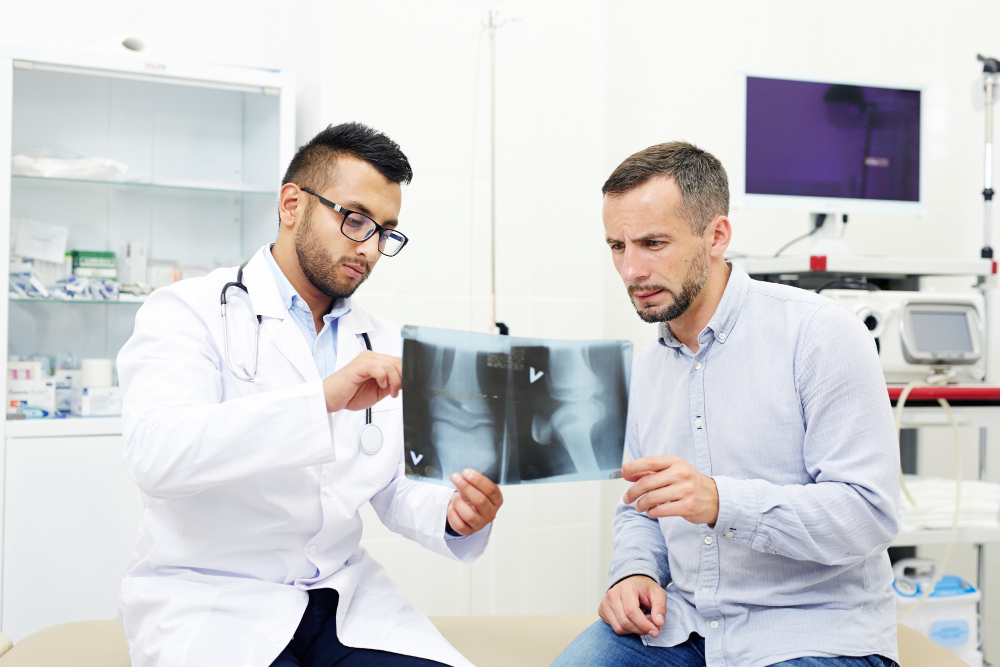
For many patients in Indore, the simple answer is: in most bone and joint problems, physiotherapy is strongly recommended along with treatment from an orthopedic doctor, but it is not always mandatory for every case. Physiotherapy helps you heal faster, move better, and stay pain-free for longer, especially after injuries, surgery, or chronic joint pain. Whether you need it or not depends on your diagnosis, age, lifestyle, and how severe your bone or joint condition is.
Dr. Tarkit Modi, a trusted orthopedic doctor in Indore, carefully evaluates each patient and then decides if physiotherapy should be part of the treatment plan. His approach is not “one-size-fits-all” but personalized, based on what will help you recover safely and effectively.
Role of an Orthopedic Doctor in Indore
An orthopedic doctor is a specialist who diagnoses and treats problems related to bones, joints, muscles, ligaments, and the spine. When you visit Dr. Tarkit Modi for joint pain, back pain, fractures, or sports injuries, his role includes:
- Listening to your symptoms and medical history
- Examining the affected area (knee, shoulder, back, etc.)
- Ordering X-rays, MRI, or blood tests if needed
- Giving a medical diagnosis (for example: knee osteoarthritis, ligament tear, slip disc, or fracture)
- Prescribing medicines, braces, injections, or surgery when required
But in many cases, medicines or surgery alone are not enough. To regain full movement, strength, and confidence in your joint, structured physiotherapy after orthopedic treatment becomes just as important as the initial diagnosis.
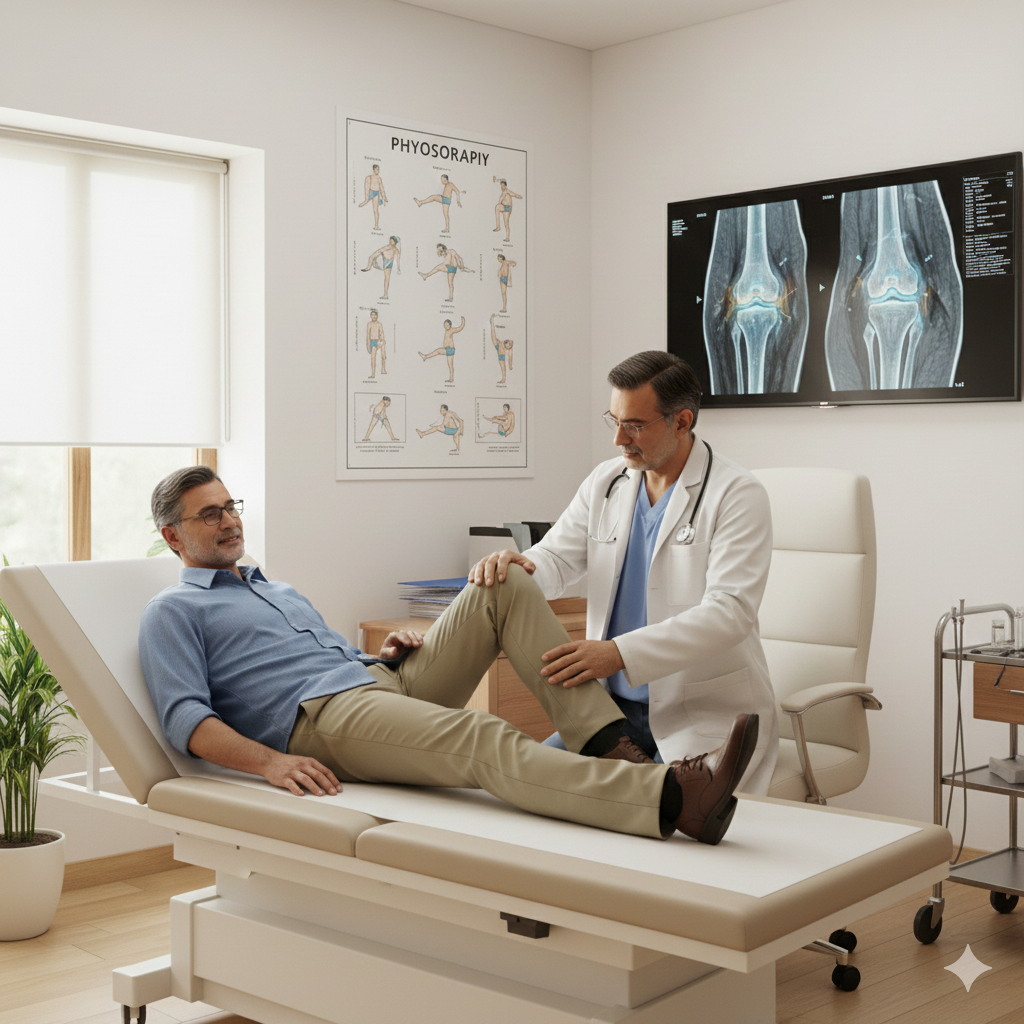
What Is Physiotherapy and Why Does It Matter After an Orthopedic Consultation?
Physiotherapy (also called physical therapy) uses targeted exercises, manual techniques, and movement training to help your body heal and function better. It is especially important after:
- Joint injuries (like ligament sprains or meniscus tears)
- Fractures (after plaster or surgery)
- Spine problems (like cervical or lumbar spondylosis)
- Joint replacement surgeries
- Sports injuries
Studies show that when physiotherapy is combined with medical treatment, patients have better pain relief and better function at 3 months and even 1 year after treatment, compared to those who only take medicines and do basic exercises on their own. Physiotherapy:
- Reduces pain and stiffness
- Improves joint movement
- Strengthens weak muscles
- Restores balance and walking pattern
- Prevents future injuries and long-term disability
In simple words, orthopedic treatment repairs the problem, and physiotherapy trains your body to use that repaired area correctly again.
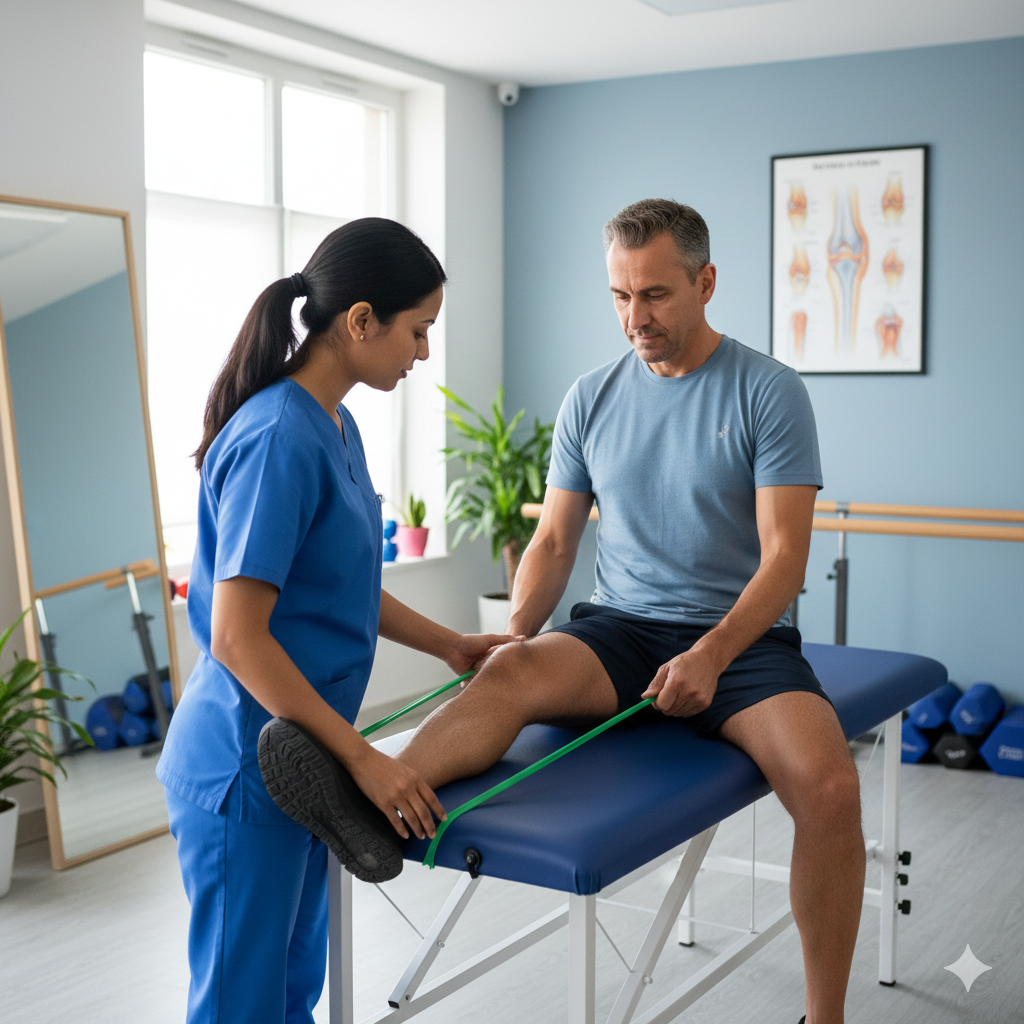
When Is Physiotherapy Recommended After Seeing an Orthopedic Doctor?
After your orthopedic consultation in Indore, Dr. Tarkit Modi may recommend physiotherapy if:
- Your pain is affecting daily activities like walking, climbing stairs, or getting up from a chair
- You have stiffness after rest or after plaster removal
- Your muscles have become weak due to pain or long-term rest
- You have undergone surgery (fracture fixation, ligament reconstruction, spine surgery, joint replacement)
- You have recurring back pain or neck pain
- You play sports and want a safe return to the game
In such situations, skipping physiotherapy often leads to:
- Slower recovery
- Persistent stiffness
- Weakness in the muscles
- Higher chances of pain coming back
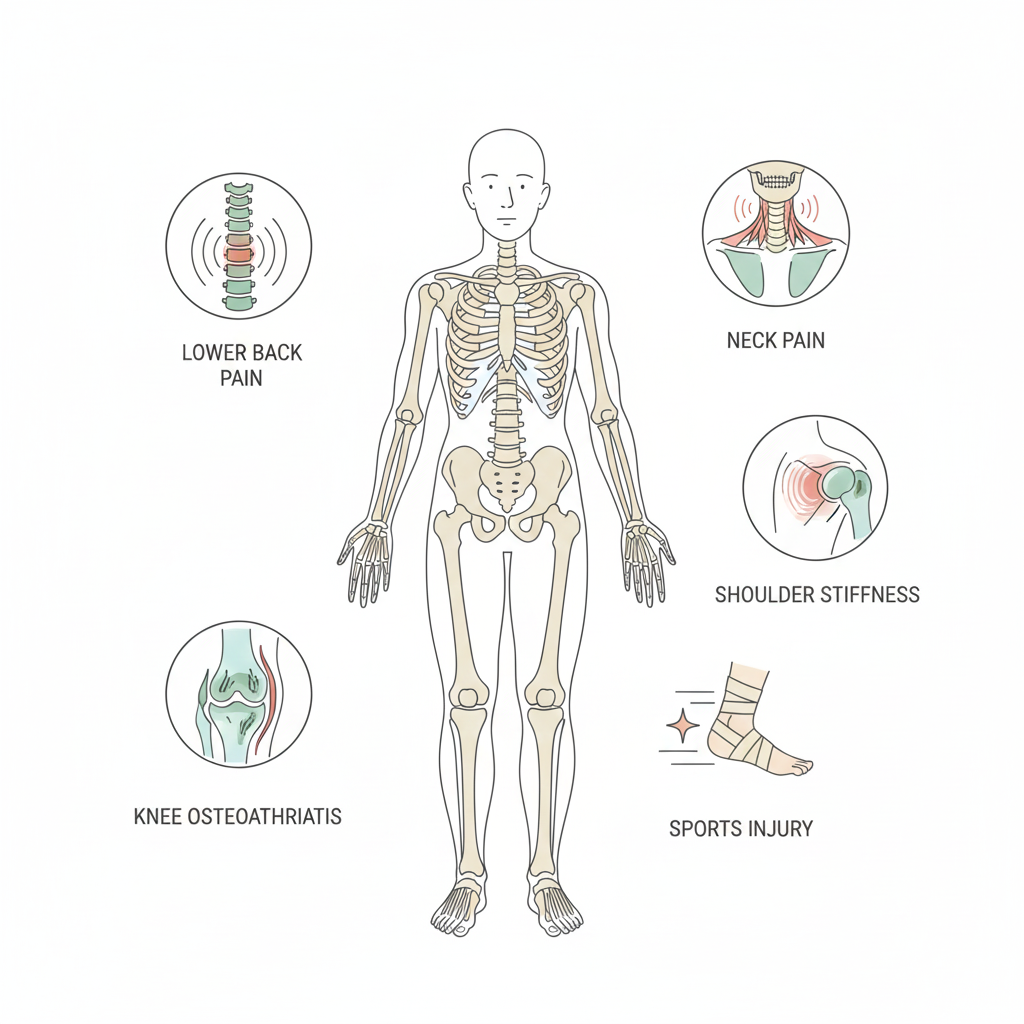
Conditions That Commonly Require Physiotherapy
Some bone and joint conditions almost always benefit from structured physiotherapy, especially in Indore, where people often delay care due to busy schedules.
Common conditions include:
- Knee osteoarthritis – Exercises to strengthen thigh muscles and improve joint stability
- Chronic low back pain – Core strengthening, posture correction, stretching
- Neck pain from spondylosis or desk work – Posture training and cervical strengthening
- Post-fracture recovery – After plaster or surgery, to regain full joint movement
- Shoulder problems (frozen shoulder, rotator cuff tears) – Stretching and gradual strengthening
- Sports injuries – Ankle sprains, ligament injuries, meniscus tears, muscle strains
- After joint replacement surgery – To help you walk, bend, climb stairs, and do daily work sooner
Physiotherapy is especially important for elderly patients, people with weak muscles, and those with repeated injuries.
Benefits of Physiotherapy Along With Orthopedic Treatment
Research and clinical experience both show that combining physiotherapy with orthopedic treatment offers clear benefits:
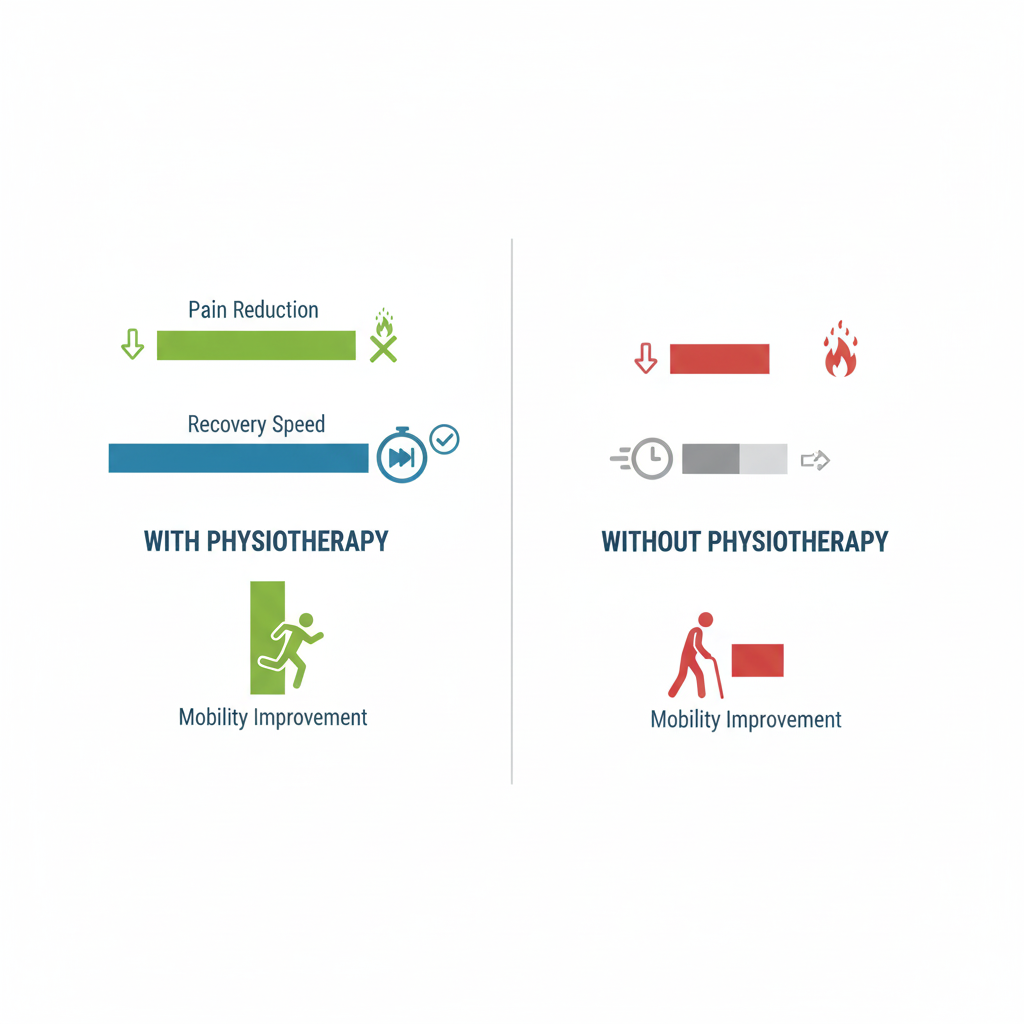
- Better pain control: Studies have found that adding physiotherapy to medical treatment can reduce pain by 60–70% at around 3 months, compared to 30–40% with medicines and home exercises alone.
- Faster recovery: Soft tissue injuries often heal in 6–8 weeks, but with proper physiotherapy, patients typically regain function earlier than those without supervised rehab.
- Improved mobility and strength: Physiotherapy can improve functional mobility (walking, climbing stairs, daily tasks) by 65–80% in many orthopedic cases, vs only 30–45% without it.
- Lower risk of stiffness and long-term disability: Physiotherapy reduces stiffness, prevents joint contractures, and maintains muscle strength.
- Better long-term results: One long-term study found that combining physiotherapy with medical treatment gave better pain and function even one year after treatment, compared with medical treatment alone.
In short, physiotherapy helps you heal better, not just heal faster.
When Physiotherapy May NOT Be Immediately Required?
There are some situations where physiotherapy may not be needed right away:
- Mild sprains or minor joint pain that improves quickly with rest and medicines
- Very early-stage osteoarthritis with minimal functional limitation
- Simple fractures in children that heal well with immobilization alone
- Severe pain flare-ups, where pain needs to settle before active exercises
Recovery Timeline: With vs Without Physiotherapy
The table below shows a general comparison of recovery when physiotherapy is included versus when it is not (for common problems like knee pain, back pain, and post-fracture stiffness):
| Parameter | With Physiotherapy | Without Physiotherapy |
| Pain reduction at 3 months | 60–70% reduction | 30–40% reduction |
| Functional mobility improvement | 65–80% improvement | 30–45% improvement |
| Average recovery time (knee pain, back pain, post-fracture) | 6–8 weeks | 10–14 weeks |
| Risk of stiffness and muscle weakness | Low | High |
| Long-term stability (after 1 year) | Most patients maintain improvement | Higher chance of pain and stiffness returning |
Do You Really Need Physiotherapy After Seeing an Orthopedic Doctor in Indore?
If you have persistent joint pain, back pain, fractures, or sports injuries, physiotherapy is not just an “extra” – it is often a key part of complete treatment. It:
- Speeds up recovery
- Reduces pain more effectively
- Improves mobility and strength
- Lowers the risk of long-term stiffness and disability
However, whether you personally need physiotherapy right now should always be decided after a proper orthopedic consultation and physiotherapy assessment.
If you are in Indore and dealing with bone and joint problems, consulting Dr. Tarkit Modi, an experienced orthopedic doctor, can help you understand:
- What exactly is causing your pain
- Whether physiotherapy is required or optional in your case
- How a structured rehab plan can support your long-term recovery and joint health
FAQs
Is physiotherapy always required after visiting an orthopedic doctor?
No, physiotherapy is not always mandatory. It depends on your diagnosis, pain level, and functional limits. For many conditions, like chronic knee pain, back pain, fractures, or after surgery, physiotherapy is strongly recommended because it improves recovery and long-term results.
How does physiotherapy help after orthopedic treatment?
Physiotherapy helps reduce pain, improve joint movement, strengthen muscles, correct posture, and restore daily function. Studies show that combining physiotherapy with medical treatment gives better pain relief and mobility at 3 months and 1 year compared to medicines alone.
Which conditions treated by an orthopedic doctor in Indore usually need physiotherapy?
Common conditions requiring physiotherapy include knee osteoarthritis, chronic back pain, neck pain, post-fracture stiffness, ligament injuries, frozen shoulder, rotator cuff tears, and recovery after joint replacement or fracture surgery.
How long does physiotherapy usually last for joint or back problems?
For many soft tissue and joint conditions, physiotherapy lasts about 6–8 weeks, with sessions 2–3 times a week. Some complex problems or post-surgical cases may need several months of structured rehab. The exact duration depends on your progress and goals.
Can I recover with only medicines and rest, without physiotherapy?
Mild problems may improve with medicines and rest. However, for many bone and joint conditions, treatment without physiotherapy leads to slower recovery, more stiffness, weaker muscles, and a higher chance of pain returning later.
When should I start physiotherapy after consulting an orthopedic doctor?
Your orthopedic doctor decides the right timing. In many cases, gentle physiotherapy starts early (within days or weeks), especially after injuries or surgery. In severe pain or acute inflammation, treatment may begin with rest and medicines first, followed by gradual physiotherapy.
Posted by : Dr. Tarkit Modi
MBBS, MS (Orthopaedics) , FIJR, FIAS- (Fortis Hospital,Delhi)
Specialist in Joint Replacement and Arthroscopy, Shoulder, Hip, Knee & Orthopedic Surgeon in Indore