

Overview
Knee replacement surgery may be needed sooner than expected if you experience persistent knee pain, difficulty walking, pain while climbing stairs, morning stiffness lasting over 30 minutes, ongoing swelling, visible knee deformity like bow legs, or growing difficulty with daily activities such as sitting cross-legged or using stairs. These signs usually indicate advanced cartilage wear from knee arthritis. An orthopedic surgeon can confirm the severity through a physical exam and X-rays, and recommend whether knee replacement or earlier non-surgical treatment is appropriate for your condition.
Featured Snippet
The most common signs you may need knee replacement surgery sooner include persistent knee pain, difficulty walking, pain while climbing stairs, severe morning stiffness, ongoing swelling, visible knee deformity, and difficulty with daily activities. If these signs persist, consult an orthopedic surgeon for evaluation.
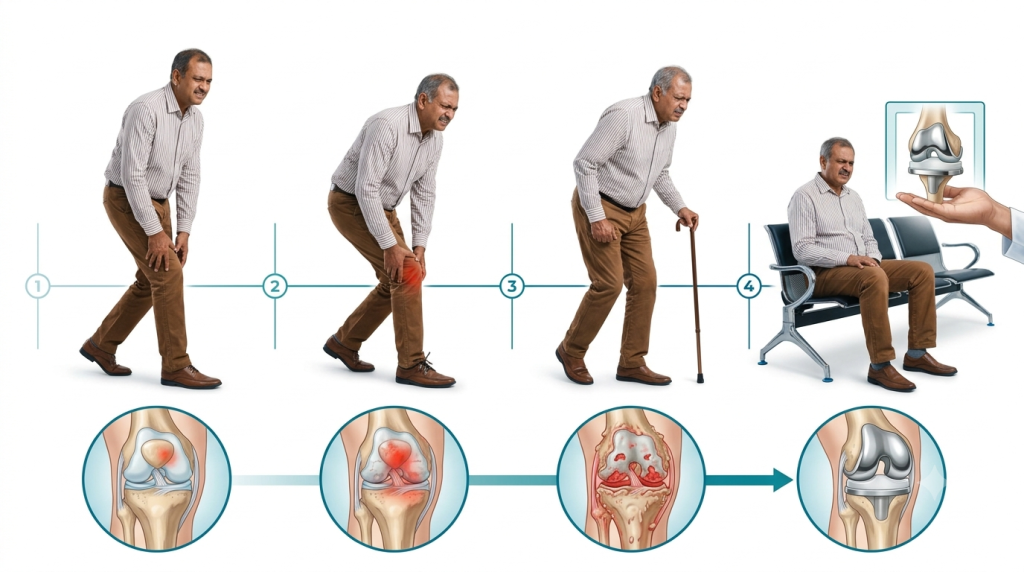
Ramesh Patel, a 58-year-old shop owner, used to walk to his shop every morning without a second thought. Over the past year, that short walk became a struggle. Climbing the stairs to his store made his knees ache. Some mornings, he could barely bend his knee until he had “walked it off” for ten minutes. He kept telling himself it was just age. It wasn’t until the pain started waking him up at night that he finally saw an orthopedic surgeon and learned his knee arthritis had progressed further than he realized.
Many patients wait too long before considering knee replacement surgery. The most common signs that you may need knee replacement sooner than expected include persistent knee pain, difficulty walking, pain while climbing stairs, morning stiffness, ongoing swelling, visible knee deformity, and struggling with daily activities like sitting cross-legged or getting up from a chair. If these signs sound familiar, it’s worth getting your knees checked by an orthopedic surgeon before the damage worsens.

What Is Knee Replacement Surgery?
Knee replacement surgery, also called total knee replacement, is a procedure where a surgeon removes the damaged surface of your knee joint and replaces it with an artificial joint made of metal and plastic. Think of it like replacing worn-out tyres on a car; the damaged parts are swapped out so the joint can move smoothly again.
The surgery is usually recommended when the cartilage (the smooth cushion between bones) has worn down so much that bone rubs against bone, causing pain, stiffness, and swelling. This condition is most often caused by severe knee arthritis, which is common in adults above 45.
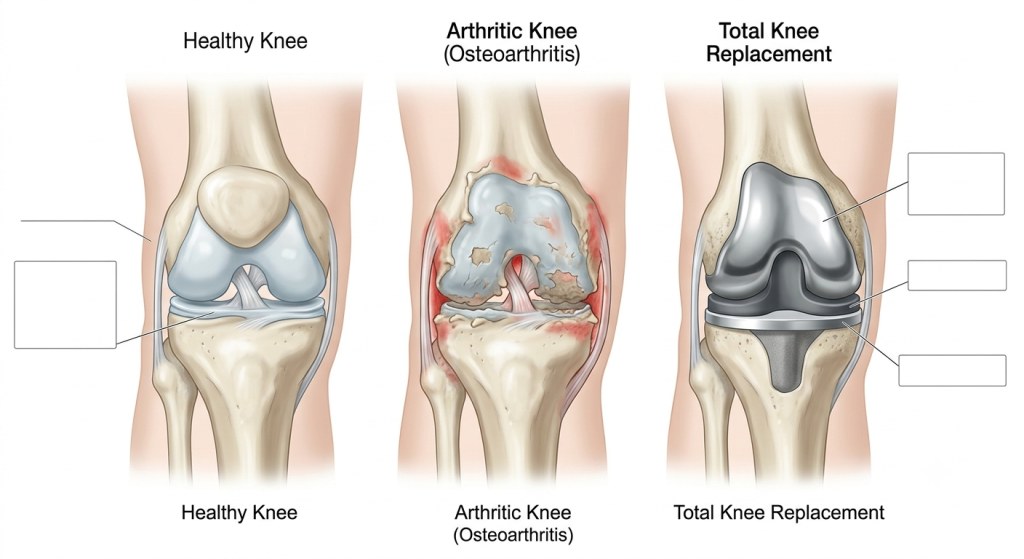
7 Signs You May Need Knee Replacement Surgery Sooner Than You Think
1. Persistent Knee Pain
If your knee hurts almost every day, even while resting, this is a major warning sign. Early arthritis pain usually comes and goes with activity. Constant pain often means the cartilage cushion is significantly worn down.
Why it happens: Bone-on-bone contact irritates nerve endings around the joint.
When to consult a doctor: If pain lasts more than 3 months and doesn’t improve with rest, medication, or physiotherapy.

2. Difficulty Walking
Struggling to walk short distances, needing a wall or railing for support, or noticing that your walk has slowed down significantly are signs that your knee joint may no longer be functioning properly.
Why it happens: Damaged cartilage makes the knee unstable and painful under weight.
When to consult a doctor: If walking 10–15 minutes becomes noticeably harder than it was a year ago

3. Knee Pain While Climbing Stairs
Stairs put much more pressure on your knees than flat walking. Pain, a burning sensation, or a feeling that your knee might “give way” while climbing or descending stairs is a common early sign of advanced arthritis.
Why it happens: Bending the knee under body weight increases pressure on already-damaged cartilage.
When to consult a doctor: If you start avoiding stairs altogether or need to take them one step at a time
.
4. Severe Morning Stiffness
Feeling stiff for 30 minutes or longer after waking up, or after sitting for a while, points to significant joint inflammation.
Why it happens: Reduced joint fluid and cartilage wear make the knee harder to move after periods of rest.
When to consult a doctor: If stiffness regularly lasts more than 30 minutes and interferes with your morning routine.

5. Knee Swelling That Doesn’t Improve
Occasional mild swelling after activity is normal. But swelling that stays for days, comes back repeatedly, or doesn’t respond to rest and ice is a red flag.
Why it happens: The joint produces excess fluid to protect itself from ongoing damage.
When to consult a doctor: If swelling persists for more than a week or keeps recurring.
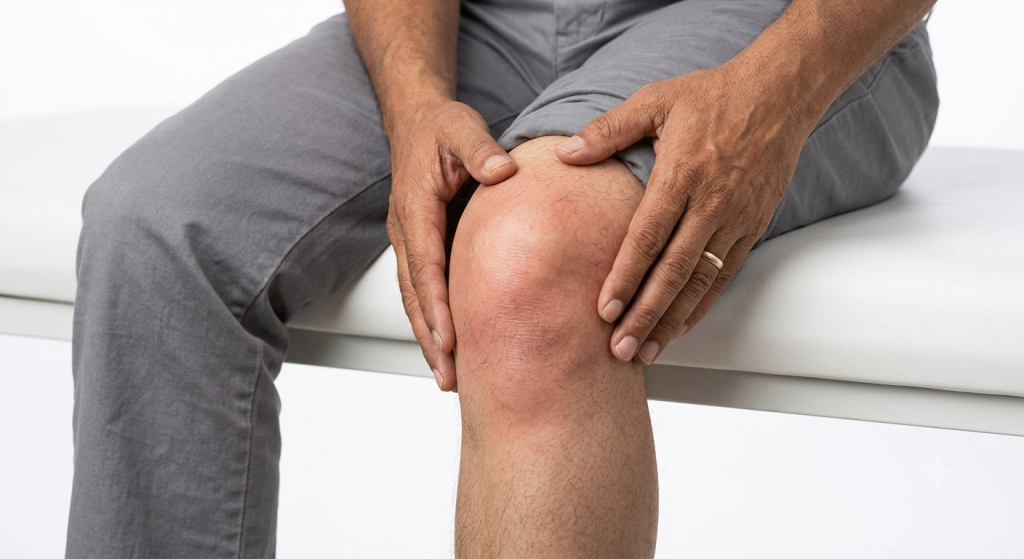
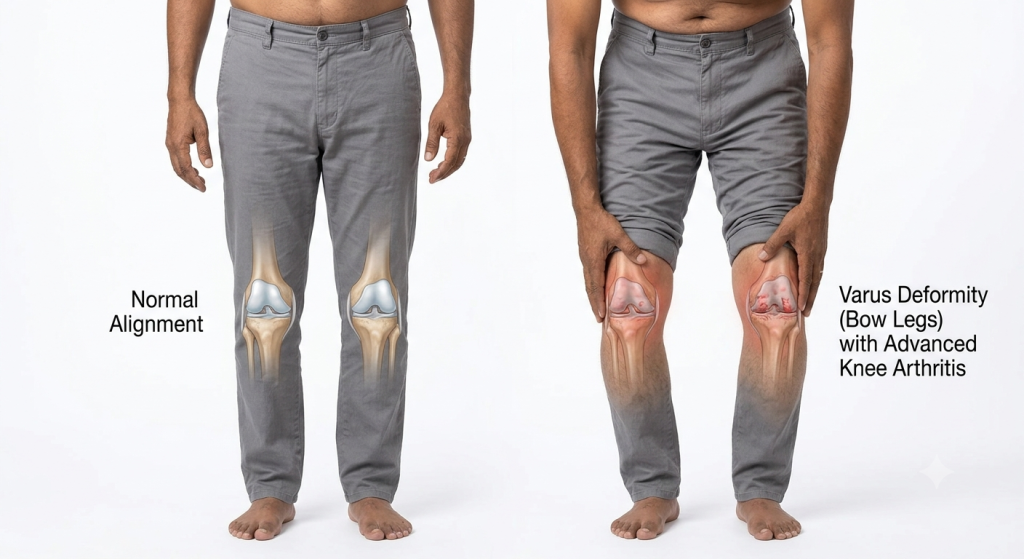
6. Bow Legs or Knee Deformity
If your legs are starting to look bowed, or one knee appears different in shape from the other, this usually means the cartilage on one side of the knee has worn away unevenly.
Why it happens: Uneven cartilage loss shifts your leg alignment over time.
When to consult a doctor: As soon as you or your family notice a visible change in leg shape.
7. Daily Activities Becoming Difficult
Struggling to sit cross-legged, get up from a low chair, use Indian-style toilets, or kneel for prayer are activities that Indian patients often mention first — even before they describe “pain.”
Why it happens: These movements require deep knee bending, which becomes painful and limited as cartilage wears down.
When to consult a doctor: If these activities have become consistently difficult over the past 6–12 months.
Knee Pain vs Knee Replacement :
| Factor | Manageable Knee Pain | Needs Knee Replacement Evaluation |
| Pain frequency | Occasional, activity-related | Daily or constant, even at rest |
| Walking | Mild discomfort | Needs support or frequent rest |
| Stairs | Slight difficulty | Avoided altogether |
| Morning stiffness | Under 15 minutes | Over 30 minutes |
| Swelling | Rare, resolves quickly | Frequent or long-lasting |
| Leg appearance | Normal | Visible bowing or deformity |
| Response to treatment | Improves with rest, medication | Little to no improvement |
What Happens If You Delay Knee Replacement?
Delaying surgery when it’s genuinely needed doesn’t just mean living with pain, it can create additional problems. Arthritis tends to worsen progressively, and the surrounding thigh and calf muscles weaken from reduced use, making walking even harder. Many patients also develop poor sleep due to nighttime pain, which affects overall health and mood.
Long-term immobility can lead to weight gain, which places further stress on the joint, creating a difficult cycle. Waiting too long can also make surgery and recovery more complex, since weakened muscles take longer to rebuild afterward.
When Should You Consult an Orthopedic Surgeon in Indore?
If you’re experiencing two or more of the signs above, especially persistent pain, walking difficulty, or visible deformity, it’s time for a proper evaluation. An orthopedic surgeon can assess your knee through a physical exam and imaging (like X-rays) to determine how much cartilage damage has occurred and whether knee replacement, or an earlier non-surgical treatment, is right for you.
Dr. Tarkit Modi, an experienced orthopedic surgeon in Indore, specializes in diagnosing and treating knee arthritis at every stage from early management to total knee replacement. If you’re struggling with ongoing knee pain or noticing any of the signs above, don’t wait for the pain to control your life. Book a consultation with Dr. Tarkit Modi today to get a clear, honest assessment of your knee health and the right treatment path for you.
FAQs
1. How do I know if I need knee replacement surgery?
If you have persistent pain, difficulty walking, stiffness lasting over 30 minutes, or ongoing swelling that doesn’t improve with rest or medication, you should get evaluated by an orthopedic surgeon.
2. At what age is knee replacement recommended?
Knee replacement is most common in adults above 55–60, but it can be recommended earlier if arthritis is severe or caused by injury, regardless of age.
3. Can I avoid knee replacement surgery?
In early stages, arthritis can often be managed with physiotherapy, weight management, medication, and lifestyle changes. Surgery is usually considered when these options no longer relieve symptoms.
4. How long does recovery take?
Most patients start walking with support within a day or two after surgery and return to normal daily activities within 6–12 weeks, though full recovery can take a few months.
5. Can I climb stairs after surgery?
Yes. Most patients can climb stairs comfortably a few weeks after surgery, once strength and mobility improve through physiotherapy.
6. Is knee replacement painful?
Modern pain management techniques keep discomfort well controlled during and after surgery. Most patients report significant pain relief compared to their pre-surgery arthritis pain.
7. What is the success rate of knee replacement?
Knee replacement surgery has a high success rate, with most patients experiencing major pain relief and improved mobility.
8. How long does an artificial knee last?
Modern knee implants typically last 15–20 years or longer, depending on activity level and how well post-surgery guidelines are followed.
9. Which doctor should I consult in Indore?
Dr. Tarkit Modi is an experienced orthopedic surgeon in Indore, specializing in knee arthritis treatment and total knee replacement surgery.
10. Is knee replacement safe for elderly patients?
Yes. With proper pre-surgery evaluation and care, knee replacement is safe and commonly performed in elderly patients, often significantly improving their quality of life.