

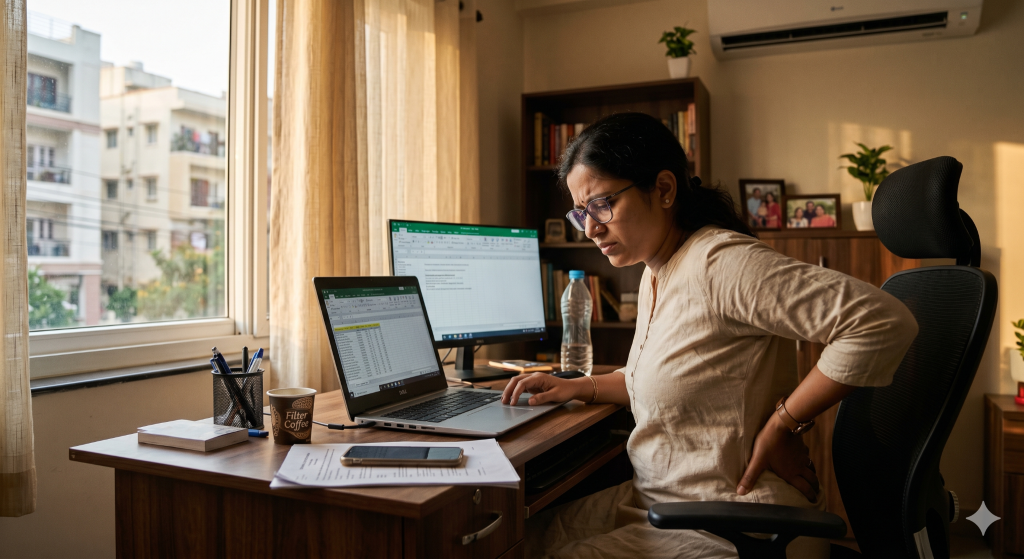
Sound familiar? You sit down at 9 AM, dive into work, look up, and it’s already 3 PM. Your lower back is stiff, your hips feel locked, and getting up feels like a punishment. Whether you’re working at an IT company, working from home, or studying for long hours, lower back pain from sitting too long has become one of the most common complaints I hear every single week at my clinic in Indore.
The good news? In most cases, it is completely manageable and even preventable. Let me walk you through everything you need to know.
Why Does Sitting for Long Hours Cause Lower Back Pain?
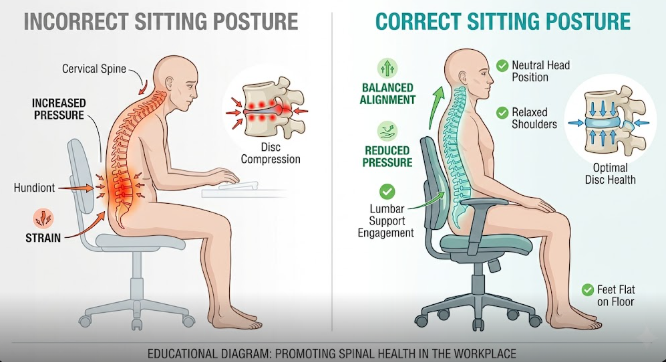
Here’s something most people don’t realize: sitting is actually harder on your spine than standing. When you sit, especially with a forward hunch, the pressure on your lumbar discs increases by nearly 40% compared to standing upright. Over hours and hours, that adds up.
A few things happen when you sit too long:
- Your hip flexor muscles tighten and shorten
- Your core muscles (which support the spine) weaken gradually
- The cushioning discs in your lower spine get compressed
- Blood flow to the back muscles reduces, causing stiffness and aches
According to research published in the European Spine Journal, people who sit for more than 6 hours a day have a significantly higher risk of developing chronic low back pain. In today’s screen-heavy work culture, most professionals sit for 8–10 hours daily. No wonder back pain clinics in Indore are busier than ever.
Symptoms: What Are You Actually Feeling?
Lower back pain from prolonged sitting can feel different for different people. Here are the most common symptoms:
- A dull, constant ache in the lower back that worsens after sitting
- Stiffness when you try to stand up or change position
- Muscle tightness or spasms around the lumbar area
- Pain that eases slightly when you walk or lie down
- A shooting or burning pain that travels down to your buttocks or legs
That last one, pain radiating down the leg, is called sciatica. It’s a sign that your sciatic nerve may be getting compressed. Don’t ignore it.
Is Your Back Pain Normal- Or Something to Worry About?
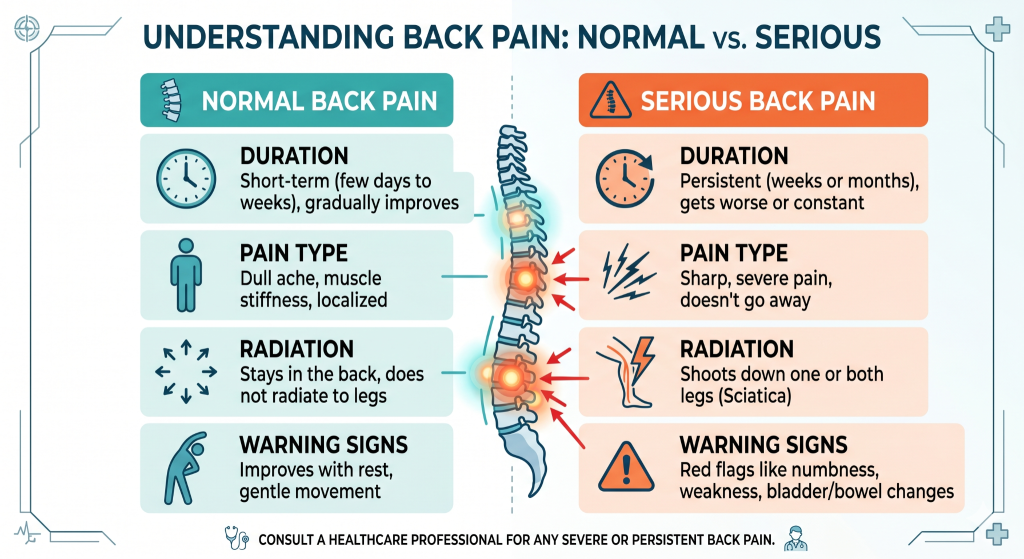
Most lower back pain from sitting is muscular and postural, it gets better with rest, movement, and a few lifestyle changes. But some signs point to something more serious.
Here’s a quick comparison:
| Symptom / Factor | Normal Back Pain | Serious Back Pain | When to Act |
| Duration | Goes away with rest | Persists > 6 weeks | Book appointment |
| Location | Lower back only | Radiates to legs | See doctor soon |
| Cause | Long sitting / posture | No clear cause | Investigate early |
| Numbness | Absent | Legs/feet numb | Urgent consult |
| Bladder control | Normal | Affected | Emergency visit |
| Fever + pain | No fever | Fever present | Visit immediately |
Treatment and Relief: What Actually Works?
Let’s be practical. Here’s what I recommend to most of my patients — and what you can start doing today.
1. Heat and Cold Therapy
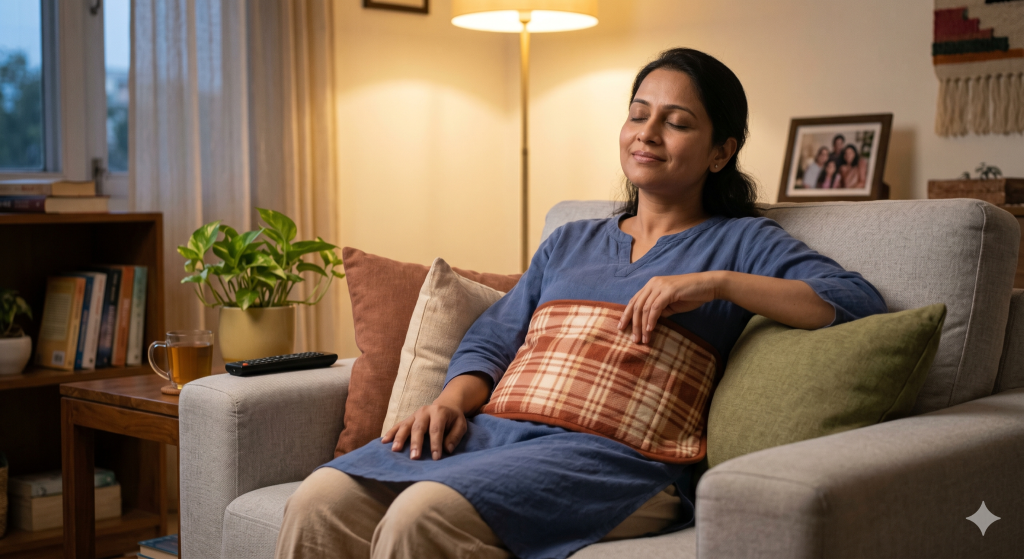
For the first 48–72 hours of a flare-up, apply a cold pack (wrapped in a cloth) to reduce inflammation. After that, switch to a warm heat pad to relax tight muscles. Do this for 15–20 minutes, 2–3 times a day.
2. Over-the-Counter Pain Relief
Anti-inflammatory medications like ibuprofen or diclofenac gel can give short-term relief. Don’t use them for more than a few days without medical advice, overuse can cause other problems.
3. Physiotherapy
This is genuinely one of the best treatments for postural back pain. A trained physiotherapist will work on your core strength, flexibility, and posture correction. Most of my patients in Indore see significant improvement within 4–6 weeks of regular physiotherapy.
4. Lifestyle Modifications
- Take a 2-minute walk every 30 minutes, set a timer if needed
- Use a lumbar support cushion on your chair
- Place your laptop or screen at eye level
- Keep your feet flat on the floor; avoid crossing your legs
Easy Exercises and Posture Correction at Home
These simple exercises, done consistently, make a huge difference:
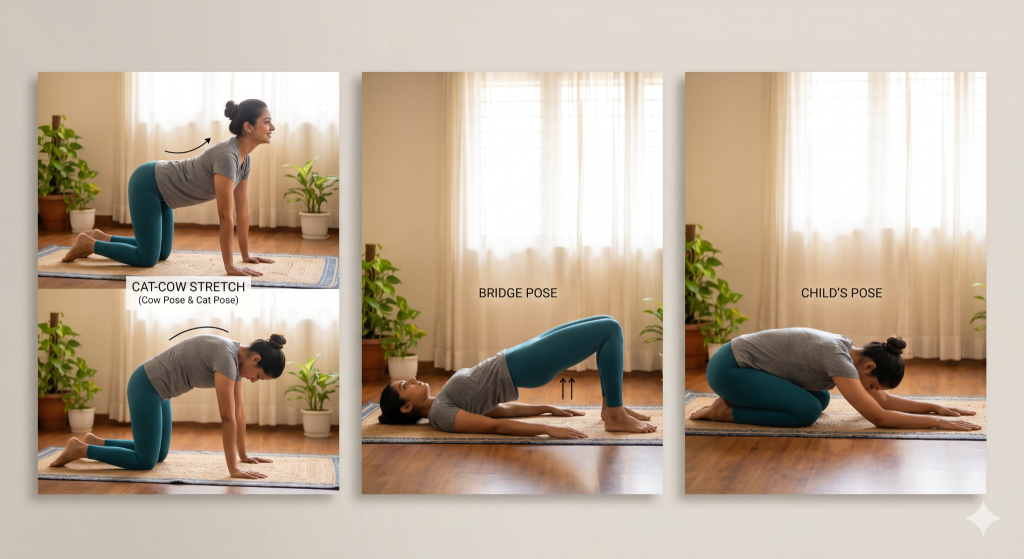
- Cat-Cow Stretch: On all fours, arch your back upward (cat), then dip it downward (cow). Repeat 10 times slowly.
- Knee-to-Chest Stretch: Lie on your back, pull one knee toward your chest, and hold for 20 seconds. Repeat on both sides.
- Pelvic Tilts: Lie on your back with knees bent. Flatten your lower back against the floor, hold 5 seconds, release. Do 10 reps.
- Bridge Pose: Lie on your back, lift your hips off the ground while keeping your feet flat. Hold for 5–10 seconds. 3 sets of 10.
- Child’s Pose: Sit back on your heels, stretch arms forward, hold 30 seconds. Deeply relaxes the lower back.
Do these for 15 minutes every morning. It takes just 2–3 weeks of consistency to feel a real difference.
When Should You See an Orthopaedic Doctor?
Most back pain resolves within 4–6 weeks. But you should book an appointment sooner if:
- The pain has lasted more than 2 weeks with no improvement
- It’s getting progressively worse, not better
- You have numbness, tingling, or weakness in your legs or feet
- You’ve had a fall, accident, or sports injury
- Your bladder or bowel function is affected (this is a medical emergency)
- You’re over 50 and experiencing new back pain
Ready to Get Relief? Book Your Consultation Today.
Don’t let back pain slow you down. Whether it’s been a few weeks or several months, it’s never too late to get proper care.
📍 Dr. Tarkit Modi | Orthopedic Surgeon, Indore, Madhya Pradesh Book Online or Call for Appointment
Frequently Asked Questions (FAQs)
Q: How long should I sit before taking a break?
Ideally, stand up and move around every 30 minutes. Even a 2-minute walk helps reduce pressure on your lower spine.
Q: Can lower back pain from sitting become permanent?
Yes, if ignored over time. Chronic muscle weakness and disc problems can develop. Early treatment and lifestyle changes usually prevent this.
Q: What is the best sitting posture for back pain relief?
Sit with your back fully supported, feet flat on the floor, knees at 90 degrees, and screen at eye level. Avoid slouching forward.
Q: Should I use a heating pad or ice pack for back pain?
Use ice for the first 48–72 hours if the pain is from a new strain. After that, switch to heat to relax tight muscles.
Q: When should I see an orthopedic surgeon for back pain?
See a specialist if your pain lasts more than 2 weeks, radiates to your legs, or is accompanied by numbness, tingling, or weakness.
Q: Is exercise safe when I have lower back pain?
Gentle exercises like walking, stretching, and core strengthening are safe and recommended. Avoid heavy lifting or high-impact activities until cleared by a doctor.
Q: Where can I find a back pain doctor in Indore?
Dr. Tarkit Modi is a trusted orthopedic surgeon in Indore with expertise in diagnosing and treating lower back pain using both non-surgical and surgical approaches.