
Early hip joint damage often starts with small warning signs like groin pain when walking, difficulty sitting cross-legged, or stiffness after rest. If these symptoms are ignored, they can slowly lead to severe arthritis, constant pain, and even the need for hip replacement later in life. Seeing an experienced orthopedic surgeon at the right time can protect your mobility and quality of life.

Why Early Hip Pain Matters?
Hip problems are common as people get older, especially in growing cities where many people sit for long hours, travel on two-wheelers, or have old injuries. Studies show that joint conditions such as osteoarthritis are a leading cause of long‑term pain and disability in older adults worldwide.
The good news is that many hip problems can be managed well if treated early. Recognising the first signs and visiting an orthopedic at the right time can prevent serious damage.

What Is Hip Joint Damage?
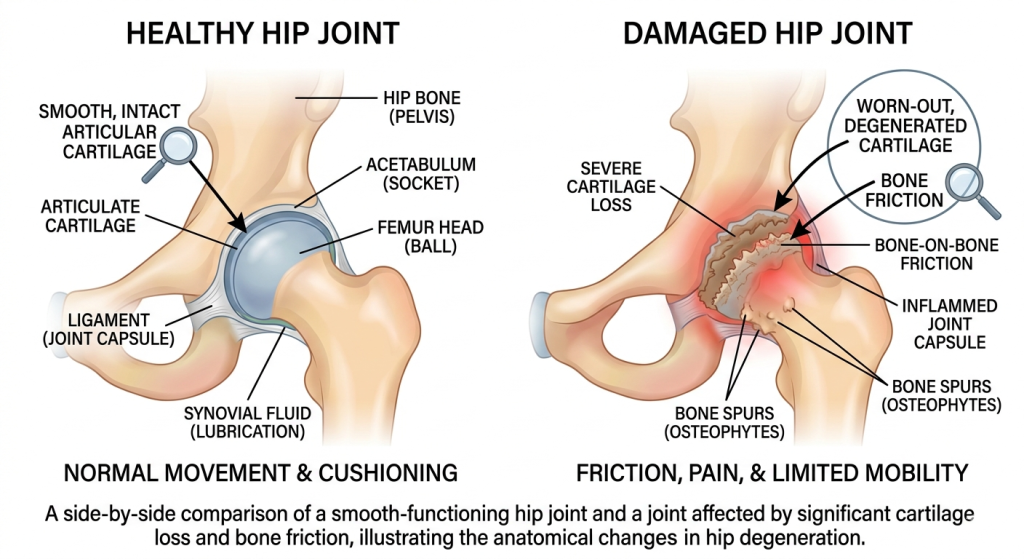
Hip joint damage usually means the smooth cartilage that covers the ball-and-socket joint has started to wear out, become thinner, or develop cracks. Over time, this can lead to osteoarthritis, where the joint becomes painful, stiff, and less flexible.
In simple words, the natural cushion inside your hip joint gets worn out, and the bones start rubbing more against each other. This causes pain, swelling, and difficulty in daily activities like walking, climbing stairs, or sitting on the floor.
Early Signs of Hip Joint Damage
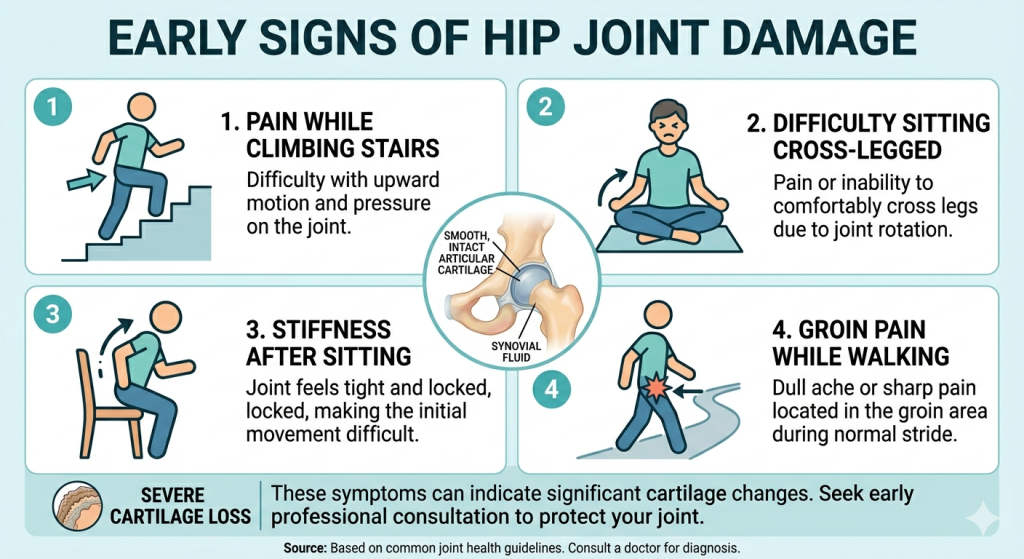
If you notice any of these early symptoms, do not ignore them:
- Dull ache in the groin or front of the thigh, especially after walking or standing for long.
- Pain when getting up from a chair, car, or bed.
- Stiffness in the hip after sitting for a long time, which improves slowly as you start moving.
- Difficulty sitting cross‑legged or squatting comfortably.
- Pain that increases when climbing stairs or walking uphill.
- Clicking, catching, or a feeling of “giving way” in the hip.
- Reduced movement – you feel the hip does not rotate or move as freely as before.
These early signs are often mild and may come and go, but they are a clear signal to consult an orthopedic surgeon in Indore before things get worse.
Causes and Risk Factors
Several factors increase the risk of hip joint damage and osteoarthritis:
- Age: The risk rises with age; most people with osteoarthritis are above 50–55 years.
- Previous injury: Old fractures, sports injuries, or accidents involving the hip make arthritis more likely later in life.
- Excess body weight: Obesity puts extra load on weight‑bearing joints; obese people have a significantly higher chance of hip osteoarthritis compared with those with normal weight.
- Family history: Genetics can play a role; if close family members have arthritis, your risk may be higher.
- Occupation and lifestyle: Jobs or activities that involve heavy lifting, frequent bending, or long hours of standing can strain the hip over many years.
- Other joint diseases: Conditions like inflammatory arthritis or metabolic diseases can damage cartilage more quickly.
When Should You See an Orthopedic Surgeon in Indore?
You should consider seeing an orthopedic surgeon in Indore if:
- Hip or groin pain lasts for more than 2–3 weeks.
- Pain is affecting your sleep or daily activities.
- You are avoiding walking, climbing stairs, or sitting on the floor due to discomfort.
- You have a history of hip injury and now notice new pain or stiffness.
- Pain medicines and home remedies give only temporary relief.
Delaying a visit can allow the damage to progress from early to advanced stages, making treatment more complex later.
Diagnosis: How Hip Problems Are Checked
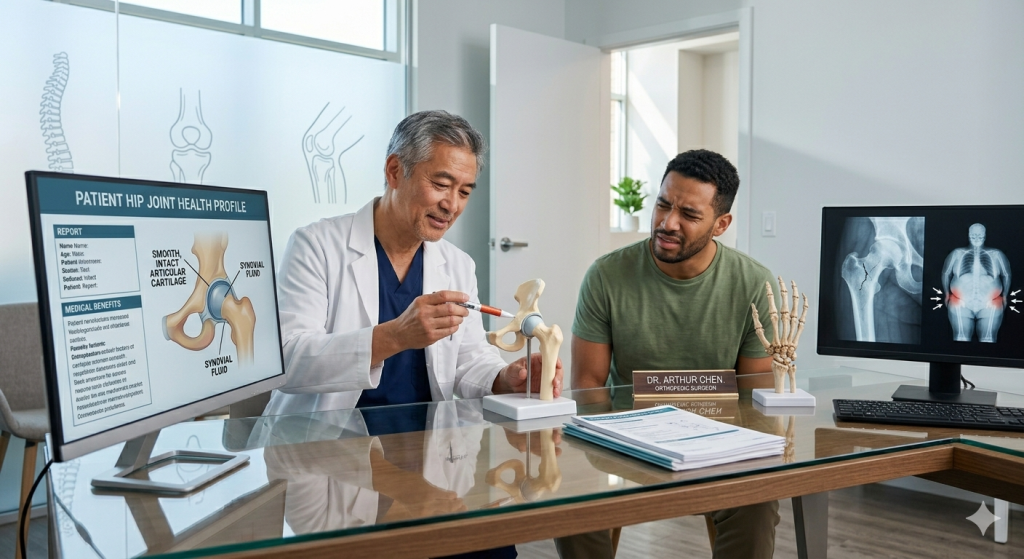
The best orthopedic doctor will start with a detailed history and physical examination of your hip. This usually includes:
- Physical examination: Checking your walking pattern, hip movement, leg length, and areas of tenderness.
- X‑ray: Shows joint space, bone spurs, and alignment, and helps to confirm osteoarthritis or other joint changes.
- MRI scan (if needed): Gives a clearer picture of cartilage, ligaments, and surrounding soft tissues, especially in early or complex cases.
Treatment Options (Non‑Surgical and Surgical)
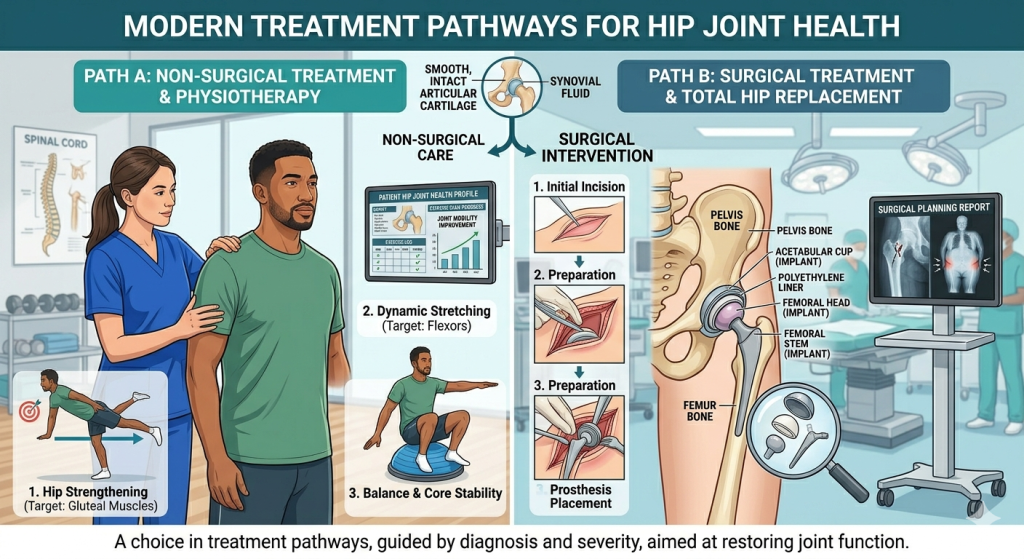
Treatment depends on how advanced the hip damage is.
Non‑surgical options
- Activity modification and rest during flare‑ups.
- Weight management to reduce pressure on the hip joint.
- Physiotherapy to strengthen hip and core muscles.
- Pain‑relieving medicines and anti‑inflammatory drugs should be used carefully under medical supervision.
- Joint injections in select cases to reduce pain and improve movement.
Surgical options
If pain is severe, movement is very restricted, or X‑rays show advanced arthritis, surgery may be advised:
- Hip arthroscopy (in selected early cases) to treat certain structural problems.
- Total hip replacement for advanced hip arthritis, which can significantly improve pain and mobility in well‑selected patients.
Early vs Advanced Hip Joint Damage
| Stage of damage | Typical symptoms | Daily activity impact | Usual treatment focus |
| Early hip damage | Occasional pain after long walks, mild stiffness, discomfort when sitting cross‑legged | You can manage most activities but with some discomfort | Lifestyle changes, physiotherapy, weight control, pain medicines, monitoring |
| Advanced hip damage | Constant pain, night pain, severe stiffness, limp, difficulty walking even short distances | Daily tasks like walking, dressing, and using stairs become difficult | Stronger medicines, walking aids, and often hip replacement surgery |
Prevention Tips for Healthy Hips
You cannot control all risk factors, but you can reduce your chances of hip damage by:
- Maintaining a healthy weight to reduce joint load.
- Staying active with low‑impact exercises like walking, cycling, or swimming.
- Avoiding sudden heavy lifting or twisting movements.
- Strengthening hip and core muscles through guided exercises.
- Using proper posture while sitting, driving, and working at a desk.
- Treating injuries early rather than living with pain.
Choosing the right orthopedic surgeon is essential for accurate diagnosis and effective treatment. As an experienced orthopedic surgeon in Indore, Dr. Tarkit Modi focuses on patient‑centric care, clear communication, and evidence‑based treatment plans.
FAQs
1. What are the first signs of hip joint damage?
Early signs include dull groin pain, stiffness after rest, difficulty sitting cross‑legged, and pain while climbing stairs or walking long distances. If these symptoms last more than a few weeks, you should consult an orthopedic surgeon in Indore for a proper check‑up.
2. Is hip pain in old age normal?
Mild joint discomfort can be common with age, but persistent hip pain is not “normal” and may signal osteoarthritis or other problems. Early evaluation by an orthopedic in Indore can help prevent further damage and reduce long‑term disability.
3. When should I see an orthopedic doctor for hip pain?
You should see a best orthopedic doctor in Indore if hip pain lasts more than 2–3 weeks, affects walking or sleep, follows an old injury, or does not improve with rest and basic medicines. Early treatment usually gives better results and may avoid major surgery.
4. Can hip joint damage be cured without surgery?
In early stages, many patients improve with weight management, physiotherapy, lifestyle changes, and medicines. These reduce pain and slow damage. Advanced joint damage, however, may need procedures like hip replacement for lasting relief.
5. What tests are done to diagnose hip arthritis?
Doctors usually start with a physical examination and X‑ray of the hip. In some cases, an MRI scan is advised to look at cartilage and soft tissues in more detail. These tests help decide the best treatment plan.
6. Is hip replacement safe for older patients?
When carefully planned and performed by an experienced orthopedic surgeon, hip replacement can be safe and highly effective even in older patients. It often reduces pain and improves mobility and quality of life.
7. How can I protect my hips as I age?
Maintaining a healthy weight, staying active with low‑impact exercises, avoiding heavy lifting, and seeking early treatment for injuries are key steps. Regular check‑ups with an orthopedic in Indore can help detect problems before they become severe.