
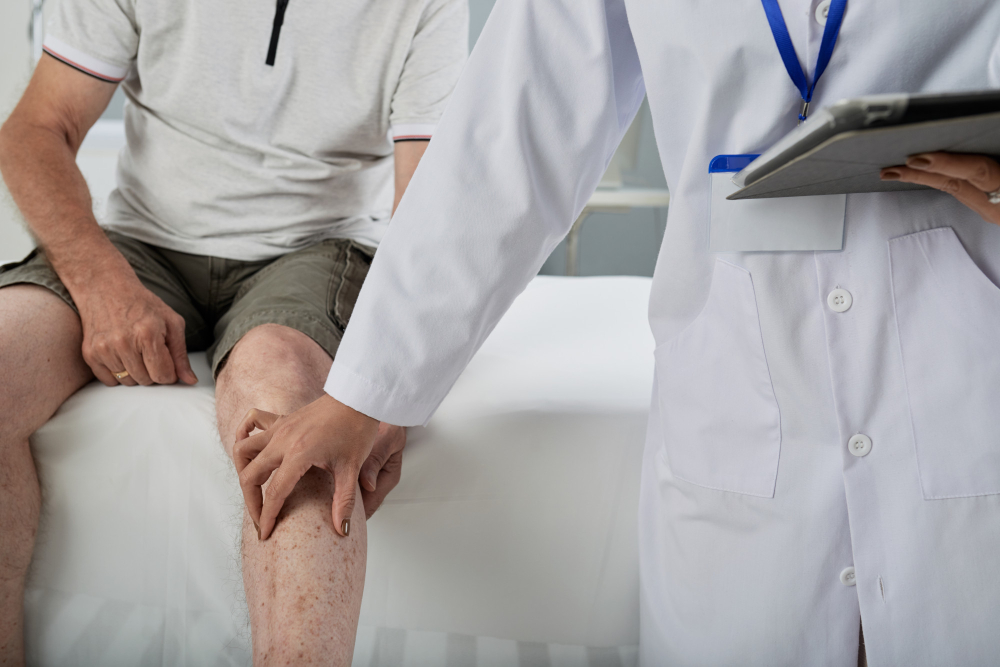
Living with persistent joint pain, stiffness, and swelling can be incredibly challenging. If you’ve been diagnosed with arthritis, the fear of eventually needing surgery might be weighing on your mind. You may be asking yourself, “Is an operation my only option?” This is a common concern for many in Indore dealing with osteoarthritis or other forms of arthritis.
However, the answer is often reassuring. Dr. Tarkit Modi, a trusted orthopedic surgeon, frequently advises patients that surgery is not the first or only solution. In fact, for a significant number of patients, a well-structured, non-surgical approach can effectively manage pain, improve mobility, and delay or even eliminate the need for an operation.

What is Arthritis?
Arthritis is not a single disease; it’s an informal way to refer to joint pain or joint disease. There are more than 100 types of arthritis. The most common type is osteoarthritis (OA), often called “wear-and-tear” arthritis, where the protective cartilage cushioning the ends of your bones wears down over time . Other forms, like rheumatoid arthritis, are inflammatory conditions where the body’s immune system attacks the joint lining.
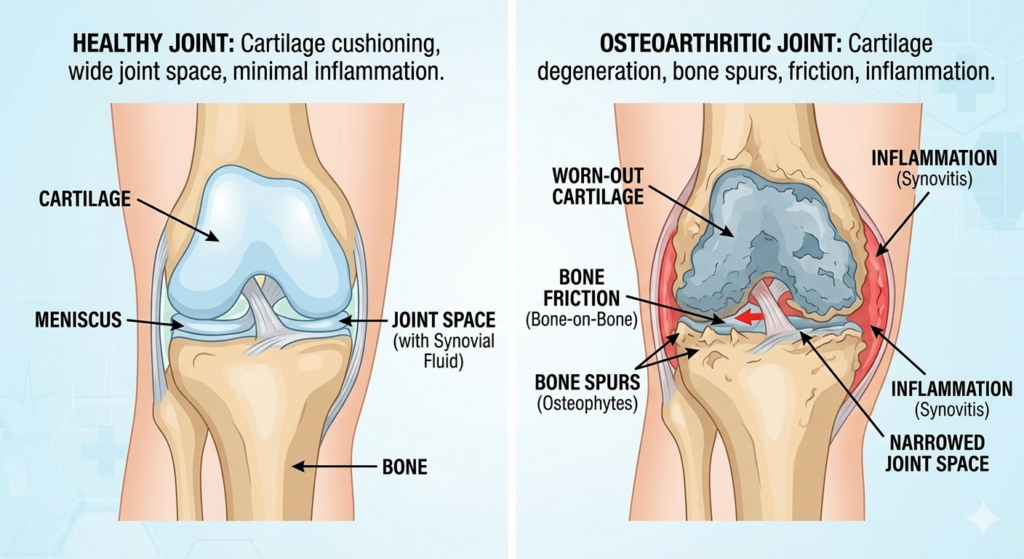
Key symptoms often include:
Joint pain: Stiffness, especially first thing in the morning
Swelling: Decreased range of motion
While an X-ray can show the extent of joint damage, We emphasizes that the image on a scan doesn’t always dictate the level of pain you experience. This is why treatment must be personalized.
Can Arthritis Be Treated Without Surgery?
Yes, absolutely. In the majority of cases, arthritis can be managed effectively without surgery. Surgery is typically reserved for cases where non-surgical treatments have been exhausted and the pain severely impacts your quality of life.
This isn’t just anecdotal advice; it’s backed by strong scientific evidence. A landmark study published in the New England Journal of Medicine followed patients with severe knee arthritis who were eligible for surgery. Half of them underwent a structured non-surgical treatment program instead.
The results were striking: 74% of those who tried non-surgical treatment first did not end up needing surgery, even after a year . A five-year follow-up study reinforced these findings, showing that approximately two out of three patients never required a knee replacement .
As Dr. Modi explains, “The goal of modern orthopedics is to preserve your natural joint for as long as possible. We have a powerful ‘toolbox’ of non-surgical strategies that can make a world of difference.”
Non-Surgical Treatments for Arthritis: The Non-Surgical Toolbox
We use a combination of evidence-based treatments tailored to each patient’s specific needs and lifestyle. These treatments are most effective when used together in a comprehensive plan.
Core Treatments (The Foundation)
Before considering medications or injections, the foundation of arthritis treatment rests on two pillars: exercise and weight management.
Therapeutic Exercise: This is not just about “going for a walk.” It involves specific, supervised exercises to strengthen the muscles around the joint. Stronger muscles act as shock absorbers, taking pressure off the painful joint.
A 2024 study confirmed that exercise therapy is one of the few treatments proven to improve both pain and joint inflammation. We often recommends working with a physiotherapist to learn the correct techniques.
Weight Management: For those carrying extra weight, even a modest amount of weight loss can have a dramatic impact. For every kilogram of body weight you lose, you reduce the load on your knees by about four kilograms with each step . Losing just 5-10% of your body weight can significantly reduce pain and improve function .
Medications and Injections
When core treatments aren’t enough, we move to the next level.
Topical Medications: Gels or creams containing non-steroidal anti-inflammatory drugs (NSAIDs), like diclofenac gel, are often the first line of defense. They are applied directly to the skin over the painful joint and have fewer side effects than oral pills .
Oral Medications: If topical treatments aren’t sufficient, oral NSAIDs (like naproxen) may be prescribed for short-term pain relief, always with a stomach-protecting medication . It’s important to note that current guidelines advise against relying on paracetamol or strong opioids like tramadol for arthritis pain .
Intra-articular Injections:
Corticosteroid Injections: These are powerful anti-inflammatory injections that can provide significant pain relief for several weeks or months. They are often used as a “bridge” to help a patient become pain-free enough to start an effective exercise program .
Viscosupplementation (Hyaluronic Acid Injections): These injections act as a lubricant and shock absorber in the joint. While their use is debated in some guidelines, they can provide long-lasting relief for specific patients .
Supportive Therapies
Physical Therapy: A physical therapist can teach you specific strengthening exercises, manual therapy techniques, and how to use assistive devices correctly.
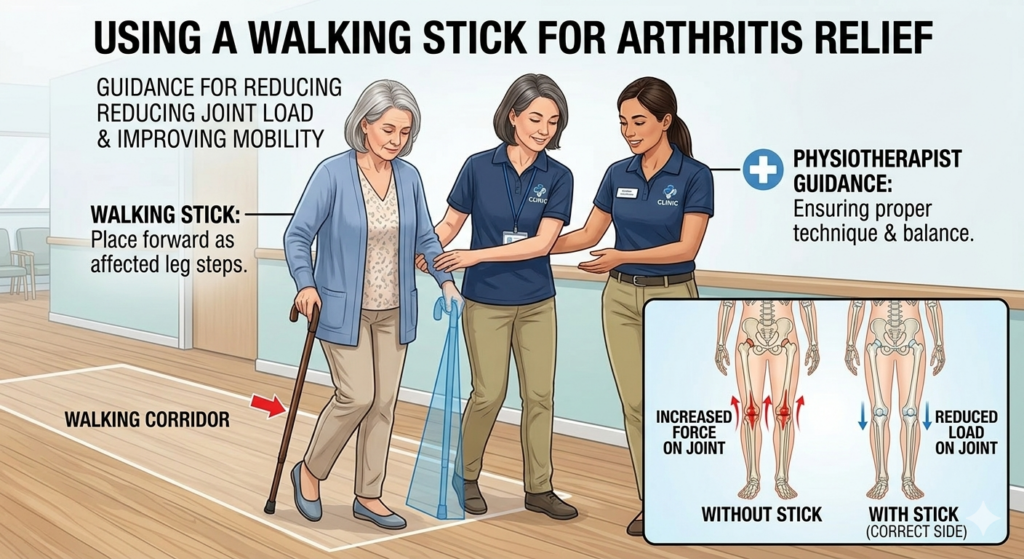
Assistive Devices: Using a walking stick in the hand opposite your painful joint can reduce the load on your hip or knee by up to 60%, making walks much more comfortable .
When is Surgery Needed?
Surgery is not a failure. For some patients, it is the right and necessary choice. We explains that surgery is typically considered when:
Pain is severe and constant, interfering with sleep and basic daily activities like walking or climbing stairs. Significant joint deformity is present.
Non-surgical treatments have been tried properly for a reasonable period (often 3-6 months) and have failed to provide adequate relief .
The decision to operate is always a shared one, made after a thorough discussion of the risks and benefits.
Tips for Managing Arthritis at Home
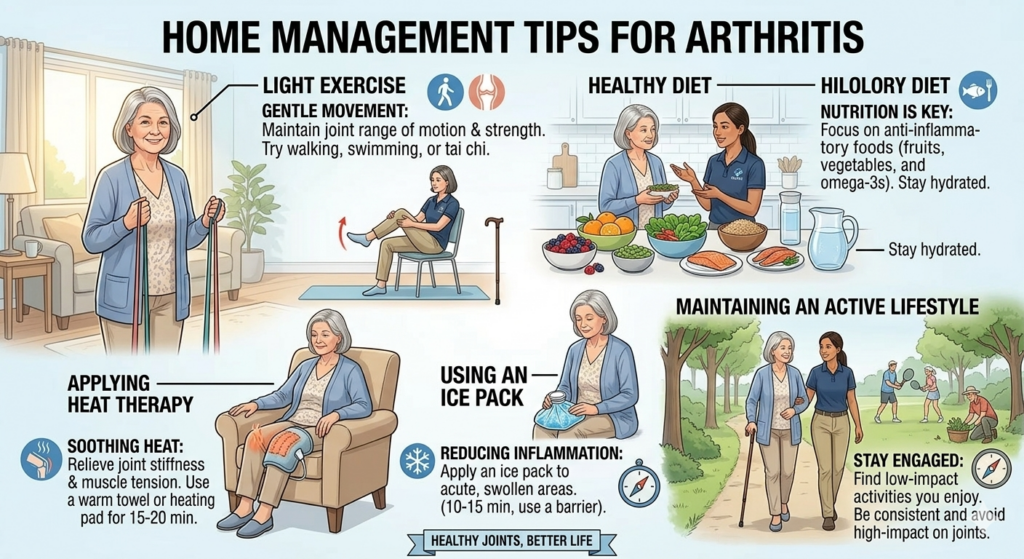
You are an active partner in your treatment. Here are some self-management tips recommended by the health bodies that you can start today .
Stay Active: Aim for low-impact activities like walking, swimming, or cycling. “Motion is lotion” for your joints.
Protect Your Joints: Use larger or stronger joints to carry things. For example, carry a heavy bag with your shoulder instead of your hands. Listen to your body and pace yourself—take breaks before you feel pain.
Use Heat and Ice: Apply moist heat (like a warm towel) to stiff joints before activity to loosen them up. Use an ice pack on swollen, painful joints after activity for 15-20 minutes to reduce inflammation .
Eat an Anti-Inflammatory Diet: Focus on a balanced diet rich in fruits, vegetables, and whole grains. Omega-3 fatty acids (found in fish like salmon) may also help reduce inflammation.
Maintain a Healthy Weight: As mentioned, this is one of the most impactful things you can do for your joints.
If you are looking for expert arthritis treatment in Indore, consulting a qualified professional is the first step. Dr. Tarkit Modi, a renowned orthopedic doctor in Indore, can help you navigate these options and create a plan that gets you back to living your life fully.
Frequently Asked Questions (FAQs)
1. What is the first thing I should do if I have joint pain?
The first step is to get an accurate diagnosis. Consult an orthopedic doctor who can perform a clinical examination. You often don’t need an X-ray immediately unless there are specific concerns. Based on the diagnosis, the doctor can recommend a treatment plan.
2. Can arthritis pain go away on its own?
Arthritis is a chronic condition, meaning it doesn’t just “go away” permanently. However, symptoms can fluctuate. With proper management—including exercise, weight control, and medication—you can achieve long periods with little to no pain.
3. Are injections for arthritis painful and safe?
Injections are generally well-tolerated. The doctor may use a local anesthetic to numb the area first. While there are small risks (like infection or allergic reaction), they are considered safe when performed by an experienced professional like Dr. Tarkit Modi. Corticosteroid injections are a standard, evidence-based treatment for short-term relief .
4. Is walking good for bone-on-bone arthritis?
Yes, in most cases. While it may seem counterintuitive, controlled, regular walking helps lubricate the joint and strengthens the supporting muscles. It’s important to listen to your body, use proper footwear, and perhaps use a walking stick if needed. Your doctor or physiotherapist can advise on the right amount for you.
5. What is the success rate of non-surgical treatment?
Studies show that with a structured program including exercise and education, the majority of patients can avoid surgery. One high-quality study found that 74% of patients with severe arthritis who were eligible for knee replacement avoided it for at least one year by sticking to a non-surgical plan .
6. How do I know if I need to see an orthopedic doctor in Indore?
You should consider seeing an orthopedic doctor in Indore if you have persistent joint pain that interferes with your daily life, doesn’t improve with rest or over-the-counter medications, or is accompanied by significant swelling or stiffness.
7. What should I expect during my first visit with Dr. Tarkit Modi?
Dr. Modi will begin by listening carefully to your concerns and medical history. He will perform a physical examination to check your range of motion, stability, and areas of tenderness. He will then discuss his findings with you and explain all suitable treatment options, starting with the least invasive ones first.