
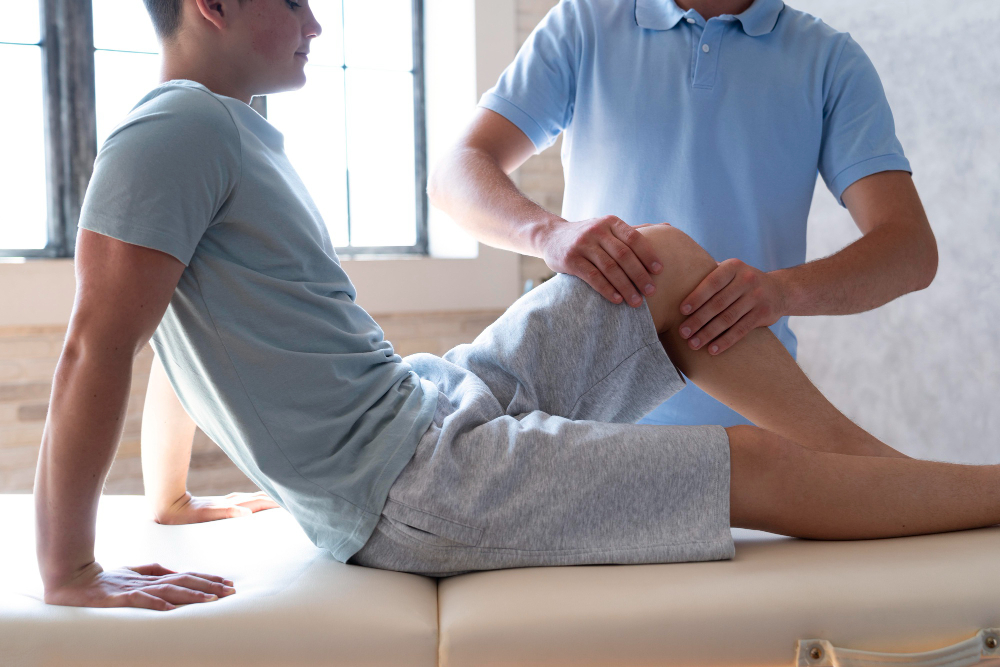
You’re pushing hard during a football match when your knee suddenly gives way. A swimmer feels a sharp pain in their shoulder. A cricket player experiences sudden elbow discomfort. For athletes in Indore and across India, sports injuries represent a significant challenge, one that can end careers, derail training progress, and impact quality of life if not handled expertly.
The statistics are sobering: 48.5% of young athletes in Indian cities experience sports injuries annually, with football players suffering injury rates as high as 64% and lower limb injuries accounting for 61.3% of all sports trauma. The most common injuries, ankle sprains, ACL tears, hamstring strains, and shoulder problems, strike active individuals at the peak of their athletic careers.
However, a sports injury doesn’t mean the end of athletic participation. Early, expert evaluation by an orthopaedic surgeon in Indore, combined with proper treatment and structured rehabilitation, enables athletes to return to their sport stronger and more resilient than before. Understanding what happens when sports injuries occur and when to seek specialized care becomes essential for every athlete.
What Are Sports Injuries?
Sports injuries result from the physical demands of athletic activity, sudden trauma during competition, repetitive stress from training, or poor movement mechanics. They affect bones, muscles, tendons (tissue connecting muscle to bone), ligaments (tissue connecting bone to bone), and cartilage.
Two main categories exist:
Acute Injuries develop suddenly, such as a torn ACL from a directional change, a sprained ankle from landing awkwardly, or a dislocated shoulder from contact. These injuries require immediate attention to prevent complications.
Chronic Injuries develop gradually from repetitive stress, such as tennis elbow from repeated gripping, shin splints from running on hard surfaces, and rotator cuff inflammation from overhead throwing. These injuries worsen without proper management but typically develop over weeks or months.
Common Sports Injuries Treated by an Orthopaedic Surgeon in Indore
Lower Limb Injuries (Most Common)
ACL (Anterior Cruciate Ligament) Tears: The ACL is the most commonly injured ligament in the knee. Athletes describe hearing a “pop” during sudden deceleration or directional change. ACL tears are the most serious knee injury, requiring surgical reconstruction in most cases. Recovery requires 5-12 months, depending on injury severity and surgical approach.
Ankle Sprains: The most frequent sports injury overall, ankle sprains occur when ligaments stretch beyond their normal range. Mild sprains recover in 1-3 weeks, moderate sprains in 3-6 weeks, and severe sprains in 6-12 weeks. The key to preventing chronic ankle instability lies in proper early treatment and physiotherapy.
Hamstring Strains: Common in sprinting sports and activities requiring explosive leg power, hamstring strains occur when the muscle stretches excessively. Recovery typically requires 6-12 weeks, though inadequate physiotherapy can prolong healing to several months or cause re-injury.
Meniscus Tears: The meniscus (cartilage padding in the knee) can tear from pivoting movements or direct trauma. Some tears respond to conservative treatment; others require arthroscopic surgical repair. Recovery ranges from 4-8 weeks for conservative management to 8-12 weeks following arthroscopic repair.
Upper Limb Injuries
Rotator Cuff Injuries: The rotator cuff (four muscles surrounding the shoulder) can become inflamed or torn from overhead activities or direct trauma. Swimmers, baseball players, and tennis players commonly experience rotator cuff problems. Recovery ranges from 3-6 months with physiotherapy, with some cases requiring surgical repair.
Shoulder Dislocation: Contact sports like wrestling produce a 58% injury rate, with shoulder dislocation as the most frequent injury. When the shoulder ball slips out of its socket, immediate reduction (repositioning) is necessary. Recovery requires 3-4 months of immobilization and physiotherapy before safely returning to contact sports.
Tennis Elbow: This repetitive strain injury affects the tendon on the outer side. While common in tennis players, it affects anyone performing repetitive gripping or wrist extension. Recovery ranges from 2 weeks to 6 months, depending on severity and treatment compliance.
Why Early Sports Injury Treatment Is Important?
Delay in seeking expert evaluation for sports injuries carries significant consequences:
Progressive Damage: Minor injuries worsen without proper treatment. A small meniscus tear can progress to larger cartilage damage. Early intervention prevents advancement.
Chronic Instability: Untreated ligament injuries leave joints unstable. Athletes develop chronic instability where the joint feels unreliable during activity, increasing re-injury risk by 31%.
Compensatory Problems: Pain from one injury causes athletes to alter their movement mechanics, creating problems in other joints. A knee injury changes hip and ankle function, potentially causing new injuries.
Longer Recovery: Properly treated fresh injuries heal faster. Chronic injuries that have progressed require months or years of rehabilitation compared to weeks for early intervention.
Return to Sport Timing: Athletes who receive early expert evaluation return to sport safer and faster. Those delaying treatment often miss extended time or return prematurely, risking re-injury.
How an Orthopaedic Surgeon Diagnoses Sports Injuries?
Comprehensive Assessment Process
A sports injury doctor in Indore combines clinical expertise with advanced technology to accurately diagnose what’s wrong.
Detailed History: Understanding exactly when the injury occurred, what movement caused pain, subsequent symptoms progression, and how the injury affects athletic performance.
Physical Examination: Specialized orthopedic tests assess ligament stability, range of motion, strength, and pain patterns. For instance, the Lachman test specifically evaluates ACL integrity.
Imaging Studies:
- X-rays reveal bone fractures and joint alignment
- Ultrasound shows soft tissue inflammation and fluid collection in real-time
- MRI provides detailed images of ligaments, tendons, cartilage, and muscles, essential for ACL tears, meniscus damage, and rotator cuff injuries
Functional Assessment: Evaluating how the injury affects athletic movement and performance, informing treatment and rehabilitation decisions.
Non-Surgical vs Surgical Sports Injury Treatment
Conservative (Non-Surgical) Management
Most sports injuries respond to non-surgical approaches when initiated early:
Rest and Immobilization: Allowing acute inflammation to settle and preventing movement that worsens injury. Duration depends on injury type and severity.
Ice, Compression, Elevation (ICE Protocol): Reducing swelling and pain during the first 48-72 hours following injury.
Anti-Inflammatory Medications: Reducing pain and inflammation, enabling earlier physiotherapy participation.
Physiotherapy: Progressive exercise protocols restore strength, flexibility, and proprioception (body awareness). Physiotherapy success rates reach 70% for many sports injuries when started early.
Advanced Injections: Corticosteroids reduce persistent inflammation; platelet-rich plasma (PRP) promotes healing; hyaluronic acid lubricates joints. These allow increased activity and physiotherapy participation.
Surgical Intervention
Some injuries require surgical repair:
ACL Reconstruction: When the ACL completely tears, surgery becomes necessary for athletes wanting to return to cutting/pivoting sports. Arthroscopic ACL reconstruction enables 92%+ return to sport success rates.
Meniscus Repair: Arthroscopic surgery repairs repairable meniscus tears, preserving knee cartilage health long-term.
Rotator Cuff Repair: Significant rotator cuff tears benefit from arthroscopic surgical repair combined with intensive physiotherapy.
Shoulder Dislocation Surgery: Recurrent dislocations may require surgical stabilization to prevent future episodes in contact athletes.
Role of Rehabilitation and Physiotherapy
Rehabilitation represents the foundation of successful sports injury recovery.
Early Phase (Days 1-7): Protecting the injury while minimizing stiffness. Gentle range-of-motion exercises prevent prolonged immobility.
Intermediate Phase (Weeks 2-8): Progressive strengthening as inflammation subsides. Rebuilding muscle around injured structures restores stability and function.
Advanced Phase (Weeks 8+): Sport-specific training preparing athletes to return to their specific activity. For soccer players, this includes cutting and pivoting drills; for swimmers, sport-specific shoulder exercises.
Return-to-Sport Phase: Gradually increasing activity intensity under expert guidance, preventing premature return that risks re-injury. This typically requires 8-12 weeks for ankle sprains, 3-4 months for shoulder injuries, and 5-12 months for ACL reconstruction.
Critical reality: Rehabilitation adherence directly predicts success. Athletes who complete prescribed physiotherapy return to sport safely; those cutting sessions short risk chronic problems.
If you’ve suffered a sports injury, don’t delay seeking evaluation. Early consultation with an experienced sports injury doctor in Indore dramatically improves recovery prospects. Whether requiring conservative care or surgical intervention, expert guidance combined with dedicated physiotherapy enables you to return to your sport stronger and more resilient.
FAQs
What is the most common sports injury treated by an orthopaedic surgeon in Indore?
The most common sports injuries are ankle sprains and ACL tears. Ankle sprains occur in nearly every sport and represent the most frequent acute injury. ACL tears are the most serious ligament injury, particularly in football where 64% of players experience injuries. Lower limb injuries overall account for 61.3% of all sports trauma in Indian athletes.
How long does recovery take from sports injuries?
Recovery varies significantly by injury type: ankle sprains recover in 6-12 weeks, hamstring strains require 6-12 weeks, shoulder dislocations need 3-4 months, and ACL tears require 5-12 months including surgical reconstruction and physiotherapy. The key to faster recovery lies in early expert diagnosis and strict physiotherapy adherence.
Do all sports injuries need surgery?
No, most sports injuries respond to conservative treatment with rest, ice, immobilisation, and physiotherapy when diagnosed early. Only severe injuries like complete ACL tears, unstable shoulder dislocations, and large meniscus tears typically require surgery. Conservative management succeeds in 70% of sports injuries when initiated promptly.
When should I return to sports after an injury?
Return-to-sport timeline depends on injury severity, treatment type, and rehabilitation progress. General guidelines: ankle sprains 6-12 weeks, hamstring strains 6-12 weeks, rotator cuff injuries 3-6 months, ACL reconstruction 5-12 months. Premature return risks re-injury and chronic problems.
What is the role of physiotherapy in sports injury recovery?
Physiotherapy is essential, not optional, for sports injury recovery. Progressive exercise protocols restore strength lost during immobilization, rebuild flexibility, restore proprioception (body awareness), and prevent compensatory movement patterns causing secondary injuries
How does an orthopaedic surgeon diagnose a sports injury?
An orthopaedic surgeon in Indore diagnoses sports injuries through: comprehensive history (understanding exactly how injury occurred), physical examination with specialized orthopedic tests assessing stability and function, and advanced imaging (X-rays, ultrasound, MRI). MRI provides the most detailed soft tissue imaging essential for ACL tears, meniscus damage, and rotator cuff injuries. This thorough approach ensures accurate diagnosis guiding appropriate treatment.
Can I play sports after a serious injury like an ACL tear?
Yes, athletes successfully return to sport after ACL tears through arthroscopic reconstruction surgery combined with intensive physiotherapy. 92%+ of athletes return to their sport with proper surgical technique and rehabilitation compliance. However, the return timeline is long—5-12 months—reflecting the serious nature of this injury
Posted by : Dr. Tarkit Modi
MBBS, MS (Orthopaedics) , FIJR, FIAS- (Fortis Hospital,Delhi)
Specialist in Joint Replacement and Arthroscopy, Shoulder, Hip, Knee & Orthopedic Surgeon in Indore